






























The SEC Just Classified XRP as a Commodity — Franklin Templeton Says It Could Be the Next Bitcoin
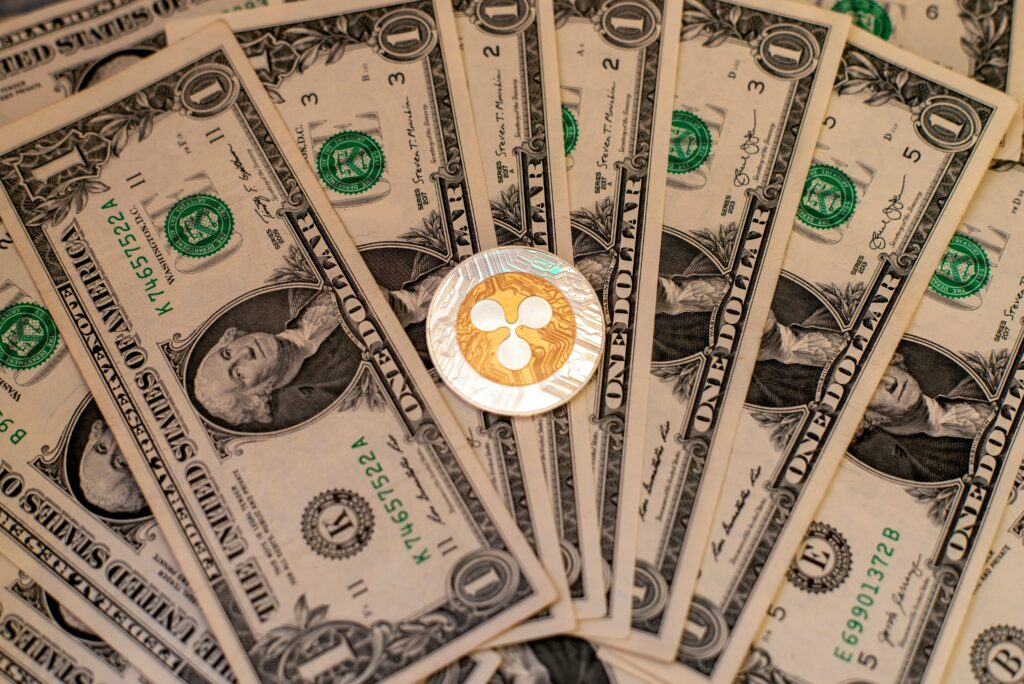
For years, the two questions that kept institutional money out of XRP were straightforward: is it legal, and can we access it through regulated channels? In the space of a few months, both have been answered. The SEC and CFTC jointly classified XRP as a digital commodity on 17 March 2026, placing it alongside Bitcoin and Ethereum under binding federal law. And Franklin Templeton — a firm managing $1.68 trillion in assets that has been around since 1947 — launched the Franklin XRP ETF (XRPZ) in November 2025, giving institutional investors regulated, custody-grade exposure through standard brokerage accounts for the first time.
The combination matters. Regulatory classification removes the legal uncertainty that had made XRP untouchable for compliance-sensitive allocators since the original SEC lawsuit in December 2020. The ETF removes the operational barrier — the need to custody XRP directly, navigate crypto exchanges, or hold the token on a balance sheet that a risk committee can scrutinise. Together, they open XRP to the same institutional capital flows that transformed Bitcoin and Ethereum from speculative assets into portfolio allocations.
Franklin Templeton’s Head of Digital Assets Roger Bayston described XRP as “a foundational building block” within a diversified digital portfolio, with XRPZ delivering regulated custody and daily transparency without the operational complexity of managing direct token holdings through crypto-native infrastructure. The firm’s research team has gone further, characterising XRP as moving toward Bitcoin and Ethereum-level institutional adoption, pointing to its role in cross-border payments as its core utility driver.
XRPZ carries the lowest expense ratio among all XRP ETFs at just 0.19% — a figure that reflects Franklin Templeton’s scale rather than a promotional rate, and one that makes it the most cost-effective long-term holding in the space. More importantly, Franklin Templeton sits on the approved lists of virtually every major institutional investor. That means XRPZ may be the only XRP ETF accessible to certain allocators who cannot use products from smaller or crypto-native issuers regardless of performance.
The broader ETF market has responded quickly. Seven US spot XRP ETFs are now live — from Canary Capital, Grayscale, Bitwise, Franklin Templeton and 21Shares — and have absorbed over $1.3 billion in their first 50 trading days, with 43 consecutive days of net positive inflows. Standard Chartered projects $4-8 billion in total XRP ETF inflows by year-end if the CLARITY Act also passes, providing additional legislative certainty on top of the commodity ruling.
That ruling is structurally more significant than its muted price reaction suggested. The SEC and CFTC’s joint classification of XRP as a digital commodity is binding federal law — not staff guidance that the next administration can reinterpret. US exchanges can now offer full XRP services without enforcement risk. The pipeline for larger issuers who had cited regulatory uncertainty as their reason for staying out — BlackRock being the most obvious — has cleared. As EBM’s earlier analysis of XRP’s institutional adoption story showed, the August 2025 lawsuit resolution was the beginning of this process. The commodity classification is its structural completion.
The network data supports the momentum. The XRP Ledger now hosts over 5.6 million wallets holding less than 100 XRP and more than 32,000 wallets holding over 100,000 XRP — a distribution indicating growing participation at both retail and institutional scale. As Wall Street moves to put equities on blockchain rails with XRP positioned as a key settlement layer, the network utility argument has rarely been stronger. The NYSE’s tokenisation partnership with Securitize places Ripple’s infrastructure at the centre of a shift that could route trillions in settlement volume through the XRP Ledger over the coming decade.
The price picture is more complicated. XRP faces resistance near $1.65 that has capped short-term upside despite the regulatory tailwinds, trading in the $1.40-1.50 range in the weeks following the commodity ruling. Markets have learned that regulatory wins alone do not move prices — institutional allocators often wait for full legislative certainty before committing at scale. The broader risk-off environment driven by the Iran energy shock is compressing appetite for growth assets across the board, and XRP is not immune.
But the structural picture has changed materially. XRP now has a commodity classification, a regulated ETF from one of the world’s largest asset managers, a growing network and a position at the centre of Wall Street’s tokenisation architecture. The institutional barriers that defined XRP’s investment case for half a decade have been removed. Whether the price follows the fundamentals is, as always, a separate question — but the conditions for it to do so have rarely been better set.
 Subscribe to our free weekly newsletter
  https://europeanbusinessmagazine.beehiiv.com/
The post The SEC Just Classified XRP as a Commodity — Franklin Templeton Says It Could Be the Next Bitcoin appeared first on European Business & Finance Magazine.