





















The Padel Gold Rush: From Converted Tennis Courts to a €6 Billion Tech-Powered Empire
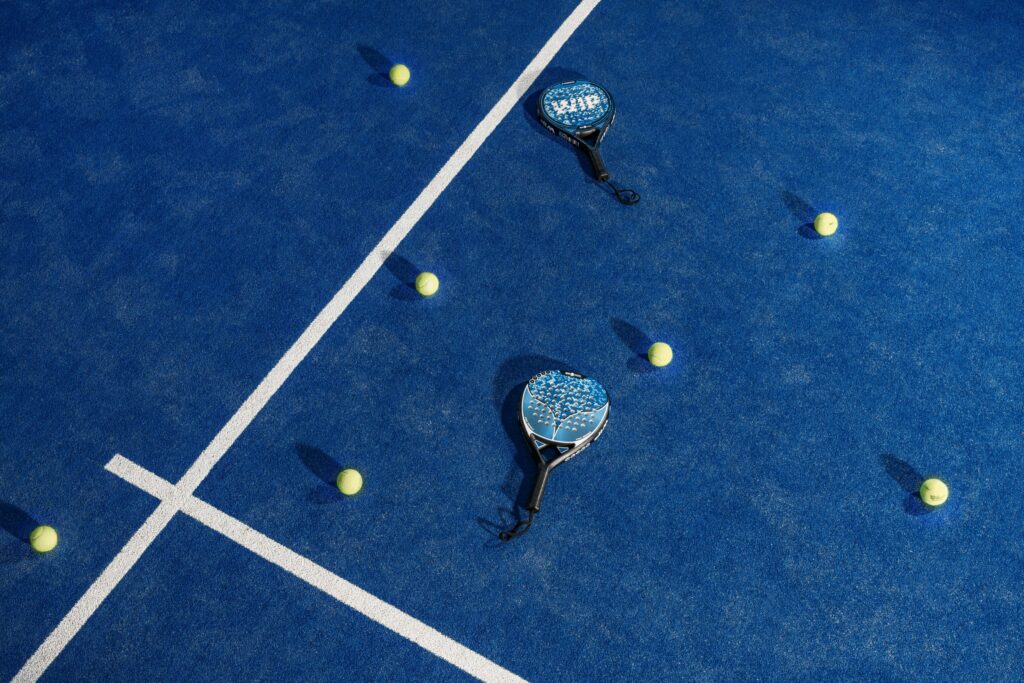
It started in a rich man’s back garden in Acapulco. In the late 1960s, Mexican businessman Enrique Corcuera wanted to play tennis but didn’t have the space for a full-sized court. His solution—a smaller enclosed court with walls—was the accidental invention of the world’s fastest-growing sport. Today, padel has migrated from Marbella private clubs to the balance sheets of private equity firms, sovereign wealth funds, and the most sophisticated sports investors on the planet.
Quick Takeaways: The 2026 Padel Economy
-
The 24-Month ROI: Premium indoor clubs are reaching break-even in record time due to high-density court layouts.
-
The €6B Valuation: The industry has tripled in value since 2022, driven by massive infrastructure expansion in the UK, Germany, and the US.
-
The “Wero” Advantage: Modern clubs are slashing fees by adopting Europe’s new Wero payment rail for memberships.
-
The SpaceX Halo: The same risk appetite fueling Musk’s $2 trillion SpaceX IPO target is trickling into “Unicorn” sports infrastructure.
| Metric (2026) | 2022 Baseline | 2026 Audit |
| Global Industry Value | €2 Billion | €6 Billion (Projected) |
| Daily Club Openings | ~3 per day | 9 per day (Average) |
| Space Efficiency | 1 Tennis Court | 3 Padel Courts (Same Footprint) |
| ROI Horizon | 4-5 Years | Under 24 Months (Tier 1 Indoor) |
Why Padel Works as a Business
The economics of padel are unusually attractive. A padel court is cheaper to build than a tennis court, requires less space, and accommodates four players simultaneously. This generates significantly higher revenue per square meter because courts can be booked across twelve to fourteen hours a day.
For investors who understand subscription economics—the same logic that has driven valuations in SaaS businesses—padel clubs have an immediately recognizable financial profile: high frequency of use, a loyal local customer base, and predictable booking revenue.
Where the Money Is Going
Qatar Sports Investments (QSI)—the group that owns Paris Saint-Germain—has been the most prominent institutional backer through Premier Padel. Their involvement reflects a pattern of sovereign capital treating padel as a strategic media asset.
While Spain remains the “Capital of Padel” with over 17,300 courts, the geography is widening. Italy has surpassed 10,000 courts, and the UK saw a record-breaking 2025, surpassing the 1,000-court landmark. In the US, while still in the early stages, player participation surged to over 500,000 this year, with a massive pipeline of “Tech-Hub” clubs slated for 2027. Just as smart money is hunting for the “Next Wrexham,” institutional investors are realizing padel offers a cleaner, more predictable exit strategy than professional football.
Who Is Playing Padel — and Why
Over 35 million people now play padel worldwide, across more than 130 countries. The demographic profile is unusually broad for a racket sport — 40% of players are women, one of the highest female participation rates in any competitive sport, and 54% of players are aged 26 and above. It spans office workers booking Friday evening courts and elite footballers unwinding after training. Jürgen Klopp famously used padel sessions with his coaching staff to brainstorm tactics. David Beckham, Messi and Neymar are all regulars. Serena Williams has picked up a racket. Celebrity association has accelerated mainstream adoption in ways that most sports take decades to achieve.
The reason people play comes down to three things: accessibility, sociability and the 92% return rate — meaning nine out of ten people who try it once come back. Unlike tennis, which requires years of practice before a rally feels satisfying, padel’s enclosed glass walls mean the ball stays in play far longer. Beginners can have a genuinely enjoyable game within an hour of picking up a racket. It is always played in doubles, which makes it inherently social — a workout and a social occasion in one. Players burn 500–700 calories per hour, which keeps the fitness crowd engaged. The combination of low barrier to entry, high enjoyment, and strong community culture is what drives retention — and what makes padel’s growth feel structural rather than seasonal.
What distinguishes the current “Padel Gold Rush” from a simple property play is the technology infrastructure. Booking platforms like Playtomic now influence 37% of all club engagement, turning venues into data-rich businesses.
We are also seeing a “Hardware-to-Software” revenue loop. Smart rackets with embedded sensors from brands like Bullpadel and Head allow players to analyze their game via AI coaching apps. In Europe, this tech-forward approach is merging with the banking revolution. Tier-1 clubs are increasingly transitioning to Wero to bypass the high fees of legacy US card giants, finding an “invisible” 100-basis-point margin improvement in the process.
The Olympic Question and the Horizon
Padel’s governing bodies are actively pursuing inclusion in the Brisbane 2032 Olympics. If successful, current valuations will look conservative. The sport that began as a workaround for a lack of space is rapidly running out of ceiling. For investors, the question is no longer whether padel is a real asset class. It is whether they got in early enough.
The post The Padel Gold Rush: From Converted Tennis Courts to a €6 Billion Tech-Powered Empire appeared first on European Business & Finance Magazine.