























The Iran War Is Now Costing European Families at the Pump and in Their Homes

The conflict in Iran is no longer just a geopolitical story. It is an economic one — and European households are now paying for it directly. Eurozone inflation jumped to 2.5% in March, its highest level in more than a year, driven by a sharp surge in energy prices that traces its origins directly to the disruption unleashed by the Iran war. The numbers confirm what many economists feared: the inflationary aftershock of Middle Eastern conflict does not stay in the Middle East.
The preliminary March estimate, released by Eurostat, came in slightly below consensus forecasts but represented a significant acceleration from 1.9% in February — a rise of 0.6 percentage points in a single month. It marks the first time since early 2025 that eurozone inflation has risen meaningfully above the European Central Bank’s medium-term target of 2%, and it arrives at a moment when the ECB had been cautiously signalling that the inflation battle was largely won.
That confidence now looks premature.
Energy Is Doing the Damage
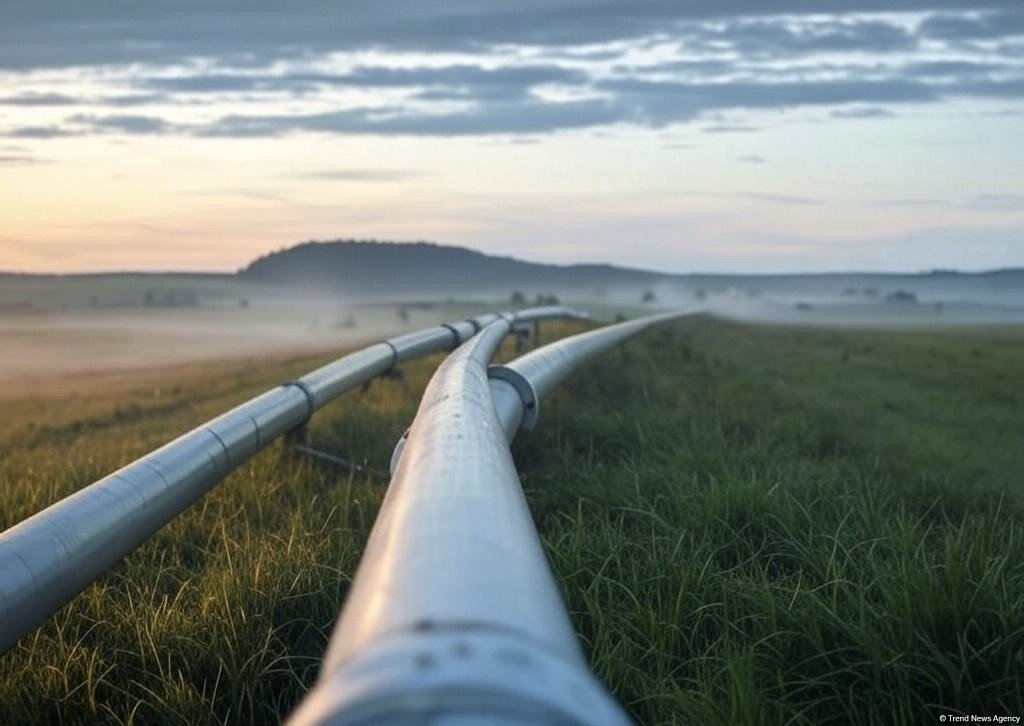
The mechanism is straightforward. Energy prices rose 4.9% year-on-year in March, providing virtually the entire upward impulse to headline inflation. Crude oil and natural gas markets have been in sustained disruption since hostilities in Iran intensified, tightening supply from a region that remains central to global energy flows despite years of diversification efforts. Europe, which has spent three years restructuring its energy supply chains since the Russian invasion of Ukraine, now faces a second successive geopolitical shock to its energy security within the same decade.
The timing is punishing. European governments had only recently begun to withdraw emergency energy support measures introduced during the 2022 crisis, and household energy bills had started to normalise. The Iran-driven surge threatens to reverse that progress, putting renewed pressure on consumer disposable income across the bloc.
The Core Picture Offers Partial Relief
Strip out energy and food, and the picture looks more manageable. Core inflation edged down 0.1 percentage points to 2.3% in March, suggesting that underlying domestic price pressures are not re-accelerating. More encouragingly, services inflation — the indicator the ECB watches most closely as a gauge of wage-driven price growth — fell from 3.4% to 3.2%. Services inflation has been the most stubborn element of the eurozone’s post-pandemic price surge, and its continued gradual descent is meaningful.
But the ECB cannot simply look through an energy shock of this magnitude. Even if core dynamics are softening, headline inflation at 2.5% complicates the rate-cutting path that markets had been pricing with growing confidence heading into spring. This matters enormously for the direction of ECB monetary policy and for the cost of credit across the eurozone.
A Dilemma Frankfurt Did Not Want
The ECB faces a genuinely difficult position. Growth across the bloc remains fragile, with Germany still struggling to generate momentum and southern European economies increasingly dependent on tourism and services for their resilience. Cutting rates into an energy-driven inflation overshoot risks credibility. Holding rates while growth stalls risks a political and economic backlash that several eurozone governments can ill afford.
This tension is inseparable from the broader structural pressures weighing on European monetary sovereignty. The eurozone was built on the assumption that the ECB could conduct monetary policy in a relatively stable external environment. Two major geopolitical shocks in three years have exposed how vulnerable that assumption is when energy dependence and global conflict intersect.
The March inflation data also lands against a deteriorating backdrop for European export competitiveness. Higher energy costs are not just a consumer problem — they feed directly into industrial production costs, squeezing manufacturers already contending with a structurally weaker dollar and softening global demand.
For investors watching global bond market dynamics, the March print is a reminder that the last mile of inflation control remains the hardest — and that when geopolitics intervenes, central bank timetables become considerably less reliable.
The Iran war has many fronts. Europe just discovered it is fighting on one of them.
The post The Iran War Is Now Costing European Families at the Pump and in Their Homes appeared first on European Business & Finance Magazine.