














The Iran War Is Handing Germany’s AfD Its Most Powerful Argument Yet — Turn Back to Russia
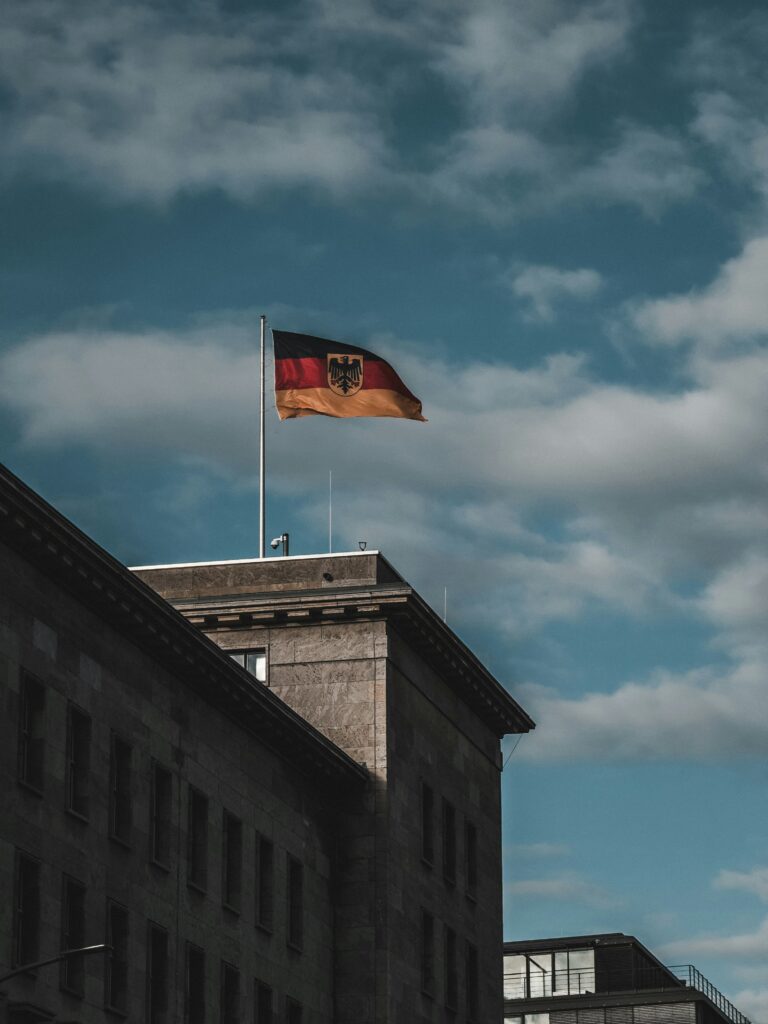
Quick Answer: Germany’s Alternative for Germany party scored 18.8% in the Baden-Württemberg state elections on 8 March 2026 — nearly doubling its previous result — partly by exploiting surging energy prices to revive its call for Berlin to restore cheap Russian gas imports. With German petrol prices up more than 15% since the Iran war began and the state’s automotive industry under severe pressure, the AfD’s energy argument found a ready audience in one of Germany’s most industrialised regions.
What Happened in Baden-Württemberg
The state election on 8 March was the first major political test of the Iran war’s domestic impact in Germany. The AfD secured 18.8% of the vote — up 9.1 percentage points from its previous result — making it the third-largest party in the Landtag and its best-ever performance in a western German state. OSW Centre for Eastern Studies The Greens narrowly held on as the largest party with 30.2%, with the CDU a close second at 29.7%. But the story of the night was the AfD’s advance into territory it had previously never penetrated at this scale.
Baden-Württemberg is not a natural AfD stronghold. It is home to Porsche, Mercedes-Benz and one of Germany’s most sophisticated industrial supply chains. It is wealthy, educated and has historically been resistant to far-right populism. Industry accounts for 38.1% of gross value added in the state — far exceeding the national average of 28.5% — meaning any tremor in the automotive sector causes a seismic shift in voter sentiment. SpecialEurasia The Iran war delivered exactly that tremor, arriving just days before polling day and pushing energy costs to the centre of a campaign that had previously been dominated by migration and the green transition.
The Russian Energy Argument Returns
The AfD’s programme for the election was explicit. It included redirecting €400 million from climate measures to an energy rebate, building nuclear power plants and sourcing Russian gas Wikipedia — alongside a broader agenda of rolling back the energy transition and protecting the internal combustion engine. The argument was not new. The AfD has consistently called for the lifting of all sanctions on Russia, including energy sanctions, and for reopening the Nord Stream 2 pipeline. What is new is the receptiveness of voters in western Germany to that argument.
For years, the Russian energy case was largely confined to eastern Germany, where memories of closer Soviet-era ties and higher energy dependency made it more resonant. The Iran war has changed that calculation. The AfD framed the green transition as “de-industrialisation by design,” and its demand to “return to cheap energy” resonated in factory towns where high electricity prices have hit high-precision manufacturers hard. SpecialEurasia Skilled workers and master craftsmen — not just the unemployed — shifted toward the AfD in significant numbers, pointing to a middle-class erosion that establishment parties have not yet found an answer to.
The Broader Political Risk
Germany faces what analysts are calling a “super election year” in 2026, with five state elections running from March through September. The September votes in eastern states — Saxony-Anhalt and Mecklenburg-Vorpommern — represent far more fertile AfD territory, where the party currently leads polls by double-digit margins. A party that can score nearly 19% in affluent Baden-Württemberg while simultaneously preparing to contest eastern states where it polls at 30% or higher represents a structural shift in German politics, not a protest spike.
For Chancellor Friedrich Merz and his CDU-SPD coalition, the dilemma is acute. As Europe’s own AI investment race and industrial strategy accelerates, Germany’s competitiveness depends on affordable energy — and the Iran war has made that problem dramatically worse. Merz has ruled out coalition with the AfD and has confirmed Germany’s commitment to its 2030 climate targets. But as stagflation fears surge across Europe, the gap between government policy and voter pain is widening.
The uncomfortable truth is that the AfD does not need to win power to shape policy. If mainstream parties begin softening their positions on energy costs, nuclear power or even the pace of the green transition to stem voter defection — a pattern visible in CDU messaging already — the AfD will have achieved its goals without ever entering government. As the Iran war reshapes Europe’s energy security calculus, the political consequences for Germany’s governing coalition may prove as significant as the economic ones.
The post The Iran War Is Handing Germany’s AfD Its Most Powerful Argument Yet — Turn Back to Russia appeared first on European Business & Finance Magazine.