
























The Global Oil Market Looks Calm — But a Much Bigger Shock May Be Building Beneath the Surface
Quick Answer: Oil prices have pulled back from their March peaks and volatility has eased — but the Strait of Hormuz remains effectively closed, up to 8 million barrels per day of Gulf production is still curtailed, and the infrastructure damage across the region will take years to repair. The market is not recovering. It is pausing. The biggest risk is not what markets are reacting to now — but what they are choosing to ignore.
The Business Case
The global oil market appears, on the surface, to have stabilised. Prices have stopped surging, volatility has eased, and investors are beginning to price in a return to normal conditions. Brent crude has pulled back from its near-$120 peak to trade around $92-$104 per barrel depending on the session. The relief is palpable in European markets that have been battered by energy costs since late February.
But beneath that calm, something far more significant is building. Supply routes remain exposed, geopolitical tensions continue to simmer, and the infrastructure underpinning global energy flows is being quietly repriced in real time. The result is a market that looks stable — but may, in reality, be far more fragile than it appears. By the EBM Editorial Team.
Why the Oil Market Appears Stable
The surface-level case for stability is not without merit. IEA member countries agreed in March to release 400 million barrels from emergency reserves to address disruptions stemming from the conflict — one of the largest coordinated reserve releases in history. OPEC+ agreed to begin increasing production in April 2026 by a total of 206,000 barrels per day. Non-OPEC producers — particularly in the United States, Brazil and Guyana — have been ramping output to compensate for Gulf losses. Global observed oil stocks were at their highest level since February 2021 heading into the crisis, providing a buffer.
These are real factors. They have real effects on prices. And the market has responded accordingly, treating the pullback from $120 as confirmation that the worst of the global oil market volatility is behind it.
That confidence may be premature.
The Hidden Fragility in Global Supply Routes
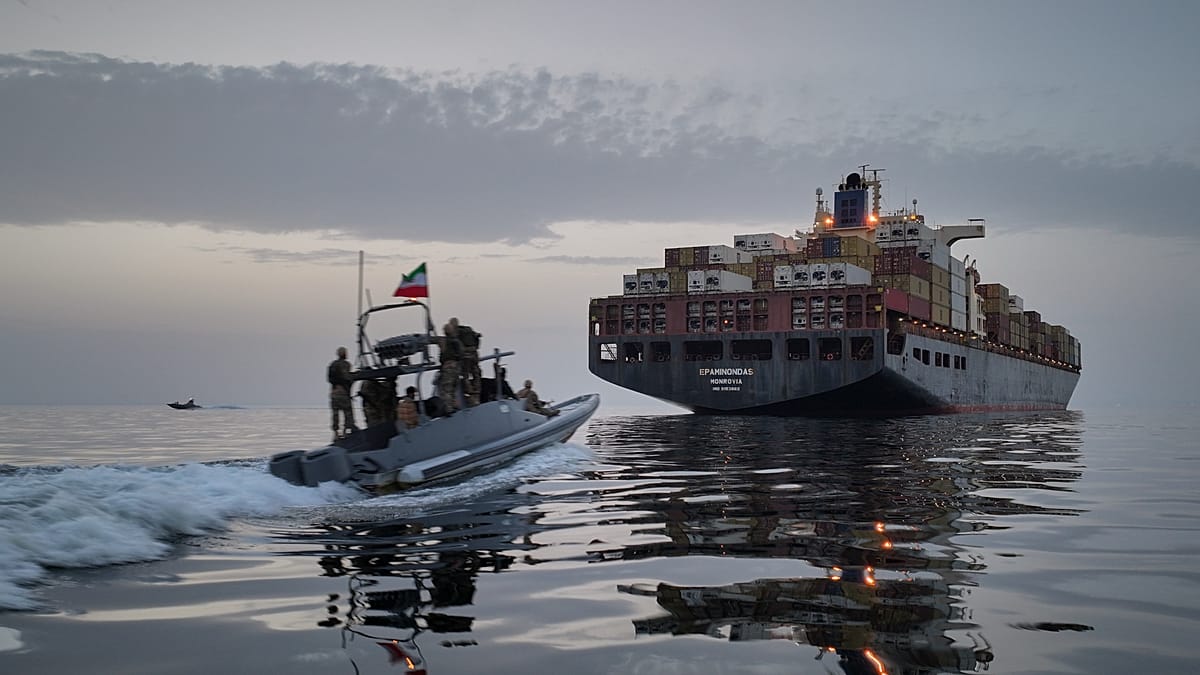
The Strait of Hormuz has not reopened. That single fact deserves to sit at the centre of every analysis of the current oil market — and it largely does not. According to the IEA’s March 2026 Oil Market Report, the crisis has led to a near halt in tanker movements through the strait, with nearly 20 million barrels per day of crude and product exports currently disrupted and limited alternative options to bypass the world’s most critical oil transit chokepoint.
The Federal Reserve Bank of Dallas has modelled the scenario with unusual precision. A closure of the Strait that removes close to 20% of global oil supplies from the market is expected to raise average WTI prices to $98 per barrel and lower global real GDP growth by an annualised 2.9 percentage points in the second quarter of 2026. That is not a tail risk. That is the current baseline.
How geopolitical tensions are reshaping energy markets in 2026 goes well beyond the immediate oil price impact. The IEA estimates that crude production is currently being curtailed by at least 8 million barrels per day, with a further 2 million barrels per day of condensates and NGLs shut in. Major supply reductions are concentrated in Iraq, Qatar, Kuwait, the UAE and Saudi Arabia — the backbone of global supply. With domestic storage tanks filling up and few ships able or willing to load cargoes at port, producers have had no alternative but to shut in production. When the Strait reopens — if and when it reopens — that production cannot be turned back on overnight.
Why Infrastructure Is Becoming the Real Story
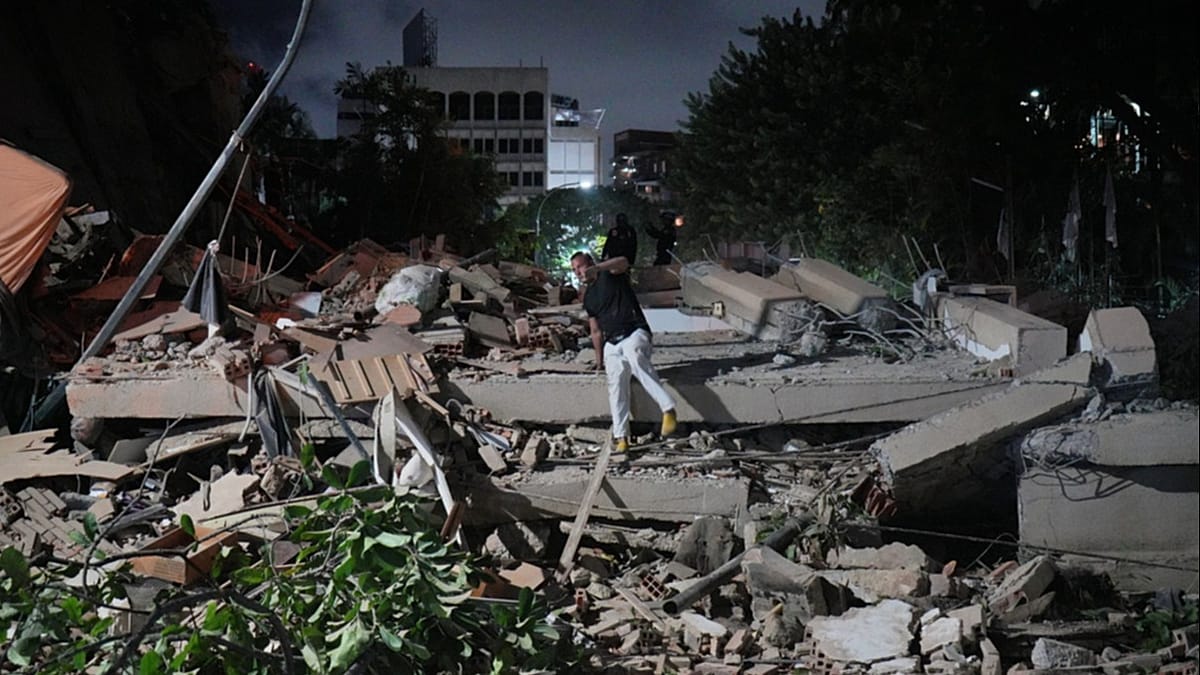
The damage to physical infrastructure across the Gulf region is the element of this crisis that markets are most dramatically underpricing. Saudi Aramco halted all LPG exports from the Juaymah terminal in late February after structural damage caused the collapse of a trestle carrying propane and butane pipelines — affecting around 180,000 barrels per day of LPG exports. Iran launched the first drone attacks targeting the Shaybah oil field deep inside Saudi territory. Ras Tanura refinery has faced repeated strikes.
The forgotten Saudi pipeline that became the most critical energy artery on the planet — the East-West pipeline running from the Eastern Province to Yanbu on the Red Sea — has become the only meaningful bypass for Gulf oil exports. It has a maximum capacity of around 5 million barrels per day. The Gulf normally exports three to four times that volume. The arithmetic does not work.
Beyond oil, the World Economic Forum has identified nine critical non-oil commodities being disrupted by the Hormuz crisis — methanol, aluminium, sulphur, graphite, polymers, LPG, naphtha, fertilisers and green hydrogen precursors. The IEA notes that Gulf states exported more than 4 million barrels per day equivalent of oil products and petrochemical feedstocks in 2025 — roughly a quarter of the total global petrochemicals market. The polymer and fertiliser disruptions alone will take months to work through supply chains, with consequences for food production and manufacturing that extend well beyond the energy sector.
What Markets May Be Underpricing
The current market consensus appears to be pricing in a relatively swift resolution — a ceasefire, a reopening of the Strait, and a gradual return to pre-war production levels. That is a reasonable base case. It is not the only case. And the asymmetry of risk is striking.
If the conflict resolves quickly and cleanly, oil prices normalise and the economic damage is contained. If the conflict drags on — or escalates further — the consequences compound in ways that are not currently reflected in asset prices. The Dallas Fed’s modelling suggests that even a single additional quarter of Strait closure would lower global GDP growth by an annualised 2.9 percentage points. Two quarters would be a global recession trigger. The probability of either scenario is not zero. Markets are pricing as though it is.
The infrastructure repair timeline adds another layer. Even under an optimistic scenario in which the Strait reopens by mid-2026, the physical damage to refineries, pipelines, storage facilities and loading terminals across the Gulf means that full production restoration is a 2027 or 2028 story at the earliest. The oil market is not returning to February 2026 conditions. It is navigating to a new equilibrium — one that nobody has fully mapped yet.
What Happens If the Shock Actually Hits
The parallels with previous oil shocks are instructive but imperfect. The 1973 Yom Kippur War disruption lasted approximately three quarters and produced stagflation across the Western world. The current disruption is already larger in absolute volume terms — the IEA has described the Hormuz shipping crisis as the largest supply disruption in the history of the global oil market. The duration remains unknown.
What is clear is that the financial system’s exposure to this risk is not limited to energy stocks and fuel prices. Europe’s $24 trillion payments shift — the move away from dollar-denominated financial infrastructure — is being accelerated by exactly the kind of geopolitical shock now unfolding. Central banks that have been quietly repositioning away from US Treasuries are watching a conflict that validates every concern they had about the fragility of dollar-dependent global systems. The oil market shock is not happening in isolation. It is one thread in a much larger unravelling.
The market looks calm. But the biggest risk is not what it is reacting to now. It is what it is choosing to ignore.
The post The Global Oil Market Looks Calm — But a Much Bigger Shock May Be Building Beneath the Surface appeared first on European Business & Finance Magazine.