


























The Five Wealthiest People in the World: The Business Empires Behind the Billions
An analysis of the unprecedented fortunes driving global innovation, from artificial intelligence to space exploration
The concentration of wealth at the pinnacle of global finance has reached historic proportions. As of January 2026, the world’s five richest individuals command a combined fortune exceeding $1.9 trillion, representing an unprecedented consolidation of capital in the hands of a small technological elite. These billionaires are not merely passive inheritors of wealth but active architects of industries reshaping civilisation itself.
What distinguishes this generation of ultra-wealthy from previous eras is the source of their fortunes. Where once oil barons and industrial magnates dominated wealth rankings, today’s richest built their empires on digital platforms, artificial intelligence, and space technology. Their companies—Tesla, Amazon, Alphabet, Oracle, and Meta—are not simply businesses but fundamental infrastructure of modern life, controlling everything from how we communicate to how we shop, search for information, and increasingly, how we think.
This report examines the five wealthiest individuals on the planet, the business empires that underpin their fortunes, and the implications of such concentrated economic power.
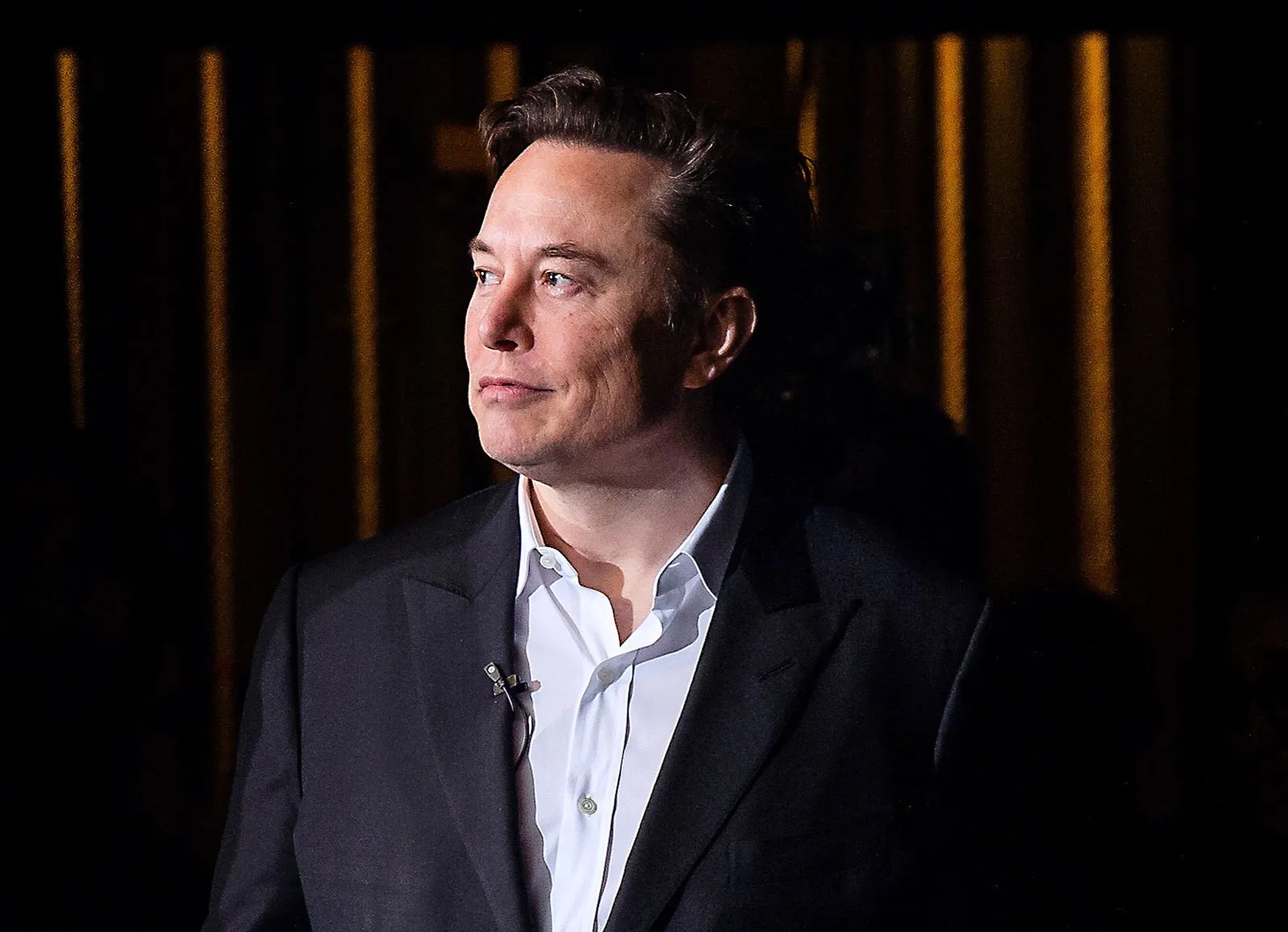
Elon Musk: The World’s Richest Person
Net Worth: $619–$716 billion
 Elon Musk stands alone at the summit of global wealth, having become the first person in history to surpass $600 billion in net worth. Born in Pretoria, South Africa, in 1971, Musk’s journey to unparalleled wealth began with the sale of his first company, Zip2, in 1999 for $307 million. He subsequently co-founded PayPal, which sold to eBay for $1.5 billion in 2002, providing the capital base for his more ambitious ventures.
How Tesla Made Elon Musk a Centibillionaire
Though not Tesla’s founder, Musk joined the electric vehicle manufacturer in 2004 as its largest investor and became CEO in 2008. Under his leadership, Tesla has transformed from a niche electric car maker into the world’s most valuable automotive company, with a market capitalisation hovering around $1.5 trillion. The company produced over 1.3 million vehicles in the first nine months of 2024, fundamentally disrupting the century-old automotive industry and forcing traditional manufacturers to pivot toward electrification.
Musk owns approximately 12% of Tesla, a stake worth over $150 billion. In November 2025, shareholders approved a staggering $1 trillion compensation package—one of the largest in corporate history—contingent on Musk meeting ambitious targets including expanding Tesla’s market capitalisation to $8.5 trillion and advancing its robotics and autonomous driving divisions.
SpaceX Valuation: Why Musk’s Space Company Is Worth $800 Billion
Perhaps Musk’s most audacious venture is SpaceX, founded in 2002 with the stated goal of enabling human colonisation of Mars. The company has revolutionised space economics through its development of reusable rockets, slashing launch costs by an order of magnitude. SpaceX’s Starship project aims to create a fully reusable super-heavy lift vehicle capable of interplanetary travel.
As of 2025, SpaceX’s valuation has soared to $800 billion, making it one of the world’s most valuable private companies. The firm’s Starlink satellite constellation—comprising over 7,000 operational satellites—provides broadband internet to more than five million subscribers across nearly 100 countries. Starlink now accounts for approximately 65% of all operational Earth satellites, an unprecedented concentration of orbital infrastructure under single corporate control.
xAI and Grok: Musk’s $200 Billion Bet on Artificial Intelligence
Founded in 2023, xAI represents Musk’s entry into the artificial intelligence arms race. The company has raised over $12 billion in funding and achieved a valuation exceeding $200 billion after being folded into X (formerly Twitter) in an all-stock transaction. xAI’s flagship product, Grok, competes directly with OpenAI’s ChatGPT and Anthropic’s Claude.
However, xAI’s financial sustainability remains uncertain. The company is reportedly burning through approximately $13 billion annually—more than $1 billion per month—as it races to build advanced AI models and the computational infrastructure to support them. Beyond these core holdings, Musk owns The Boring Company (urban tunnelling), Neuralink (brain-computer interfaces valued at $5 billion), and X Corp (social media). His wealth grew by $165 billion in 2025 alone.
Larry Page: The Google Co-Founder Who Became the Second Richest Person
Net Worth: $262–$267 billion
 Larry Page, co-founder of Google alongside Sergey Brin, has emerged as the world’s second-richest person for the first time in 2025. Despite his colossal wealth, Page maintains an extraordinarily low public profile, having made no public speeches since a 2014 TED talk and regularly declining to appear at Congressional hearings on technology regulation.
How Alphabet’s 65% Stock Rise Made Larry Page $50 Billion Richer
Page and Brin founded Google in 1998 whilst PhD students at Stanford University, revolutionising internet search through their PageRank algorithm. The company’s parent, Alphabet Inc., now commands a market capitalisation exceeding $2 trillion and controls over 92% of global search traffic. Page’s wealth surged by over $50 billion in 2025 as Alphabet’s stock rose nearly 65%, making it the best-performing of the so-called “Magnificent Seven” technology stocks.
Larry Page’s Moonshot Investments: From Flying Cars to Renewable Energy
What distinguishes Page’s approach is his focus on “moonshot” investments in futuristic technology. Through his holding company, he has funded ventures including Kitty Hawk (flying taxis) and various renewable energy projects. Alphabet’s business empire extends far beyond search. Google Cloud generates over $100 billion annually in revenue, competing with Amazon Web Services for dominance in enterprise computing. YouTube, acquired for $1.65 billion in 2006, has become the world’s second-largest search engine and a cultural phenomenon.
Jeff Bezos: How Amazon Built a $268 Billion Fortune
Net Worth: $256–$268 billion
Jeff Bezos, founder of Amazon, transformed online retail from a curiosity into the dominant commercial platform of the 21st century. After stepping down as CEO in 2021, Bezos remains Amazon’s largest individual shareholder with approximately 8% of the company, a stake worth over $150 billion based on Amazon’s $2.6 trillion market capitalisation.
Amazon Web Services: The $100 Billion Cloud Business That Changed Everything
Founded in 1994 as an online bookshop operating from Bezos’s garage, Amazon has metastasised into a corporate leviathan spanning e-commerce, cloud computing, streaming entertainment, artificial intelligence, and logistics. The company’s Amazon Web Services (AWS) division generates over $100 billion annually and operates as the world’s most profitable cloud platform, effectively subsidising Amazon’s often thin-margin retail operations.
Blue Origin vs SpaceX: Jeff Bezos’s Space Ambitions
Beyond Amazon, Bezos has invested heavily in Blue Origin, his space exploration company founded in 2000. Though far less successful than Musk’s SpaceX, Blue Origin focuses on reusable rockets and space tourism, having successfully launched several crewed suborbital flights. Bezos also owns The Washington Post, purchased for $250 million in 2013. Bezos became the first centibillionaire in 2018 and topped global wealth rankings for four consecutive years before being overtaken by Musk.
Sergey Brin: The Other Google Billionaire Worth $246 Billion
Net Worth: $246 billion
Sergey Brin, Larry Page’s co-founder at Google, holds nearly identical wealth owing to their symmetrical shareholdings in Alphabet. Born in Moscow in 1973, Brin emigrated to the United States as a child, eventually earning his PhD from Stanford where he met Page.
Sergey Brin’s Role in Google’s Gemini AI Development
Like Page, Brin has largely withdrawn from Alphabet’s operational management, though he remains a board member and controlling shareholder. His recent focus has centred on artificial intelligence, where he played a key role in developing Alphabet’s Gemini AI model. Brin has also provided financial backing for LTA Research, an ambitious project developing high-tech airships for cargo transport and disaster relief. Brin’s fortune, like Page’s, surged by over $50 billion in 2025 as Alphabet’s shares climbed 65%.
Larry Ellison: Oracle’s 81-Year-Old Billionaire
Net Worth: $238–$251 billion
 At 81 years old, Larry Ellison stands as the elder statesman of the technology billionaire class. Co-founder of Oracle Corporation in 1977, Ellison built his fortune on enterprise database software, creating one of the first major technology companies to achieve global dominance without consumer-facing products.
Oracle’s AI Pivot: How Cloud Computing Made Ellison $89 Billion Richer
Oracle generated $57.4 billion in revenue in fiscal year 2025, with cloud services accounting for $44 billion. The company’s recent pivot toward artificial intelligence infrastructure has revitalised investor interest. Following quarterly results that exceeded expectations, Oracle’s share price surged, briefly propelling Ellison past Elon Musk as the world’s richest person in September 2025—a position he held for mere hours before market corrections reversed the rankings.
Larry Ellison’s Empire: From Hawaiian Islands to Hollywood Studios
Ellison owns approximately 40% of Oracle, alongside substantial real estate holdings including 98% of the Hawaiian island of Lanai, purchased for $300 million. More recently, he secured nearly 50% of Paramount Skydance following the $28 billion merger in 2025, giving him significant influence in Hollywood alongside his technology empire. Ellison’s close friendship with Elon Musk—he invested in Tesla and served on its board—has positioned him at the nexus of multiple technological revolutions.
The Wealth Concentration Question: What $1.9 Trillion in Five Hands Means
These five individuals—Musk, Page, Bezos, Brin, and Ellison—collectively control wealth exceeding $1.9 trillion. To contextualise this figure: their combined fortunes surpass the gross domestic product of all but eight nations. The top ten billionaires globally gained $578 billion in 2025 alone, more than the entire market capitalisation of Netflix or AT&T.
This concentration raises profound questions about economic structure and democratic governance. Critics argue that such vast wealth translates into disproportionate political influence, with billionaires effectively able to shape policy, fund media organisations, and even—as Musk demonstrated—operate as de facto government officials. Oxfam has noted that whilst the top 1% gained $2.2 trillion in 2025, this sum could theoretically lift 3.8 billion people out of poverty.
Defenders counter that these fortunes represent paper wealth tied to shareholdings in productive companies creating millions of jobs and advancing technology. They argue that wealth creation is not zero-sum, and that innovations from Tesla, Amazon, Google, and Oracle have generated enormous consumer surplus and economic growth.
What remains indisputable is the unprecedented nature of this wealth concentration. Never in human history have so few individuals controlled such vast resources, nor wielded such influence over the technological infrastructure undergirding modern civilisation. Whether this represents a temporary aberration or a permanent feature of 21st-century capitalism remains the defining economic question of our era.
Further Reading and Resources
• Bloomberg Billionaires Index – Real-time tracking of global wealth rankings
• Forbes World’s Billionaires List – Annual comprehensive analysis of ultra-high-net-worth individuals
• Tesla Investor Relations – Official Tesla financial reports and shareholder information
• Amazon Investor Relations – Amazon quarterly earnings and SEC filings
• Alphabet Investor Relations – Google parent company financial data
• Oracle Investor Relations – Oracle earnings reports and cloud computing metrics
• Oxfam Inequality Reports – Analysis of wealth concentration and global poverty
• SEC EDGAR Database – Public disclosures of executive compensation and shareholdings
• SpaceX Updates – Latest on Starship, Starlink, and space exploration milestones
• Hurun Global Rich List – Alternative wealth tracking with focus on Asian billionaires
Related Articles
• How Elon Musk Built His $600 Billion Fortune – Deep dive into Tesla, SpaceX, and xAI valuations
• The AI Billionaire Boom: Why Tech Fortunes Surged 65% in 2025 – Analysis of artificial intelligence’s impact on wealth
• Amazon vs Google: The $200 Billion Cloud Computing Battle – AWS and Google Cloud competitive analysis
• SpaceX’s $800 Billion Valuation: What It Means for Space Industry – Commercial space exploration economics
• Oracle’s Comeback: How Larry Ellison Bet on AI and Won – Enterprise software’s pivot to cloud infrastructure
• The Wealth Gap: What $1.9 Trillion in Five Hands Means for Society – Economic and political implications of billionaire wealth
• Comparing Billionaire Giving: Gates, Buffett, Bezos, and Musk – Philanthropy and wealth distribution strategies
• Tech Monopolies in 2026: Should Governments Break Up Big Tech? – Regulatory challenges facing technology giants
The post The Five Wealthiest People in the World: The Business Empires Behind the Billions appeared first on European Business & Finance Magazine.