
























The Ceasefire That Changed Nothing: Why North Sea Oil Is at Record Highs and Europe Is Still Paying the Price
Quick Answer North Sea Brent crude has surged to record highs after a Washington-Tehran ceasefire agreement failed to restore normal shipping through the Strait of Hormuz. Iran’s continued military presence in the strait is disrupting roughly 20% of global oil flows, pushing European energy markets into crisis territory and driving up costs for businesses and consumers across the continent.
EBM Exclusive Take For European businesses, this is no longer a geopolitical story — it is a balance sheet crisis in real time. The ceasefire was supposed to be the release valve. Instead, it has exposed something more troubling: that Iran’s leverage over Hormuz is structural, not tactical, and no diplomatic handshake in Washington changes the physics of a strait that remains militarised, mined in sections, and patrolled by IRGC naval assets. European CFOs who hedged against a short-term spike are now staring at a sustained pricing environment that renders those hedges inadequate. The repricing of North Sea crude is not a blip — it is a signal that energy markets have fundamentally re-rated geopolitical risk in the Gulf.
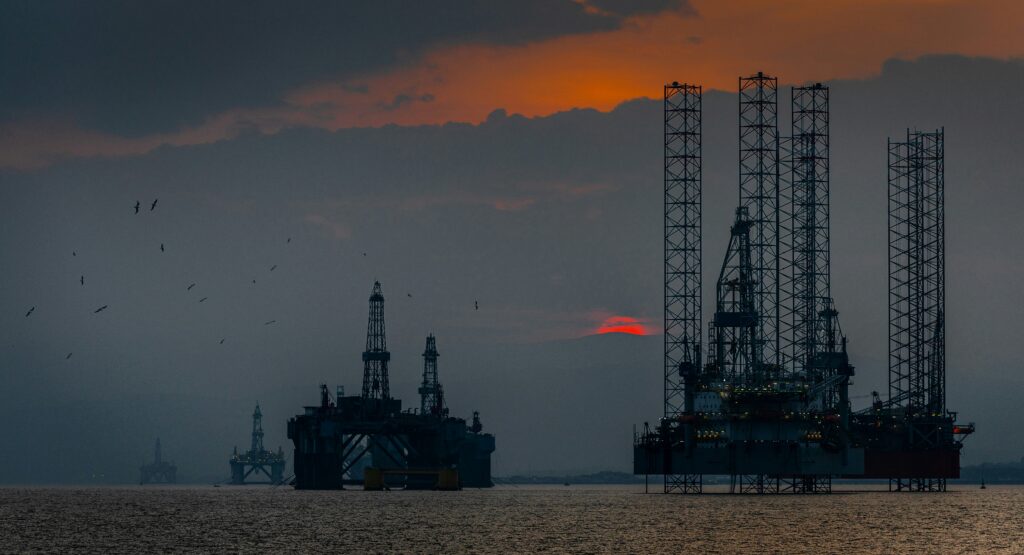
North Sea Brent crude climbed to its highest recorded price this week as energy markets absorbed the reality that a landmark ceasefire agreement between Washington and Tehran had done little to restore the free movement of tanker traffic through the Strait of Hormuz — the narrow chokepoint through which approximately one-fifth of the world’s oil supply passes daily.
The agreement, brokered under intense diplomatic pressure and announced with considerable fanfare by both administrations, was widely expected to trigger an immediate de-escalation in the Gulf. Instead, as EBM has tracked throughout Iran’s escalating campaign of Hormuz disruptions, Iranian naval forces have maintained a visible and provocative presence across key transit corridors, with several commercial vessels continuing to face inspection demands, rerouting pressure, and in at least two reported cases, temporary detainment.
The result has been a cascade of upward pricing pressure that has landed most acutely on North Sea Brent — the benchmark crude underpinning European energy markets. Analysts at major trading desks had modelled ceasefire scenarios assuming a 15 to 20 percent correction in oil prices within the first two weeks of any deal. That correction has not materialised, and Brent’s trajectory through the current Iran crisis has defied almost every consensus forecast produced since the conflict escalated.
For European industry, the consequences are compounding. Energy-intensive manufacturers across Germany, France, and the Benelux region — already navigating post-pandemic cost pressures and the residual disruption of Russian gas supply reductions that reshaped the continent’s energy map — are facing input costs that several trade bodies have described as existential without emergency government intervention. According to OilPrice.com, the current Brent level represents the most sustained above-threshold pricing event since the 2008 spike, with no clear demand-side correction mechanism visible in the near term.
The European Central Bank, which had been cautiously signalling a continued easing cycle, now faces a renewed inflationary headwind that directly complicates its rate trajectory. ECB policymakers had already flagged energy price volatility as the primary upside risk to their inflation projections — that risk has now crystallised into something considerably harder to model around.
The geopolitical dimension adds further weight to an already fragile picture. Iran’s position appears to be that the ceasefire addresses the immediate military confrontation but does not constitute broader normalisation — meaning Tehran retains what it considers a legitimate right to assert dominance over Hormuz as a matter of sovereign strategic interest. Washington has pushed back, but with limited coercive options that do not risk reigniting the conflict the ceasefire was designed to end. Bloomberg has reported that back-channel negotiations remain active, though no timeline for a substantive resolution has been established.
For European governments, the calculation is stark. Energy security diversification programmes accelerated after 2022 have not matured quickly enough to provide meaningful insulation from a Gulf disruption of this scale and duration. The market is pricing in a prolonged crisis. North Sea producers, briefly, are the only winners.
Related Analysis
The post The Ceasefire That Changed Nothing: Why North Sea Oil Is at Record Highs and Europe Is Still Paying the Price appeared first on European Business & Finance Magazine.