

























The Business of War: Who Is Profiting From the Iran Conflict

The War in Iran Has a Balance Sheet — and These Are the Winners
Wars destroy wealth. They also create it — and rarely as visibly as in the weeks since US and Israeli forces launched strikes on Iran on 28 February. While the humanitarian and macroeconomic costs have dominated headlines, a parallel story has been unfolding in boardrooms and trading floors: the systematic transfer of wealth toward a set of industries that benefit, structurally and immediately, from precisely the conditions this conflict has produced.
The starting point is oil. Modelling by investment bank Jefferies estimates American producers will generate an extra $5 billion in cash flow in March alone, following a roughly 47 per cent rise in crude prices since the conflict began. Energy stocks are reflecting those price jumps, with firms like Venture Global and Cheniere Energy seeing notable gains, while an analysis by the EnergyFlux newsletter found exporters and traders of American liquefied natural gas are set to earn nearly $1 billion more per week based on higher prices. Grist If US oil prices remain elevated and average $100 a barrel for the year, energy research company Rystad projects the industry will receive a $63.4 billion boost from production alone.
President Trump has been characteristically direct about the arithmetic. “The United States is the largest Oil Producer in the World, by far,” he posted on social media as Brent crude surged past $100 a barrel, “so when oil prices go up, we make a lot of money.” West Texas Intermediate settled at $98.71 a barrel on Friday.
Shale vs. the Majors
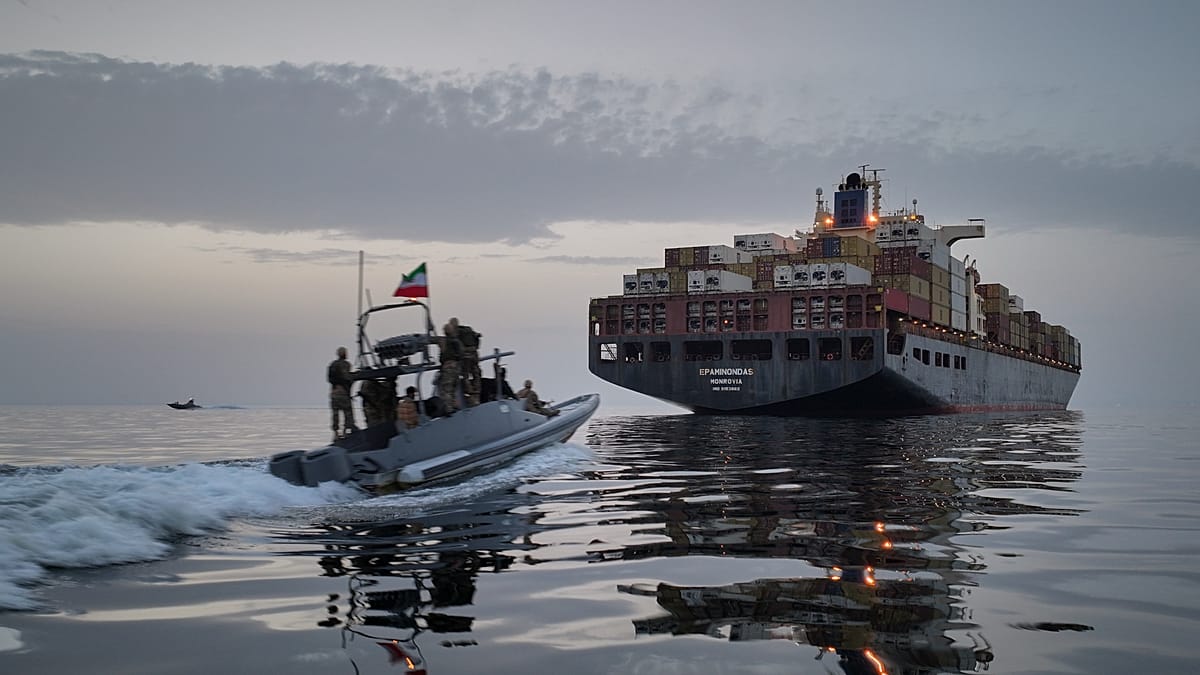
The windfall is not evenly distributed within the energy sector. The primary beneficiaries are US shale producers — companies with limited exposure to the Middle East and no assets near the Strait of Hormuz. Higher prices flow almost directly to their bottom lines. The picture is considerably more complicated for the international oil majors. ExxonMobil and Chevron, alongside European rivals BP, Shell and TotalEnergies, have widespread assets in the Gulf region and are materially affected by the closure of the Strait, through which approximately 20 per cent of the world’s daily oil supply normally passes. For those companies, elevated prices are being partially offset by operational disruption, insurance costs and asset exposure in an active war zone.
Russia is also a major beneficiary, because its crude is a legitimate substitute for Middle Eastern oil. Previously forced to sell at a discount due to Western sanctions, Moscow is now selling to India at elevated rates following a sanctions waiver — a geopolitical irony that sits uncomfortably alongside the stated objectives of the Western alliance. The Washington Institute EBM’s analysis of the oil shock and its market implications examined how energy price spikes are feeding through to inflation and central bank policy across Europe and beyond.
The Defence Dividend
If oil is the most obvious beneficiary sector, defence is the most dramatic. On Wall Street, defence firms including Lockheed Martin, Northrop Grumman and RTX rose between 4 and 6 per cent on the first day of the strikes. The three firms’ combined shareholder gain on that one day was between $25 billion and $30 billion. London-based BAE Systems surged around 6 per cent on the first day of the conflict. The Conversation
The biggest US defence companies have agreed to quadruple production of advanced weaponry following a meeting at the White House attended by the chief executives of RTX, Lockheed Martin, Boeing, Northrop Grumman, BAE Systems, L3Harris and Honeywell Aerospace — all of which are sitting on billions of dollars of order backlogs. Al Jazeera In Israel, Elbit Systems briefly became the country’s most valuable listed company, with its shares up 45 per cent since January. EBM has tracked the structural case for defence stocks as the defining investment trade of 2026, a thesis the conflict has now accelerated significantly.
The top five defence stocks positioned for growth — Lockheed Martin, RTX, Northrop Grumman, Boeing and L3Harris — all carry order backlogs that dwarf the GDP of several nations. Analysts note that defence budgets, already earmarked for growth in 2026, now face even fewer political hurdles in Washington and European capitals. Trump aims to increase US military spending to $1.5 trillion by 2027.
Insurance: Complexity at a Premium
One of the less visible winners is the war-risk insurance market. War-risk premiums for ships transiting Hormuz have, in some cases, increased twelvefold, with some policies cancelled or capacity withdrawn amid heightened attack risk. Pillsbury Winthrop Shaw Pittman The disruption has created an extraordinary pricing environment for underwriters willing to provide cover. Insurance giant Chubb has been named lead underwriter for a US government-led programme to provide insurance to ships making the risky transit through the Strait of Hormuz, working with the US International Development Finance Corporation as part of a $20 billion plan to restore commercial traffic. CNBC For Chubb and other specialist marine underwriters, the government backstop reduces tail risk while war-risk premiums remain at historic highs — an unusually favourable commercial position.
The Rerouting Economy
Beyond the headline sectors, a broader set of industries is benefiting from the enforced restructuring of global supply chains. Reroutes around the Cape of Good Hope add roughly 10 to 14 days and approximately $1 million in fuel per ship, alongside growing conflict-related surcharges. Pillsbury Winthrop Shaw Pittman That cost falls on importers and ultimately consumers — but the incremental revenue flows to tanker operators, fuel suppliers, and port operators along the alternative routes. Oman’s deep-water ports at Duqm, Salalah and Sohar are handling significantly increased volumes as shipping avoids the Strait, though drone strikes have complicated even those alternatives.
LNG exporters outside the Gulf region are another structural beneficiary. European LNG prices have nearly doubled because US exports may get redirected to Asia rather than their usual European destinations The Washington Institute — creating a pricing environment that benefits American LNG exporters regardless of which direction their cargoes ultimately travel.
As EBM has reported in its coverage of how the Iran war is driving oil toward its biggest weekly gain in four years and the week that shook global markets, the economic consequences of the conflict are now running well beyond the region. The uncomfortable truth about modern warfare is not simply that it destroys — it is that the destruction is distributed unevenly, while the financial gains accrue to a predictable set of actors who were positioned long before the first missile was fired.
FAQs
Why are US shale producers benefiting more than international oil majors from the Iran war? US shale companies have minimal exposure to Middle Eastern assets and no operations near the Strait of Hormuz, so elevated crude prices flow directly to their cash flows. The international majors — ExxonMobil, Chevron, BP, Shell and TotalEnergies — have Gulf assets that are operationally disrupted by the conflict, partially offsetting the revenue benefit of higher prices.
Which defence companies have seen the biggest gains since the conflict began? Lockheed Martin, Northrop Grumman, RTX and BAE Systems were among the largest immediate beneficiaries by market capitalisation gain. In Israel, Elbit Systems has been one of the standout performers, with shares up approximately 45 per cent since January. The sector broadly has been repositioned by the conflict from a geopolitical hedge to a structural growth trade.
How is the war affecting war-risk insurance markets? War-risk premiums for Hormuz transits have risen as much as twelvefold since the conflict began, with some mutual insurers withdrawing cover entirely. The US government has stepped in with a $20 billion political risk insurance programme, with Chubb named as lead underwriter — creating an unusual combination of government-backed capacity and historically elevated commercial pricing that benefits specialist marine underwriters.
The post The Business of War: Who Is Profiting From the Iran Conflict appeared first on European Business & Finance Magazine.