





















The €2bn Hit: How the Iran War Just Crashed IAG’s 2026 Profit Outlook
EBM Newsdesk Analysis
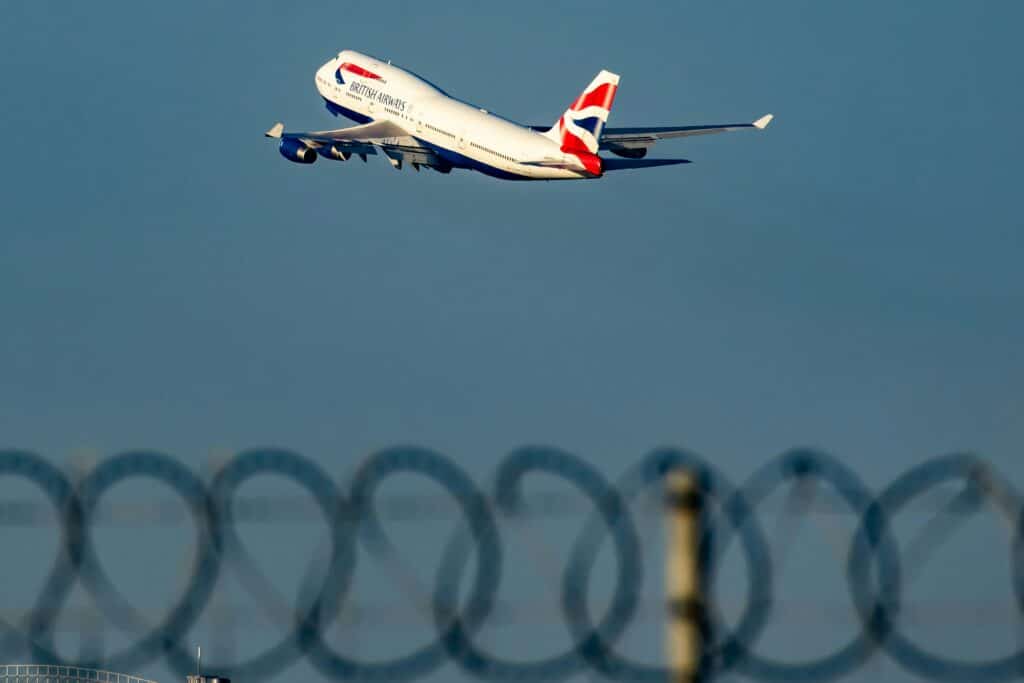
LONDON, May 8 — IAG, the parent group of British Airways, Iberia, Aer Lingus and Vueling, told the market on Friday that the Iran war will add €2 billion ($2.3 billion) to its 2026 fuel bill, taking total fuel spend to €9 billion for the year. Annual profit will now land below the level guided in February, when IAG reported a record €5 billion operating profit for 2025. Free cash flow for 2026 will be “significant” but materially below the previous €3 billion target. Capital spending falls from €3.6 billion to €3.5 billion. Capacity growth, previously guided at 3 per cent, will be lower. Q1 net profit jumped 71 per cent to €301 million on revenue up 1.9 per cent to €7.18 billion — but chief executive Luis Gallego warned that the Q1 figures pre-dated the worst of the conflict’s impact.
The crash is broader than IAG. Air France-KLM cut its 2026 outlook on Wednesday, warning fuel costs could rise by more than a third. Emirates Group announced a 3 per cent profit rise to $5.7 billion despite “severe disruption.” JetBlue, United and Alaska Air have all suspended full-year guidance. The pattern is now visible across global aviation: carriers exposed to Hormuz-sourced jet fuel are being hit hardest, and European airlines — which import a structurally larger share of refined product than Gulf or US peers — are absorbing the worst of it. IAG plans to recover roughly 60 per cent of the higher fuel cost through fare increases and operational savings. The remaining 40 per cent — call it €800 million — flows straight to the bottom line as a war-driven profit haircut.
What IAG Has Actually Said
The Friday statement was carefully written. IAG did not formally restore guidance — it withdrew that in February. What it did instead was guide the market down without quantifying the new floor. Three numbers anchor the picture.
The first is the fuel bill. The €2 billion increase represents a 28 per cent jump in IAG’s largest single cost line. Of the €9 billion total, IAG has hedged roughly 70 per cent at pre-war prices — which is why the damage is contained at €2 billion rather than the €3-4 billion figure rivals like Air France-KLM are absorbing on lower hedge ratios.
The second is the recovery rate. Sixty per cent recovery means IAG raises ticket prices and cuts operational costs hard enough to claw back €1.2 billion of the €2 billion increase. That figure is achievable for a group with IAG’s pricing power but it requires fare discipline across the entire network through Q3 and Q4 — peak summer leisure demand against record fuel costs is the test.
The third is capacity. IAG had guided 3 per cent capacity growth in 2026. That number is now lower, though the group declined to specify by how much. Capacity cuts are how airlines defend yields when costs rise — fewer seats, higher prices per seat, protected margins. The trade-off is market share to lower-cost rivals like Ryanair, easyJet, Wizz Air and the Gulf carriers, who are not facing the same hedging exposure.
Why European Airlines Are Getting Hit Harder
The structural reason European carriers are taking heavier damage than US, Gulf and Asian rivals is geographic exposure to Hormuz. European airlines source the bulk of their jet fuel from Gulf and Asian refining hubs, particularly Saudi Arabia, the UAE and Singapore — most of which depend on crude flowing through the strait that the Iranian blockade has now closed for nearly four weeks. US carriers source domestically. Gulf carriers source locally. European carriers source globally — and global means Hormuz.
The Air France-KLM warning earlier this week — fuel costs up by more than a third — is the precedent. Lufthansa Group is expected to follow next week. The structural cost difference between European and non-European airlines through 2026 is now in the order of €5-8 billion across the major listed carriers. Investors are pricing it accordingly.
The IAG share price fell 2.2 per cent on Friday morning, against the broader FTSE 100 down 0.5 per cent. JP Morgan called the result “resilient” and held its rating, citing the strong Q1 numbers and the recovery plan. But IAG’s stock has now lost roughly 15 per cent since the Iran war began on 28 February, against a FTSE 100 down 4 per cent over the same period.
What This Means for European Business
Three things matter for the next 60 days.The first is summer fares. IAG’s recovery plan depends on extracting €1.2 billion of higher prices from the summer flying season. Business travellers and leisure passengers will see ticket prices rise materially against last summer. Corporate travel budgets locked at 2025 prices are about to get squeezed. Treasurers should be revising assumptions now.
The second is the wider European aviation cycle. If IAG, Air France-KLM and Lufthansa all guide profit down within the same quarter, the post-pandemic European travel boom ends as a thesis. Airline-exposed lenders, lessors and supply-chain businesses — caterers, ground handlers, MRO specialists — face downstream pressure regardless of how well IAG itself rides through. The Q3 earnings cycle becomes the inflection point.
The third is the structural angle. Europe’s airline industry has spent twenty years building scale on the assumption of stable Middle Eastern fuel supply. The Hormuz blockade has revealed that assumption to be a single-point-of-failure risk. If the Axios framework deal between the US and Iran holds and Hormuz reopens, the damage caps at 2026. If it doesn’t, European aviation is structurally re-pricing to permanently higher fuel costs — and the IAG share price has further to fall.
The next test arrives later this month, when Lufthansa reports. If Lufthansa’s fuel bill exceeds €3 billion in additional costs, the European aviation sector enters genuine crisis territory.
Related Analysis
The post The €2bn Hit: How the Iran War Just Crashed IAG’s 2026 Profit Outlook appeared first on European Business Magazine.