


























Stellantis Just Wrote Off $26B — The EV Dream Is Officially Dead
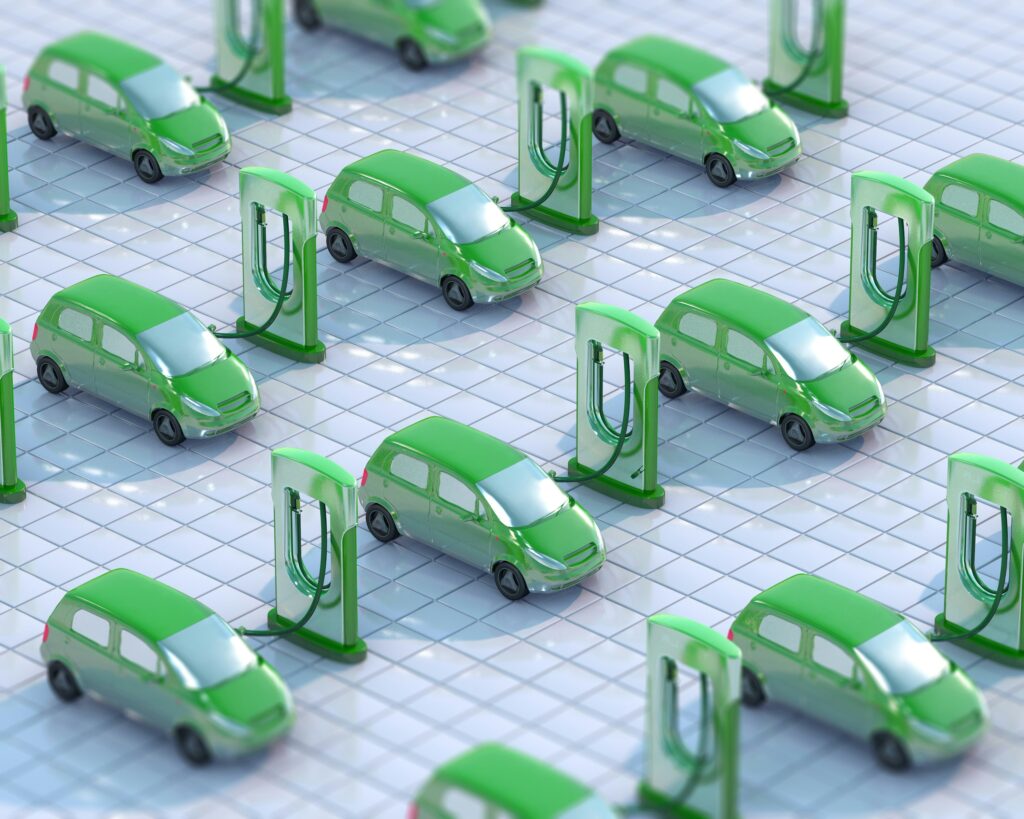
The Jeep and Chrysler owner just took the largest EV-related write-down in automotive history. Combined with Ford and GM, the industry has now torched $53 billion chasing an electric future that consumers never wanted.
Q: Why did Stellantis write off $26 billion?
A: Stellantis announced a €22.2 billion ($26 billion) charge to reverse its aggressive electric vehicle strategy after admitting it “overestimated the pace of the energy transition.” The write-down covers cancelled EV programmes, broken supplier contracts and the cost of pivoting back toward hybrids and traditional engines. The company will post a net loss for 2025, suspend its dividend and issue €5 billion in emergency bonds to stabilise its balance sheet.
The electric vehicle revolution was supposed to be inevitable. For years, automakers poured hundreds of billions into battery factories, electric platforms and ambitious production targets. Governments offered subsidies. Regulators tightened emissions standards. Executives promised a cleaner, greener future powered by lithium and ambition.
On Friday, that dream officially died.
Stellantis, the transatlantic auto giant that owns Jeep, Chrysler, Fiat, Peugeot and a dozen other iconic brands, announced the largest EV-related write-down in automotive history. The €22.2 billion ($26 billion) charge represents a brutal admission that the company bet everything on an electric future that consumers simply were not ready to embrace.
The stock market’s verdict was swift and merciless. Stellantis shares crashed as much as 30 percent in a single trading session, wiping out billions in market capitalisation and marking one of the worst single-day collapses in the company’s history. For investors who had believed the EV narrative, Friday was a reckoning.
“The charges announced today largely reflect the cost of overestimating the pace of the energy transition that distanced us from many car buyers’ real-world needs, means and desires,” said CEO Antonio Filosa during an emergency earnings call. “They also reflect the impact of previous poor operational execution.”
It was as close to a corporate mea culpa as shareholders are ever likely to hear.
The $53 Billion Bonfire
Stellantis is not alone in retreating from the electric frontier. In the past month, the three largest American automakers have collectively written off more than $53 billion in failed EV investments.
Ford Motor announced $19.5 billion in charges tied to its EV pullback, including the indefinite suspension of its electric F-150 Lightning production line. General Motors followed with $7.6 billion in write-downs and warned that more charges are likely in 2026. Now Stellantis has eclipsed them both with a single disclosure that nearly matches its rivals’ combined losses.
Across the Atlantic, the carnage continues. Volkswagen Group took a $6 billion hit, primarily from scaling back electric plans for Porsche. European suppliers, many of whom retooled entire factories for EV components, are facing their own existential crises.
“This is the single biggest capital allocation mistake in the history of the automotive industry,” John Murphy, managing director at Haig Partners, told CNBC. He predicted the industry would ultimately record at least $100 billion in EV-related write-downs before the dust settles.
That number no longer seems far-fetched.
What Went Wrong
The roots of Stellantis’s crisis trace back to its formation in January 2021, when Fiat Chrysler merged with France’s Groupe PSA in a $52 billion deal. The combined company immediately embraced the “Dare Forward 2030” strategy championed by then-CEO Carlos Tavares, which committed Stellantis to selling 100 percent electric vehicles in Europe and 50 percent in the United States by the end of the decade.
It was an ambitious target built on shaky assumptions.
Consumer demand for electric vehicles, while growing, never approached the exponential curve that automakers had projected. Range anxiety persisted. Charging infrastructure remained patchy, particularly outside major cities. And crucially, the premium prices attached to EVs put them beyond the reach of the mass-market buyers who had always been Stellantis’s core customers.
Meanwhile, the company’s traditional business deteriorated. Under Tavares, Stellantis prioritised profit margins over market share, hiking prices on Jeeps and Rams while cutting investment in new models. Dealers revolted. In late 2024, the Stellantis National Dealer Council issued a scathing public letter accusing management of “pricing overreach” and “reckless short-termism.”
By the time Tavares departed in December 2024, the damage was extensive. Global sales had fallen from 6.5 million vehicles in 2021 to 5.7 million in 2024. In the United States, the company’s market share collapsed from 11.6 percent to just 8 percent, dropping Stellantis from fourth place to sixth in domestic sales rankings. Dealer lots overflowed with unsold inventory that nobody wanted at the prices being asked.
Filosa, who took over as CEO in June 2025, inherited a company in crisis. His response has been what analysts are calling a “scorched earth” approach: take all the pain now, reset expectations and rebuild from the ashes.
The Great Pivot
The $26 billion write-down is not merely an accounting exercise. It represents a fundamental strategic reversal.
Stellantis is cancelling several high-profile battery-electric programmes, including the much-anticipated Ram 1500 REV, which was supposed to be the company’s answer to Ford’s electric F-150. The company is breaking long-term contracts with battery cell suppliers, selling its 49 percent stake in NextStar Energy — a joint venture with LG Energy Solution that was building a Canadian battery factory — and dramatically scaling back its electrification timeline.
In place of the all-electric future, Stellantis is pivoting toward what Filosa calls “freedom of choice.” The company will now focus on range-extended electric vehicles (EREVs), which use small petrol engines to charge batteries while driving, and traditional hybrids that have proven far more popular with cost-conscious consumers.
“Stellantis is committed to being a beacon for freedom of choice, including for those customers whose lifestyles and working requirements make the company’s growing range of hybrid and advanced internal combustion engine vehicles the right solution for them,” the company said in its announcement.
Translation: we are giving customers what they actually want to buy.
The company is also bringing back V8 engines for certain models — a symbolic rejection of the electric orthodoxy that dominated automotive thinking for the past decade.
The Political Tailwind
Stellantis’s retreat is unfolding against a dramatically altered political landscape.
The return of the Trump administration in January 2025 brought an immediate rollback of the aggressive EV policies implemented under President Biden. Federal tax credits for electric vehicle purchases have been eliminated. Emissions standards have been loosened. And crucially for Stellantis, 25 percent tariffs on vehicles imported from Mexico and Canada have added an estimated $1.7 billion in costs to the company’s North American operations.
For an automaker that manufactures heavily in Mexico, the tariff regime is devastating. But it also provides political cover for the strategic pivot. Stellantis can now frame its retreat from EVs as a response to regulatory changes rather than a confession of strategic failure.
European regulators, meanwhile, have also begun softening their stance. A recent regulatory change relaxed emissions targets, giving automakers more breathing room to sell traditional vehicles without facing punitive fines. The policy environment that once demanded rapid electrification is quietly shifting toward pragmatism.
What Comes Next
For Stellantis, the immediate future is grim. The company expects a net loss for 2025 — a historic low for the conglomerate. It has suspended its dividend, issued €5 billion in emergency bonds and warned investors that meaningful profitability will not return until 2027.
But Filosa is betting that the pain is front-loaded. By taking the write-downs now, clearing the bloated inventory and pivoting toward vehicles that consumers actually want, he hopes to position Stellantis for recovery.
“The positive customer reception to our product actions in 2025 resulted in increased orders and a return to top-line growth,” he said. “In 2026, our unwavering focus is on closing past execution gaps to add further momentum to these early signs of renewed growth.”
Some analysts are cautiously optimistic. UBS noted that while the charges exceeded expectations, the “decisive” cleanup and solid regional market fundamentals leave the stock attractive as a potential “comeback” play. Others are more sceptical, warning that years of underinvestment in new models have left Stellantis with an ageing product lineup that will struggle to compete even in traditional segments.
The Lesson
The broader implications of the EV retreat extend far beyond Stellantis.
For a decade, the automotive industry operated under a collective delusion that the transition to electric vehicles would be swift, smooth and profitable. Executives who questioned the timeline were dismissed as dinosaurs. Investors who raised concerns about consumer demand were told they lacked vision. Entire corporate strategies were built on the assumption that battery costs would fall faster than they did, that charging infrastructure would materialise faster than it has and that consumers would embrace electric vehicles faster than they have.
They were wrong.
The events of February 2026 will be remembered as the moment the automotive industry finally chose pragmatism over ideology. The $26 billion charge at Stellantis, combined with the tens of billions written off at Ford, GM and Volkswagen, represents the cost of that collective miscalculation.
The electric vehicle is not dead. But the dream of a rapid, industry-wide transformation has been exposed as fantasy. The future of transportation will be messier, slower and more varied than the evangelists promised — a mix of hybrids, plug-ins, range extenders and yes, traditional combustion engines that still have decades of life left in them.
For Stellantis, the question now is whether it can survive long enough to participate in that future. Friday’s write-down was the most painful admission in automotive history.
It may also have been the most necessary.
Additional Reading:
- BP Slashes $5B in Renewables as Green Retreat Accelerates
- Why Tesla’s Profits Collapsed 60% Despite Record Sales
- Europe’s Chemical Industry Crisis Deepens as Domo Collapses
- Why Europe’s IPO Market Is Surging in 2026
- Inside BlackRock’s $800 Billion Bet on Ukraine
The post Stellantis Just Wrote Off $26B — The EV Dream Is Officially Dead appeared first on European Business & Finance Magazine.