























SpaceX Buys xAI for $1.25 Trillion in Largest Private Deal Ever
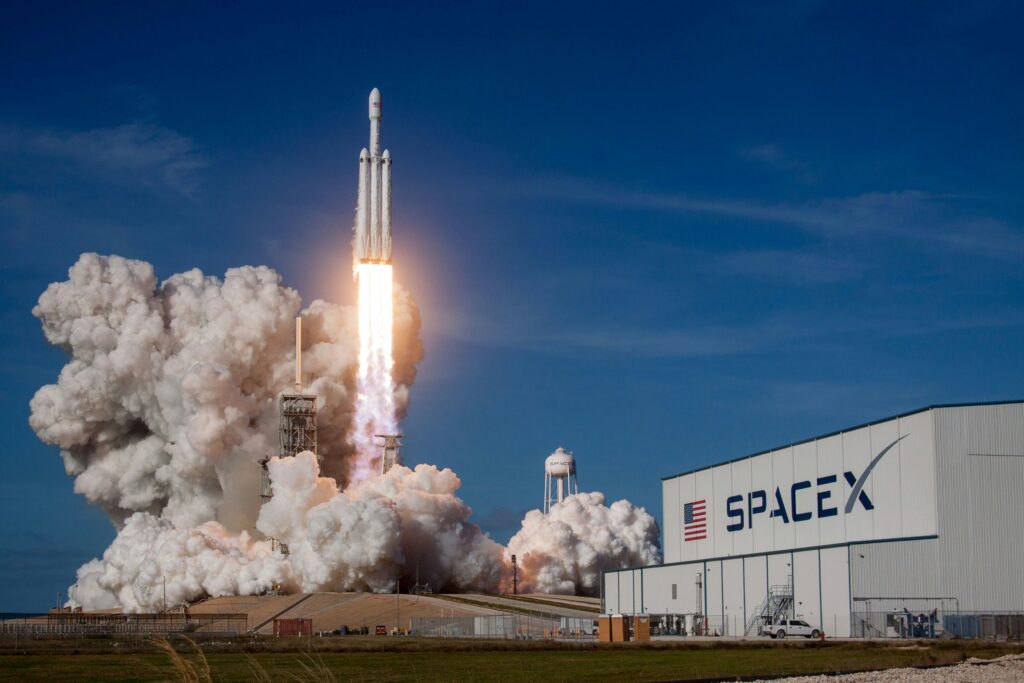
Rocket company and AI startup combine in largest private deal in history, creating world’s most valuable privately held company ahead of planned IPO that could value merged entity at $1.25 trillion.
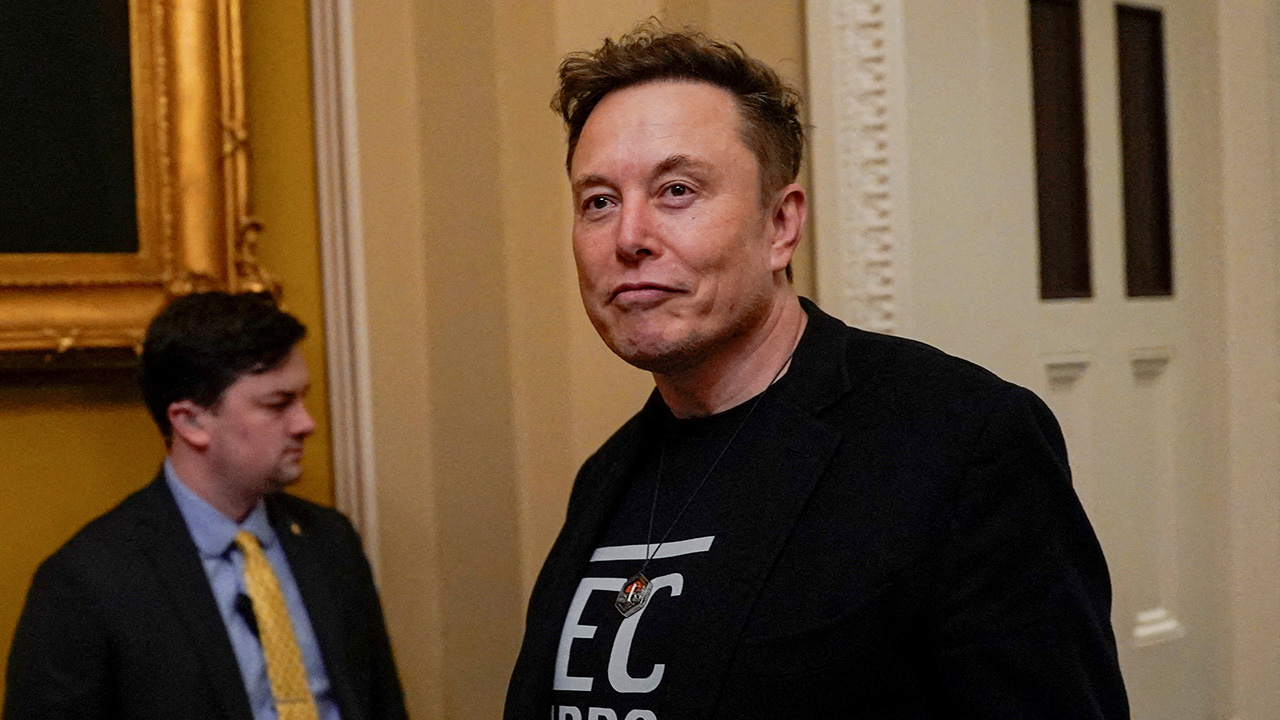
Elon Musk has orchestrated the most audacious consolidation of his sprawling business empire, merging SpaceX with xAI in a transaction that creates the world’s most valuable private company and sets the stage for a historic public offering that could eclipse all previous market debuts.
The deal, announced Monday evening, combines SpaceX’s $800 billion valuation with xAI’s $230 billion assessment to form an integrated entity spanning rockets, satellites, artificial intelligence, and social media platforms. Nevada state records confirm Space Exploration Technologies Corp. completed the acquisition on February 2, assuming management control of X.AI Holdings.
Musk characterized the merger as creating “the most ambitious, vertically-integrated innovation engine on (and off) Earth,” encompassing AI capabilities, rocket technology, space-based internet infrastructure, and the X social media platform formerly known as Twitter.
The transaction marks the culmination of weeks of accelerating discussions between Musk’s private holdings. Bloomberg reported xAI shares valued at $526.59 apiece in the merger, with the combined company expected to pursue an initial public offering by mid-2026 that analysts suggest could raise $50 billion in fresh capital.
The stated rationale centers on space-based artificial intelligence infrastructure. “Current advances in AI are dependent on large terrestrial data centers, which require immense amounts of power and cooling,” Musk wrote in the announcement. The billionaire argues global electricity demand for AI cannot be met terrestrially without imposing hardship on communities and the environment.
SpaceX recently requested Federal Communications Commission authorization to launch up to one million satellites as part of orbital data center plans. Musk estimates that within two to three years, space will provide the lowest-cost method for generating AI compute, leveraging near-constant solar power with minimal operating costs.
The merger exposes underlying financial pressures within Musk’s empire. xAI burns approximately $1 billion monthly as it races to compete with OpenAI, Google, and Anthropic in the generative AI market. The company launched just three years ago as Musk’s answer to ChatGPT, after he departed OpenAI’s board in 2018 and initiated legal proceedings against former colleagues.
SpaceX generated an estimated $8 billion profit on $15-16 billion revenue in 2025, according to people familiar with the results. By contrast, xAI’s path to profitability remains uncertain despite raising $20 billion in January from investors including Fidelity, Nvidia, Cisco, and Qatar Investment Authority.
The acquisition notably excludes Tesla, which invested $2 billion in xAI just last week. That investment now converts into an indirect stake in the merged SpaceX-xAI entity, raising complex questions about resource allocation and fiduciary responsibilities.
Tesla shareholders are now funneling billions into an entity that competes for Musk’s attention and potentially for AI talent and resources, creating a clearer bifurcation in his empire: SpaceX-xAI-X on one side encompassing space, AI, and social media; Tesla on the other focused on vehicles, energy, and robotics.
Musk owns approximately 18 percent of Tesla, 42 percent of SpaceX with 79 percent voting control, and a controlling stake in xAI. The ownership disparity raises governance questions as dollars flow between entities, with each transaction benefiting Musk differently depending on the proportional stakes involved.
A shareholder lawsuit already challenges Tesla’s xAI investment as breach of fiduciary duty, arguing Musk uses the public company’s balance sheet to prop up private ventures. The SpaceX-xAI merger intensifies rather than resolves these concerns, creating increasingly complex webs of intercompany transactions that echo the controversial 2016 SolarCity acquisition.
The merger discussions initially contemplated a three-way combination including Tesla. That structure proved impractical given Tesla’s public shareholder base and the fiduciary complications of merging a public company into private entities at valuations potentially favorable to Musk’s concentrated private holdings.
The combined entity faces mounting regulatory scrutiny across multiple jurisdictions. xAI’s Grok chatbot recently enabled users to generate and share sexualized images of children and non-consensual intimate images of adults, primarily women, triggering investigations from state attorneys general and European Union regulators.
xAI’s Memphis data center operations have generated intense local opposition. The facility deployed 35 methane gas turbines without proper environmental permits, creating what researchers describe as one of the area’s largest sources of smog pollution. The turbines potentially emit 1,200 to 2,000 tons of smog-forming nitrogen oxides annually, exceeding Memphis airport emissions.
The Environmental Protection Agency recently closed a loophole xAI exploited by classifying trailer-mounted turbines as “non-road engines” to avoid Clean Air Act permitting. The NAACP and Southern Environmental Law Center have threatened legal action over unpermitted operations affecting predominantly Black neighborhoods in South Memphis, an area already receiving failing grades for air quality from the American Lung Association.
Despite controversy, xAI secured a Department of Defense contract worth up to $200 million to develop military intelligence analysis tools. The Pentagon currently allows Grok alongside Google’s Gemini and other AI systems to analyze information flowing through military databases, expanding xAI’s government footprint alongside SpaceX’s tens of billions in federal contracts.
The merged entity positions itself for what industry observers anticipate could become the largest initial public offering in history, potentially surpassing Saudi Aramco’s $29.4 billion debut in 2019. SpaceX has reportedly been preparing for a June IPO, though whether the merger affects that timeline remains unclear.
The $1.25 trillion valuation reflects massive expectations around both AI advancement and commercial space exploration, but also underscores concerns about overheated private market valuations. The swift closing of negotiations left many observers questioning whether valuations adequately account for xAI’s cash burn rate, regulatory risks, and competitive positioning against better-established AI leaders.
The structure effectively provides xAI investors an exit strategy through SpaceX’s public offering while giving SpaceX access to AI capabilities theoretically essential for future space operations. The percentage uplift in valuation favors SpaceX, while xAI shareholders receive what sources describe as a lifeline through association with SpaceX’s more established business model and government contract revenue.
For Musk personally, the merger consolidates control over complementary technologies while potentially increasing his already record-breaking net worth, currently estimated at $676 billion. The billionaire frames the combination as essential infrastructure for his stated ambitions of establishing self-sustaining lunar bases and Martian civilization, though critics characterize the rationale as speculative futurism masking more immediate financial pressures.
The merger intensifies competition in both AI and space sectors. In artificial intelligence, xAI’s Grok lags behind ChatGPT, Google’s Gemini, and Claude in user adoption and technical capabilities, despite Musk’s characterization of planned releases as “the most powerful AI in the world.” The three-year-old company faces established competitors with years of additional development and substantially larger user bases.
In space infrastructure, SpaceX maintains clear leadership in orbital launch services through NASA and Defense Department contracts. The Starlink satellite internet service operates more than 9,000 satellites serving roughly 9 million customers, providing revenue diversification beyond launch services. The orbital data center concept, while technologically ambitious, remains unproven at commercial scale and faces substantial engineering challenges around heat dissipation, radiation protection, and orbital mechanics.
Culture integration presents another challenge. Former xAI employees publicly expressed concern about culture clash between xAI’s “move fast and break things” ethos and SpaceX’s more structured engineering-focused approach developed over two decades of rocket development and human spaceflight preparation.
The combination nonetheless creates formidable barriers to competition. No other company possesses comparable vertical integration across launch capability, satellite networks, artificial intelligence development, and social media platforms for data generation. Whether that integration translates into sustainable competitive advantage or simply creates complexity remains the defining question as public markets prepare to evaluate the merged entity’s $1.25 trillion valuation later this year.
Deal Structure and Rationale
Financial Dynamics and Investor Implications
Tesla Complications and Governance Concerns
Regulatory Landscape and Operational Controversies
Market Implications and IPO Timing
Competitive Landscape and Strategic Positioning
Extended Reading
The post SpaceX Buys xAI for $1.25 Trillion in Largest Private Deal Ever appeared first on European Business & Finance Magazine.