














Slovak MEPs have different views on the ban on imports of Russian gas into the EU
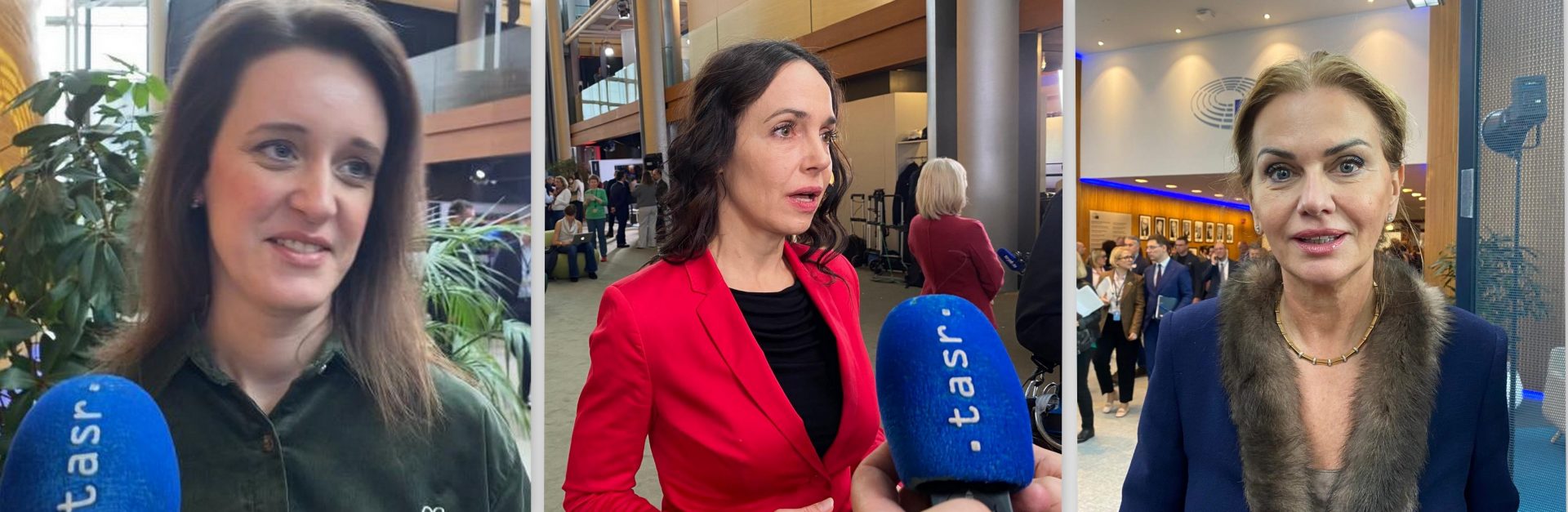
Brussels/Strasbourg – The European Parliament (EP) on Wednesday voted for the final form of EU legislation aimed at the gradual ban on imports of Russian gas into the EU, which will start to apply from autumn 2027. Slovak MEPs have different views on this legislative proposal, the TASR correspondent reports.
MEP and shadow rapporteur for this legislation Ľubica Karvašová (PS) stressed in the EP plenary that this is a historic decision and praised the broad consensus among MEPs, as well as “concrete solutions for Slovakia”. In contrast to this, she said, are the statements of representatives of the Slovak government coalition, as well as its non-attached representatives in the EP.
“As shadow rapporteur for the Renew Europe political group, I was actively involved in this legislation and supported solutions that take into account Slovakia’s specific situation. Russia is not a reliable supplier and Russian gas is not cheap. If it were, Slovakia would not have today one of the highest energy prices for companies in the entire EU and the state would not have to spend hundreds of millions of euros on energy aid,” she said.
She recalled that today Slovakia imports most of its gas from other countries and has interconnections with all its neighbours. The ban on Russian gas will start gradually in the second half of 2027 and Slovakia has negotiated the longest transition period along with specific technical exemptions.
Monika Beňová (Smer-SD) pointed out that this decision will be economically harmful for the Union and especially for Slovakia. “In this context, the International Monetary Fund predicts for us a very adverse impact concerning a decline in gross domestic product. It may mean for us a significant increase in gas prices and a related decline in the competitiveness of Slovak industry, as well as an impact on the weakening of our energy security,” she warned.
She considers important for Slovakia the exemption that will allow it to use a long-term contract for the supply of Russian gas for two years longer, and she believes it will also be crucial how the European Commission approaches the commitment regarding compensations that it has promised Slovakia in connection with this ban.
Miriam Lexmann (KDH) welcomed the shift in favour of guarantees for Slovakia brought by the final draft text negotiated between the Council of the EU and the European Parliament, where the specific deadlines for decoupling concern only natural gas, not oil or nuclear fuel. According to her, this is technically feasible in Slovakia without endangering households and the business sector.
“The proposal leaves room to negotiate justified exemptions for individual countries. Also because of these guarantees, I supported the approval of the current wording of the regulation on the gradual termination of imports of natural gas from Russia and on improving the monitoring of possible energy dependencies,” she said. She maintains that after the end of the war and the establishment of a just peace in Ukraine, the EU must act in a principled and swift manner and in the interest of its citizens so that it is not disadvantaged by its unpreparedness in the restoration of economic relations.
Martin Hojsík (PS) pointed out that peace will only be possible when the EU stops financing soldiers killing in Ukraine. “When we stop financing Putin’s effort for Slovakia to once again become a Russian guberniya. Our freedom and prosperity depend on freeing ourselves from Russian gas. It is more expensive not only in its price tag, but also in that it has deprived us of peace in Europe. It undermines the competitiveness of our industry and threatens jobs. That is why I am extremely glad that we will finally get rid of it,” he said. (18 December)