


























Scottie Pippen’s $2.8m vs Jordan’s $33m — Inside NBA’s Worst Contract In History

WEEKEND READ
In the 1997-98 NBA season — the year the Chicago Bulls won their sixth championship — Scottie Pippen earned $2.8 million. Michael Jordan earned $33.1 million. Pippen was the sixth-highest paid player on his own team and the 122nd-highest paid player in the entire league. Dennis Rodman earned more. Toni Kukoc earned more. Luc Longley — a journeyman centre — earned more. Pippen was simultaneously one of the five best basketball players on the planet and being paid like a reserve.
EBM Exclusive Analysis
The Pippen contract is a masterclass in how institutional power exploits individual vulnerability. The Chicago Bulls did not cheat Pippen through deception — they exploited three specific conditions: his financial insecurity, his emotional attachment to the city, and the absence of modern contractual protections. General Manager Jerry Krause and owner Jerry Reinsdorf understood that a player who needed security more than he needed maximum value was a player who could be locked in below market rate for the entirety of his prime. The lesson for any professional negotiating a long-term contract is not about sports. It is about the cost of signing from fear rather than from strength — and the compounding price of that decision over seven years.
How It Happened
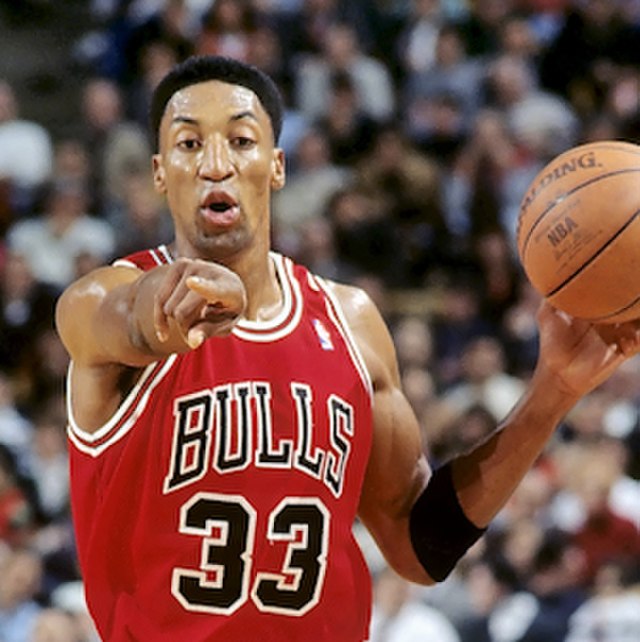
Scottie Pippen was the fifth overall pick in the 1987 NBA Draft. He signed his rookie contract and spent his first four seasons proving himself as one of the most complete two-way players in the league. When his rookie deal expired after the 1990-91 season — the year the Bulls won their first championship — Pippen was 25 years old, an All-Star, an All-Defensive selection and Jordan’s indispensable partner.The Bulls offered a seven-year extension worth $18 million. Pippen signed it.
The reasons were personal as much as financial. He had grown up in poverty in Hamburg, Arkansas, in a large family. His father had suffered a stroke before Scottie reached high school. His older brother Ronnie had been paralysed in a gym class wrestling accident. None of the modern rules that protect both owners and players from bad contracts existed in 1991. CBSSports.com There was no maximum salary, no minimum salary scale, no agent-mandated waiting periods. Pippen wanted security. The Bulls gave him the appearance of it at the lowest price they could negotiate.
The Contract That Aged Like Milk
When Pippen signed in 1991, his starting salary of $2.77 million made him the 16th highest-paid player in the NBA. That was defensible. But the NBA was about to explode financially — and Pippen’s salary was fixed.
The NBA’s salary cap more than doubled between Pippen signing his extension in 1991 and his departure from the Bulls in 1998, jumping from $11.9 million to $26.9 million. Basketball Forever Every year the cap rose, Pippen’s relative position collapsed. By year four he was 91st. By year six he was 128th. By the final championship season he was 122nd — earning $2.8 million while Jordan took home $33.1 million and Dennis Rodman, Toni Kukoc and Ron Harper each earned approximately 70% more than him.
The Bulls refused every request to renegotiate. Why would they? Pippen’s low salary gave them the cap space to build a dynasty around him.
What His Teammates Were Earning
Jordan’s one-year deals in his final two Bulls seasons — $30 million and $33 million respectively — were negotiated annually precisely to avoid being locked into long-term below-market value. Jordan’s agent David Falk understood leverage. Pippen’s situation in 1991 meant he had none. The contrast between the two men’s earning power was not merely a reflection of their relative standing on the court — it was a reflection of everything Jordan had built off it, from his Nike deal to his global commercial infrastructure, that gave him negotiating power Pippen never possessed.
What Jordan Was Earning
While Pippen was locked into his seven-year $18 million deal, Jordan operated on an entirely different financial planet — and crucially, he did so deliberately. Rather than signing long-term extensions that would cap his earnings as the market grew, Jordan’s agent David Falk negotiated one-year deals that reset annually to reflect his true market value. In the 1996-97 season Jordan earned $30.14 million. In the final championship season of 1997-98 he earned $33.14 million — a figure that made him the highest-paid player in NBA history at that point by a significant margin. To put the gap in the starkest possible terms: Jordan earned more in the final two seasons of the Bulls dynasty than Pippen earned across the entire seven years of his contract. Jordan’s $63 million across those two seasons dwarfed Pippen’s $18 million lifetime deal. Beyond his salary, Jordan was simultaneously building a commercial empire off the court — Nike royalties, sponsorship deals and endorsement income that by the mid-1990s was generating more annually than his Bulls salary. The disparity between the two men was not simply about basketball. It was about who understood the business of being an athlete and who did not.
What Pippen Would Be Worth Today
In today’s NBA the calculation is straightforward. The maximum salary for a player of Pippen’s standing — seven-time All-Star, six-time champion, All-Defensive first team across his prime — would be a supermax contract. In 2026 terms that means approximately $50-60 million per year. Over the seven years he played on his $18 million deal, Pippen earned approximately $18 million in total. At today’s rates he would have earned that in four months.
After leaving Chicago Pippen signed with the Houston Rockets for $11.2 million per season — a 450% increase on his Bulls salary. He later returned to Chicago on a five-year $67 million deal. The money eventually came. His prime, and what it was worth, never came back.
The Lesson
Pippen signed from fear. The Bulls knew it and used it. No rule prevented them. In 2026 the NBA’s maximum salary provisions, rookie scale contracts and extension windows make a repeat structurally impossible. But the underlying dynamic — an institution exploiting an individual’s need for certainty — is not confined to basketball. It is the oldest negotiation in business.
Related Analysis
- The Business of War: Who Is Profiting From the Iran Conflict
- OnlyFans Makes $684 Million a Year. It Took Years to Find a Buyer
- Polymarket Is Front-Running Bloomberg. Traditional Finance Has Noticed
The post Scottie Pippen’s $2.8m vs Jordan’s $33m — Inside NBA’s Worst Contract In History appeared first on European Business Magazine.