















Ryanair’s £40m Investment Signals a New Era for Scottish Air Travel
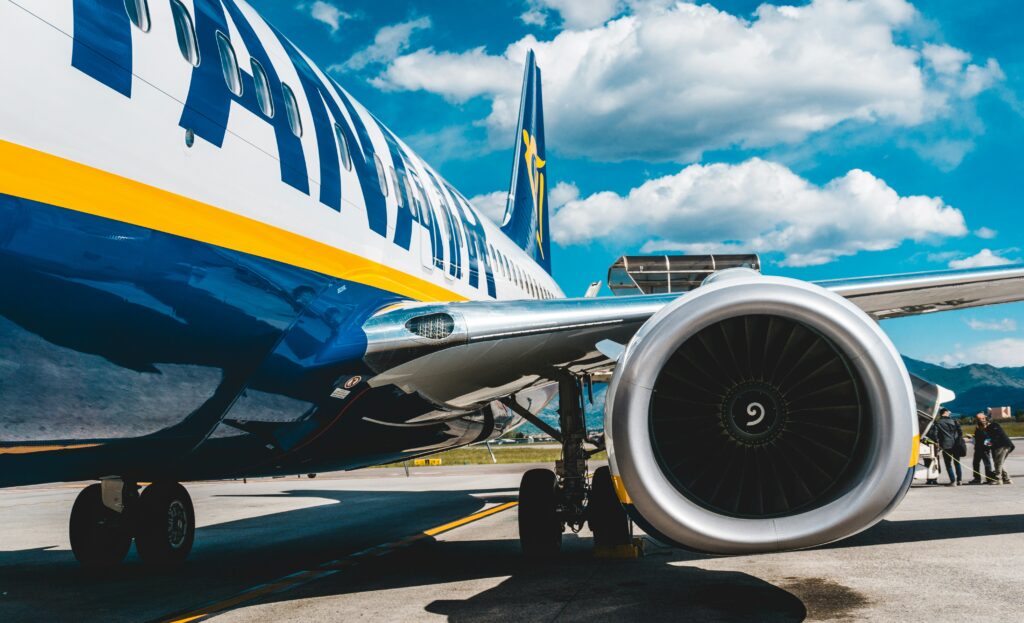
Ryanair has announced a £40 million investment at Glasgow Prestwick Airport, creating hundreds of new jobs in Ayrshire.
The funding will support the construction of a new 11,938 square metre, four-bay heavy-maintenance hangar, expanding Prestwick’s maintenance capacity from six to ten bays and transforming the site into Ryanair’s largest heavy-maintenance hub in Europe.
The company, known for its ultra-low-fare tickets and an aggressive expansion strategy, has consistently expanded its operations over the past five years.
In an age where convenience and mobile-first behaviour dominate consumer habits, from e-commerce to entertainment and the rise of casino apps, Ryanair is implementing a strategy designed to capitalise on market opportunities left open by competitors.
Where legacy carriers have retrenched or closed secondary bases, Ryanair has expanded its physical infrastructure in regions that offer both cost advantages and government support.
The deal is backed by £15 million from the Scottish Government and £4.9 million from the UK Government, forming part of a wider £32 million investment into the Prestwick aerospace cluster.
This expansion sets the stage for major job creation and long-term economic impact, reinforcing Scotland’s position as a key player in European aviation infrastructure.
Why Prestwick?
On Scotland’s west coast, an airport that has spent years in the shadow of Glasgow and Edinburgh is about to become one of Ryanair’s most important assets.
Prestwick already has a long history in aerospace, and that experience shows. The airport has a strong base of skilled engineers and technicians, making it an ideal place for Ryanair to grow its maintenance operations.
The expansion will bring 450 new high‑skilled jobs to the area, along with 60 apprenticeships to help train the next generation of aviation talent.
It also builds on Ryanair’s £5 million training academy, opened in 2024, which has already created 500 jobs and helped turn Prestwick into one of the airline’s key training and engineering centres.
The investment also strengthens Scotland’s growing reputation as a key aerospace hub. Anchoring long‑term engineering work in Ayrshire brings stability and new opportunities to the local economy.
The government’s backing of the project shows real confidence in Scotland’s aviation future and highlights how aerospace can play an important role in the region’s next phase of economic growth.
The apprenticeship element carries particular significance. Aviation maintenance requires highly specialised skills that take years to develop, and the 60 apprenticeships represent a pipeline of qualified engineers who will support not just Ryanair’s operations but the broader UK aerospace sector.
In an industry facing chronic skills shortages, this investment in training infrastructure addresses a systemic problem while creating pathways for young workers in a high-value sector.
Ryanair’s Growth Strategy: Why This Deal Makes Perfect Business Sense
Ryanair aims to grow to 800 aircraft and 300 million passengers by 2034, an ambitious target that requires significant expansion of in-house maintenance capacity to keep operational costs low.
The airline’s cost advantage comes from operating a single aircraft type, the Boeing 737, which allows for standardised maintenance processes, bulk purchasing of parts at discounted rates, and simplified training requirements for engineering staff.
Prestwick’s expansion fits perfectly into this low-cost, high-efficiency model by consolidating heavy maintenance in a location with competitive labour costs and government financial backing.
Ryanair also relies heavily on ancillary revenue streams, including baggage fees, seat selection, priority boarding, in-flight retail, and travel partnerships covering car hire, hotels and insurance.
Ryanair also benefits from the nature of many Scottish routes, which often involve longer trips, family visits, or seasonal travel. These kinds of journeys typically come with more luggage, more seat selection, and higher use of optional extras. On routes like these, those extra 40 minutes in the air really do matter.
More Scottish capacity translates directly into more passengers and increased ancillary revenue opportunities. This is about route economics and passenger behaviour, not national stereotypes.
The company also gains from having more control over its own maintenance work. By expanding Prestwick, the airline relies less on third‑party providers, whose busy schedules or higher costs can slow things down during peak periods. With its own dedicated facilities, Ryanair can keep more aircraft in the air and avoid delays.
- –
The £40 million Prestwick investment represents a textbook example of aligned incentives. Ryanair secures a major maintenance hub to support future fleet growth while maintaining its cost-leadership position. Scotland gains hundreds of skilled jobs, long-term economic benefits and a strengthened aerospace sector that extends beyond a single employer.
Prestwick becomes a central pillar in Ryanair’s European engineering network, transforming from a struggling passenger airport into a critical operational asset for the continent’s largest low-cost carrier.
The expansion signals a new era for Scottish air travel with lasting benefits for the region’s aerospace sector and workforce. It’s a clear example of how the right investment, backed by both industry and government, can make a real difference to a local economy.
The post Ryanair’s £40m Investment Signals a New Era for Scottish Air Travel appeared first on European Business & Finance Magazine.