



















Rory McIlroy Just Joined Tiger Woods in the History Books — and Earned $4.5 Million Doing It. Here’s the Business Behind the Most Lucrative Week in Golf.

Quick Answer
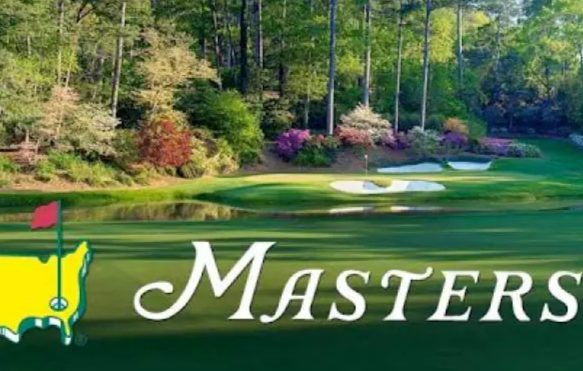 Rory McIlroy won the 2026 Masters on Sunday, becoming only the fourth player in history to defend the title at Augusta — joining Jack Nicklaus, Nick Faldo and Tiger Woods. He earned $4.5 million from a record $22.5 million total purse, with the winner’s payout having more than doubled since 2021. The prize money is historic — but Augusta’s real commercial story lies in the sponsorship model almost no other sporting event on earth has dared to copy, and what a second green jacket does to McIlroy’s off-course value is a separate and larger number entirely.
EBM Exclusive Take
Two economies operate simultaneously at Augusta every April. The visible one — the purse, the payouts, the green jacket — is the story every outlet runs. The invisible one is the reason the Masters sits in a commercial category of its own. Augusta National has built the most counterintuitive business model in sport: six sponsors, four minutes of advertising per hour, no TV rights fees, no on-course branding — and an estimated $150 million generated in a single week. The lesson is not about golf. It is about what controlled scarcity does to perceived value. Every brand manager in Europe should study Augusta’s commercial architecture more carefully than their own rate cards.
Rory McIlroy walked off the 18th at Augusta on Sunday having done something only three men in the history of the tournament had achieved before him. The Northern Irishman successfully defended his Masters title by a single stroke in a tumultuous final round — falling two off the lead before the turn, recalibrating, and charging down the back nine as each of his rivals slowly fell away. Scottie Scheffler set the clubhouse target at 11 under and pushed hardest. McIlroy held on, a bogey on 18 not enough to cost him, finishing at 12 under. He joins Tiger Woods, Nick Faldo and Jack Nicklaus as the only players to win consecutive Masters titles — the fourth back-to-back champion in the tournament’s 92-year history.
The Prize Money in Full
McIlroy earned $4.5 million for the win — a $300,000 increase over the $4.2 million he collected in 2025. Total prize money rose 7% year-on-year to $22.5 million, the highest payout among golf’s four majors, confirmed by the Augusta National official results. Scheffler earned $2.43 million for second. Tyrrell Hatton, Russell Henley, Justin Rose and Cameron Young shared third at $1.08 million each. Even players who missed the cut received $25,000. The purse has jumped more than $11 million since 2021 — a pace of increase that reflects both LIV Golf’s pressure on the PGA Tour to retain its elite players and Augusta’s use of prize money as a statement of institutional dominance. When Horton Smith won the inaugural Masters in 1934, he collected $1,500. McIlroy’s $4.5 million represents a 3,000-fold increase in 92 years.
The McIlroy Commercial Premium
McIlroy has now earned more than $115 million in official prize money — second only to Tiger Woods — with roughly $29 million coming in the 12 months before this Masters alone, according to Sportico’s annual golf earnings rankings. But on-course earnings are the smallest part of his balance sheet. His current sponsors include TaylorMade, Nike, Omega, Workday and Optum, with his TaylorMade and Nike contracts each reported at $10 million per year — putting his total annual sponsorship income at an estimated $35 million before tournament winnings are counted.
A second consecutive green jacket does not simply add to that figure — it compounds it. In sports marketing, historic milestones do not depreciate. They become permanent negotiating assets. McIlroy is now in a category of one among active players, and every brand conversation he has from this point forward happens in that context. As EBM has reported on the business empires built by elite athletes, the commercial premium attached to genuine historical distinction operates on an entirely different valuation model to standard endorsement metrics. The Federer-On Running blueprint — where a retiring champion converted brand equity into a multi-billion dollar equity stake — is the template McIlroy’s advisers will now be studying in earnest.
Augusta’s Six-Sponsor Fortress
The Masters has six official sponsors — Bank of America, AT&T, IBM, Mercedes-Benz, Rolex and UPS. That number does not move. No perimeter branding. No product placement. Each sponsor’s only visible presence sits within four minutes of commercial time per broadcast hour — roughly a quarter of what a standard sports broadcast carries. Total sponsorship revenue is estimated at approximately $60 million annually, compared to the US Open’s $15 million from a far larger and less exclusive roster. The Masters generates four times the revenue from a sixth of the noise.
The broadcast arrangement compounds the effect. CBS does not pay Augusta for television rights. Augusta controls the broadcast entirely, and CBS invoices the club approximately $10 million for production costs after the tournament. The sponsors cover it. The result is a broadcast that functions as a prestige document rather than a commercial vehicle — which is precisely what makes the slots within it so valuable. As EBM has analysed in its full breakdown of Augusta’s commercial model, the club deliberately leaves an estimated $300 million in annual revenue unrealised through this philosophy — and treats that figure as a point of pride.
What the Numbers Say
The Masters does not compete on price. It competes on permanence. The broader explosion in elite sport prize funds has forced every major tournament to reassess its commercial positioning — but Augusta remains the only event that has turned restraint itself into the product. McIlroy’s $4.5 million will clear his account. His place alongside Woods, Faldo and Nicklaus will not. That asymmetry — between what the money is worth and what the moment is worth — is the entire commercial logic of Augusta National, expressed perfectly in a single Sunday afternoon.
Related Analysis
- The Masters 2026: Why Augusta Deliberately Leaves $300 Million on the Table
- Why Djokovic Earns More Than Nadal and Federer Combined: The $370m Business Empire Explained
- Roger Federer and On Running: How a Swiss Partnership Became a Multi-Billion Dollar Bet Against Nike
The post Rory McIlroy Just Joined Tiger Woods in the History Books — and Earned $4.5 Million Doing It. Here’s the Business Behind the Most Lucrative Week in Golf. appeared first on European Business & Finance Magazine.