

















Renault Is Gutting Alpine’s Motorsport Programme — And a 50-Year-Old Engine Factory May Not Survive
QUICK ANSWER What’s happening? Alpine has confirmed it will withdraw from the World Endurance Championship after the 2026 season, ending its Hypercar programme after just five years. The decision comes after Renault killed Alpine’s Formula 1 engine programme in September 2024, making the team a Mercedes customer from 2026. The historic Viry-Châtillon facility — birthplace of F1’s first turbo engine and the site behind 12 World Constructors’ Championships — is being stripped of its motorsport role and rebranded as “Alpine Tech.” Up to 350 jobs are at risk. The mayor of Viry-Châtillon has accused Renault of “lies and betrayal.” Alpine remains in Formula 1, but the brand is not yet profitable and its long-term future under new Renault CEO François Provost remains uncertain. What is being presented as a strategic refocus is, in practice, the dismantling of one of European motorsport’s most decorated engineering operations.
The factory at Viry-Châtillon, on the southern outskirts of Paris, has been building racing engines since 1968. It was here that Renault developed the turbocharged V6 that introduced forced induction to Formula 1 in 1977. Over the following five decades, engines designed and built at Viry powered cars to 12 World Constructors’ Championships — through Renault’s own works teams, through Williams, through Benetton, through Red Bull. In almost every season from 1977 to 2025, a Viry-built engine was on the F1 grid.
That chapter is now over. And the final pages are being torn out faster than anyone expected.
Alpine confirmed on Thursday that it will withdraw from the FIA World Endurance Championship at the end of 2026, shutting down its Hypercar programme after five seasons and three race victories. The decision follows Renault’s September 2024 announcement that it would cease F1 engine development entirely, switching Alpine to customer Mercedes power units from this season. With the WEC exit, the Viry-Châtillon site loses its last remaining motorsport programme. Dacia’s Dakar programme, which won the 2026 edition, has also been cancelled.
The Business Logic
Alpine CEO Philippe Krief framed the decision as existential. “We have had to take hard decisions to protect the long-term ambitions of Alpine,” he said. “The automotive industry — and particularly the EV market — is growing slower than expected. To succeed for the long term, we must continue our ongoing investment into the Alpine product portfolio and Alpine brand.”
The numbers support the urgency, if not the method. Alpine is not yet profitable as a standalone brand. The original target was break-even by 2026, driven by the launch of the A390 crossover. That timeline now looks optimistic. Under former Renault CEO Luca de Meo, who departed last summer, Alpine’s motorsport programmes had no defined end date. His replacement, François Provost, is widely understood to have little appetite for racing. Since taking over, Provost has overseen the most aggressive cost-cutting across Renault’s competition operations since the group’s near-collapse in 2020.
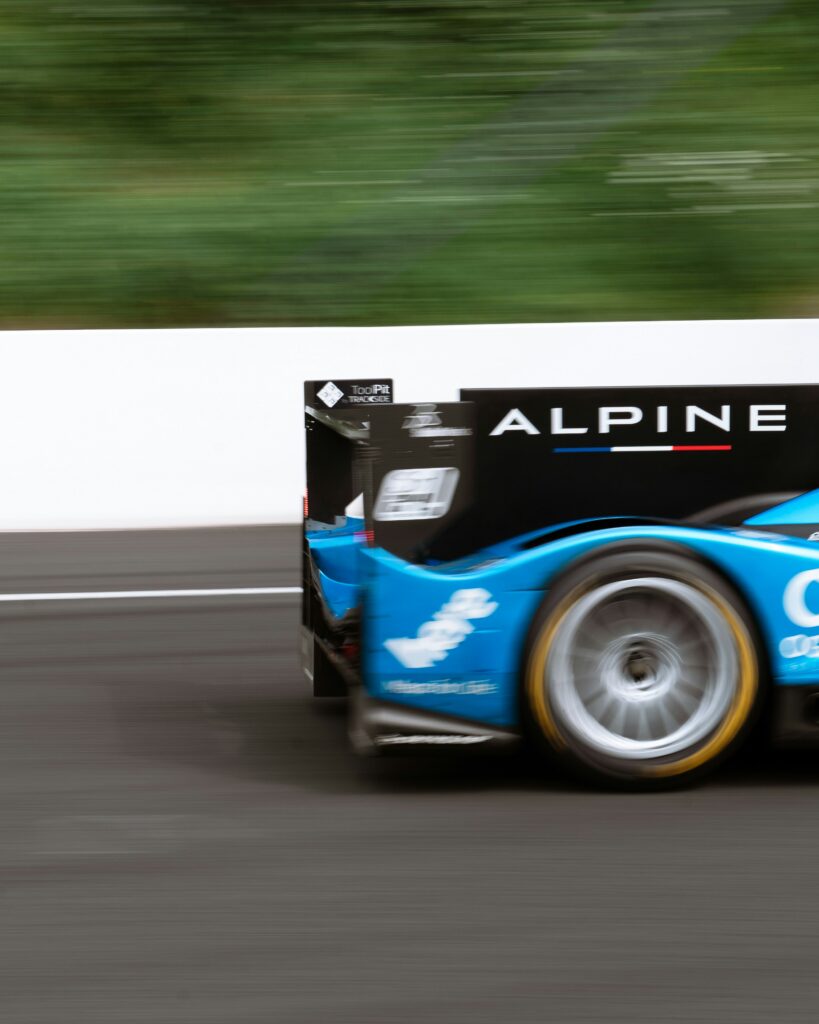
The WEC programme was never cheap, but it was not extravagant either. Alpine’s A424 Hypercar was competitive — a race win at Fuji, three podiums, and credible pace against factory efforts from Ferrari, Toyota, and Porsche. In a championship now bursting with manufacturer entries, Alpine had established itself as a serious participant. But serious is not the same as profitable, and Provost appears to view motorsport as a cost centre rather than a brand-building exercise.
Viry-Châtillon: “Lies and Betrayal”
The most politically charged consequence is the fate of Viry-Châtillon itself. When Renault killed the F1 engine programme in 2024, the facility was rebranded as “Hypertech Alpine” — ostensibly a centre of engineering excellence focused on hydrogen, electrification, and advanced technology. The WEC’s A424 engine was brought in-house to give the site a continuing motorsport function.
With the Hypercar programme now ending, that rationale collapses. The site employs 300 to 350 people. Renault has initiated what it calls an “employee protection plan” — offering redeployment, early retirement, or voluntary departure. The scale of other projects at Viry is not sufficient to justify the headcount.
Jean-Marie Vilain, the mayor of Viry-Châtillon, published an extraordinary public statement accusing Renault of “lies and betrayal.” Vilain had been closely involved in a monitoring committee, established under the authority of the Prefecture of Essonne, to oversee Viry’s transition. The mayor’s accusation suggests that commitments made during those negotiations have been abandoned. Alpine declined to confirm or deny the mayor’s claims, saying only that it had “ongoing reflections” to share with unions first.
Bruno Famin, Alpine’s vice president of motorsport and a long-serving Renault figure, is also believed to be departing. Deputy motorsport director François Champod is expected to follow. The organisational structure that ran Alpine’s racing operations has, in the assessment of multiple industry sources, been effectively dismantled.
What Remains
Alpine retains its Formula 1 entry, now running Mercedes engines out of its Enstone base in Oxfordshire. The team finished last in the 2025 Constructors’ Championship, scoring just 22 points, all through Pierre Gasly. For 2026, Gasly is joined by Franco Colapinto, with the team hoping that Mercedes power will close the performance gap that Renault’s underpowered unit created.
The F1 team’s own future is the subject of active speculation. Reports have linked former Red Bull principal Christian Horner and MSP Sports Capital to discussions about acquiring a stake in Alpine’s racing operation. Renault is likely to retain control to protect its share price, but if the Alpine brand continues to lose money, a sale or further restructuring is not implausible.
The Wider Pattern
Alpine’s retreat is not happening in isolation. It mirrors a broader contraction across European automotive investment as carmakers grapple with slower-than-expected EV adoption, margin compression from Chinese competitors, and the cost of maintaining legacy operations while funding the transition.
Mercedes reported a 57 percent profit collapse this month. Stellantis took a €22.2 billion writedown and suspended its dividend. Volkswagen and Porsche have both taken charges on EV programmes. The common thread is that European carmakers overcommitted to electrification timelines that the market has not validated — and are now cutting everything that does not directly generate revenue.
For Alpine, that calculation has reduced a brand with 50 years of racing heritage to a single F1 entry running someone else’s engine. Whether that is enough to sustain a performance car brand in a market that demands authenticity is the question Renault has not yet answered.
The post Renault Is Gutting Alpine’s Motorsport Programme — And a 50-Year-Old Engine Factory May Not Survive appeared first on European Business & Finance Magazine.