


























PwC Embraces Crypto as Trump Policies Shift Blue-Chip Sentiment on Digital Assets

Big Four firm reverses cautious stance following regulatory clarity and political backing
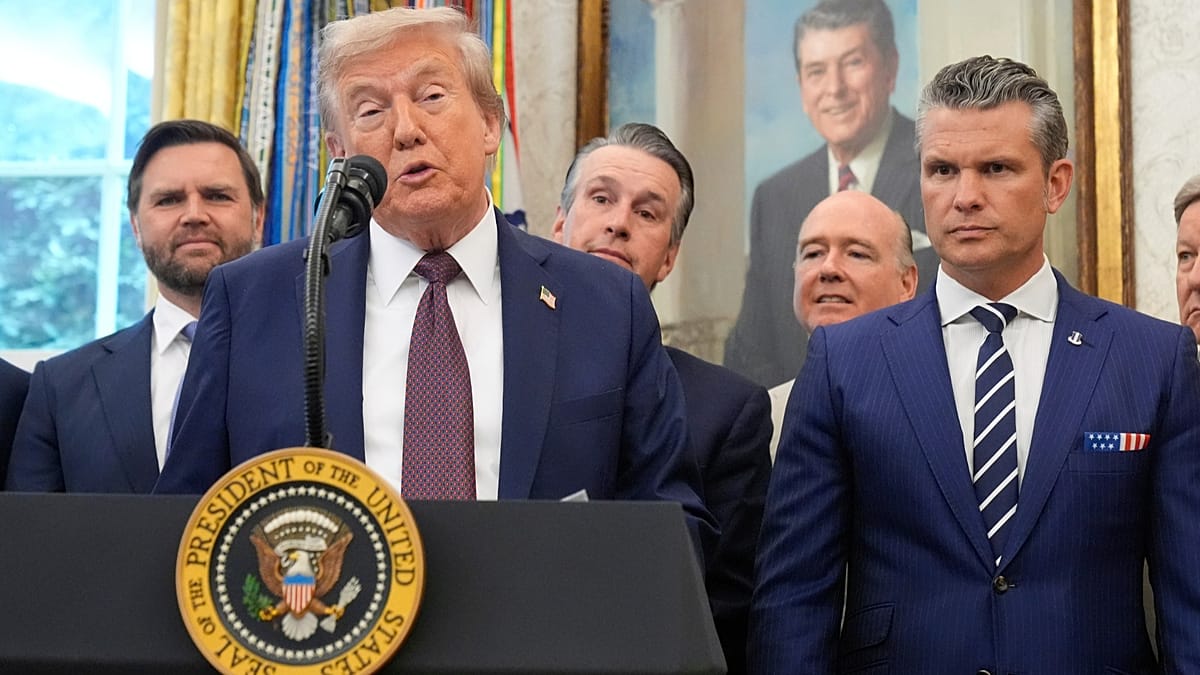
PwC has decided to “lean in” to cryptocurrency work after years of taking a more cautious stance, following the Trump administration’s embrace of digital assets and new regulatory frameworks that have finally convinced blue-chip businesses they can safely enter the market.
The strategic reversal came as the US appointed pro-crypto regulators and Congress passed landmark legislation governing digital assets including stablecoins, Paul Griggs, the US boss of the Big Four accounting firm, told the Financial Times in an interview.
“The Genius Act and the regulatory rulemaking around stablecoin I expect will create more conviction around leaning into that product and that asset class,” Griggs said. “The tokenisation of things will certainly continue to evolve as well. PwC has to be in that ecosystem.”
His comments highlight how the Trump administration’s moves on cryptocurrency policy have transformed the risk calculation for major professional services firms that spent years avoiding a sector long associated with regulatory ambiguity, fraud and financial instability.
The shift represents one of the most consequential pivots in financial services since the 2008 crisis, with implications extending far beyond the US to Europe’s fintech landscape and the global battle for dominance in digital payments infrastructure.
The Genius Act: A watershed moment for crypto regulation
The Genius Act, signed into law by President Donald Trump in July 2025, marked the first time the United States has comprehensively regulated tokens pegged to assets such as the US dollar. The legislation paves the way for banks to launch their own digital assets and establishes clear custody, reserve and disclosure requirements for stablecoin issuers.
The law ends years of regulatory paralysis that left crypto firms operating in a grey zone, subject to enforcement actions rather than clear rules. Under the Biden administration, the Securities and Exchange Commission took an adversarial approach, pursuing cases against major exchanges and questioning the legal status of most digital tokens.
That stance changed dramatically when Trump appointed Paul Atkins to lead the SEC. Atkins, a former commissioner known for his pro-business views, has prioritised setting rules for crypto rather than bringing enforcement actions. The agency has opened consultations on token classification, custody standards and disclosure frameworks—signalling a fundamental shift from hostility to facilitation.
For professional services firms like PwC, this regulatory clarity removes the reputational risk that previously deterred engagement. Auditing a crypto exchange or providing tax advice to a token issuer no longer carries the threat of being implicated in regulatory violations or becoming entangled in enforcement proceedings.
The parallel with Europe’s approach to digital asset regulation is striking. While the EU’s Markets in Crypto-Assets (MiCA) framework took effect in 2023, establishing comprehensive rules across member states, the US lagged behind due to political gridlock and agency turf wars. The Genius Act effectively closes that gap, creating a transatlantic regulatory convergence that makes it easier for global firms to operate in both markets.
From cautious observer to active participant
PwC’s decision to embrace crypto work represents a significant strategic reversal. Like its Big Four peers—Deloitte, EY and KPMG—the firm had maintained a cautious posture toward digital assets throughout the 2010s and early 2020s, wary of the sector’s volatility, regulatory uncertainty and association with fraud.
The collapse of FTX in November 2022, which wiped out billions in customer funds and resulted in criminal charges against its founder Sam Bankman-Fried, reinforced those concerns. The bankruptcy revealed that FTX had commingled customer deposits with its trading arm Alameda Research, lacked basic financial controls and misled investors about its solvency.
Yet even during the sector’s darkest period, some Big Four firms maintained exposure. Deloitte has audited publicly traded crypto exchange Coinbase since 2020, providing financial statement assurance for one of the industry’s most visible companies. That relationship gave Deloitte insight into crypto-native business models and helped establish audit methodologies for digital asset custodians.
KPMG went further, declaring a “tipping point” for digital assets adoption in 2025 and actively marketing compliance advice and risk management services around crypto. The firm published guides on crypto taxation, anti-money laundering compliance and accounting treatment of tokens—positioning itself as the go-to adviser for traditional companies entering the space.
Now PwC is catching up. Griggs told the FT that his firm has been pitching companies on how they could use crypto technology, emphasising practical applications like using stablecoins to improve the efficiency of payments systems.
“We feel a responsibility to be hyper-engaged on both sides of the business,” Griggs said. “Whether we are doing work in the audit space or doing work in the consulting arena—we do all the above in crypto—we see more and more opportunities coming our way.”
The firm’s shift mirrors broader trends in European financial services, where banks and asset managers are cautiously expanding their digital asset offerings after years of regulatory hesitation. The difference is timing: while European institutions moved incrementally under MiCA, US firms are accelerating rapidly under the Trump administration’s pro-crypto stance.
Stablecoins: The killer application that won over corporates
What finally convinced firms like PwC to embrace crypto was not Bitcoin’s speculative appeal or blockchain’s revolutionary promise, but the prosaic efficiency of stablecoins in cross-border payments.
Stablecoins—tokens pegged to fiat currencies like the US dollar—have emerged as the most commercially viable application of blockchain technology. Unlike Bitcoin or Ethereum, which fluctuate wildly in value, stablecoins maintain a stable price by holding reserves of cash or short-term government securities.
This stability makes them useful for payments, particularly in international transactions where traditional banking rails are slow and expensive. A company in Singapore can send USDC (a dollar-pegged stablecoin issued by Circle) to a supplier in Brazil almost instantly, for a fraction of the cost of a wire transfer. The recipient can hold the stablecoin, convert it to local currency, or use it to pay their own suppliers.
The Genius Act provides regulatory certainty around these transactions by establishing reserve requirements, redemption rights and disclosure obligations for stablecoin issuers. Banks can now launch their own stablecoins without fear of regulatory backlash, while corporates can use them for treasury management and supply chain finance.
JPMorgan Chase has operated JPM Coin since 2019 for wholesale payments between institutional clients. The bank processes billions of dollars in transactions daily using the token, demonstrating that stablecoins can function as enterprise-grade payment infrastructure.
Other banks are following suit. Citigroup, HSBC and Standard Chartered have all announced plans to launch or expand stablecoin offerings, targeting corporate clients looking to streamline cross-border payments and working capital management.
For PwC, this corporate adoption creates lucrative opportunities in audit, tax and advisory work. Companies using stablecoins need accounting policies for token holdings, tax strategies for cross-border transactions and internal controls for digital asset custody—all areas where Big Four firms can provide expertise.
The implications extend beyond payments. Tokenisation—the process of representing real-world assets like bonds, real estate or commodities as blockchain tokens—is gaining traction as financial institutions explore new trading and settlement infrastructure. If successful, tokenisation could reduce settlement times from days to minutes and lower the cost of issuing and trading securities.
The risks PwC is betting regulators will manage
Despite the optimism, significant risks remain in the crypto sector—risks that PwC and its peers are implicitly betting US regulators will manage effectively.
Consumer protection remains a major concern. Crypto assets are volatile, poorly understood by retail investors and frequently used in scams and fraud schemes. The collapse of Terra/Luna in May 2022 wiped out $40bn in value, while the failure of Celsius Network and Voyager Digital left hundreds of thousands of customers unable to access their funds.
Financial stability is another worry. If stablecoins become systemically important, a run on one issuer could trigger contagion across the financial system. The Genius Act addresses this by requiring reserves to be held in safe assets and establishing redemption mechanisms, but implementation details and enforcement will be critical.
Money laundering and sanctions evasion are perennial concerns. Crypto’s pseudonymous nature makes it attractive for illicit activity, from ransomware payments to terrorist financing. Regulators worldwide have pushed for stronger know-your-customer (KYC) and anti-money laundering (AML) requirements, but enforcement remains patchy, particularly for decentralised platforms that operate without intermediaries.
European regulators have been more vocal about these risks than their US counterparts, reflecting different regulatory philosophies. The European Central Bank has repeatedly warned about stablecoin risks to monetary policy and financial stability, while the EU’s MiCA framework imposes stringent requirements on issuers and service providers.
PwC’s bet is that US regulators will strike a balance—providing enough oversight to prevent catastrophic failures while allowing innovation to flourish. If regulators get that balance wrong, either through excessive permissiveness or heavy-handed intervention, the firm could face reputational damage from association with failed or fraudulent ventures.
Big Four competition heats up
PwC’s move into crypto intensifies competition among the Big Four, each of which is positioning itself as the leading adviser to companies navigating digital assets.
Deloitte published its inaugural “digital assets roadmap” to crypto accounting in May 2025, providing guidance on how companies should treat tokens on their balance sheets, recognise revenue from crypto transactions and disclose risks to investors. The document—aimed at CFOs and controllers—reflects Deloitte’s bet that mainstream companies will increasingly hold or transact in digital assets.
The firm’s work with Coinbase has given it credibility in the sector. Coinbase went public in 2021 in a direct listing that valued the company at more than $85bn, making it one of the highest-profile crypto firms in traditional capital markets. Deloitte’s audit opinions on Coinbase’s financial statements lend legitimacy to the exchange and, by extension, to Deloitte’s crypto practice.
KPMG has taken a different approach, focusing on compliance and risk management rather than audit. The firm markets itself to companies concerned about regulatory compliance, offering services like AML reviews, cybersecurity assessments and internal controls design for digital asset operations.
KPMG’s “tipping point” declaration in 2025 signalled confidence that crypto adoption was accelerating beyond speculative trading to genuine enterprise use cases. The firm pointed to institutional investors allocating to crypto, corporations experimenting with blockchain supply chains and central banks exploring digital currencies as evidence of mainstreaming.
EY, meanwhile, has emphasised tax and transaction advisory. The firm has built tools for calculating crypto tax liabilities, a complex problem given the frequent trading and cross-border nature of digital asset transactions. EY has also advised on crypto M&A, helping acquirers value token holdings and assess regulatory risks.
The Big Four’s collective embrace of crypto marks a turning point for the industry. When the world’s largest professional services firms—guardians of financial propriety and bastions of conservatism—decide a sector is safe to engage with, it sends a powerful signal to their corporate clients.
Europe watches warily as US races ahead
For European businesses tracking digital asset developments, the US regulatory shift under Trump creates both opportunities and challenges.
On one hand, clearer US rules make it easier for European firms with American operations to deploy crypto technology. A French bank can now launch a stablecoin in the US without worrying about conflicting regulatory guidance from the SEC and the Commodity Futures Trading Commission. A German asset manager can offer crypto exposure to US clients with greater confidence in the legal framework.
On the other hand, the rapid US embrace of crypto risks creating competitive disadvantages for European firms that remain cautious. If American banks can use stablecoins to offer faster, cheaper cross-border payments than European rivals, they may gain market share in international trade finance. If US capital markets embrace tokenisation while European bourses move slowly, trading volume could shift westward.
European regulators have taken a more sceptical stance than their US counterparts, reflecting different political economies and regulatory cultures. The ECB worries that stablecoins could undermine monetary policy by enabling currency substitution—if businesses and consumers use dollar-backed stablecoins instead of euros, it becomes harder for the central bank to influence economic activity through interest rates.
The EU’s MiCA framework is more comprehensive than US regulation in some respects, covering market abuse, investor protection and systemic risk in ways the Genius Act does not. But MiCA is also more restrictive, imposing capital requirements, governance standards and disclosure obligations that some industry participants view as onerous.
The risk for Europe is falling between two stools: neither as permissive as the post-Trump US, nor as innovative as crypto-native jurisdictions like Singapore or the UAE. If European firms are too slow to adopt digital assets while competitors race ahead, the continent could lose ground in the global battle for financial infrastructure dominance.
What comes next: From speculation to infrastructure
PwC’s embrace of crypto work reflects a broader maturation of the digital asset sector from speculative mania to enterprise infrastructure.
The narrative has shifted from “blockchain will revolutionise everything” to “stablecoins can improve cross-border payments” and “tokenisation might reduce settlement times.” These are incremental improvements rather than revolutionary changes, but they are commercially viable and regulatorily acceptable—criteria that matter to blue-chip firms and their clients.
The next phase of crypto adoption will likely focus on:
Enterprise blockchain applications: Companies are exploring private blockchains for supply chain tracking, trade finance and securities settlement. These are permissioned systems that offer transparency and efficiency without the volatility or regulatory uncertainty of public cryptocurrencies.
Central bank digital currencies (CBDCs): More than 100 central banks are researching or piloting digital versions of their national currencies. CBDCs could coexist with stablecoins, compete with them, or render them obsolete, depending on design choices and adoption rates.
Tokenised securities: The digitisation of stocks, bonds and other financial instruments could streamline trading and settlement, reducing costs and enabling 24/7 markets. Major exchanges including Nasdaq and the London Stock Exchange are experimenting with tokenisation pilots.
Embedded finance: Crypto wallets and payment capabilities are being integrated into non-financial applications, allowing consumers to send tokens as easily as they send messages. This “embedding” of finance into everyday digital experiences could make crypto adoption invisible to end users.
For PwC and its Big Four rivals, these developments represent a vast new market for professional services—a market that until recently seemed too risky to pursue.
Griggs’s comment that “PwC has to be in that ecosystem” reflects the firm’s calculation that the rewards now outweigh the risks. With regulatory clarity improving, mainstream adoption accelerating and competition intensifying, sitting on the sidelines is no longer tenable.
Whether this bet pays off depends on regulators’ ability to prevent the next FTX, the resilience of crypto infrastructure during financial stress, and the willingness of businesses and consumers to embrace digital assets for real-world transactions.
For now, the Big Four are betting that crypto is here to stay—not as a revolution, but as a incremental improvement to the plumbing of global finance. And they intend to get paid for helping companies navigate it.
Further reading:
The post PwC Embraces Crypto as Trump Policies Shift Blue-Chip Sentiment on Digital Assets appeared first on European Business & Finance Magazine.