

























Pratham Mittal on Building Tetr College of Business and Reinventing Business Education

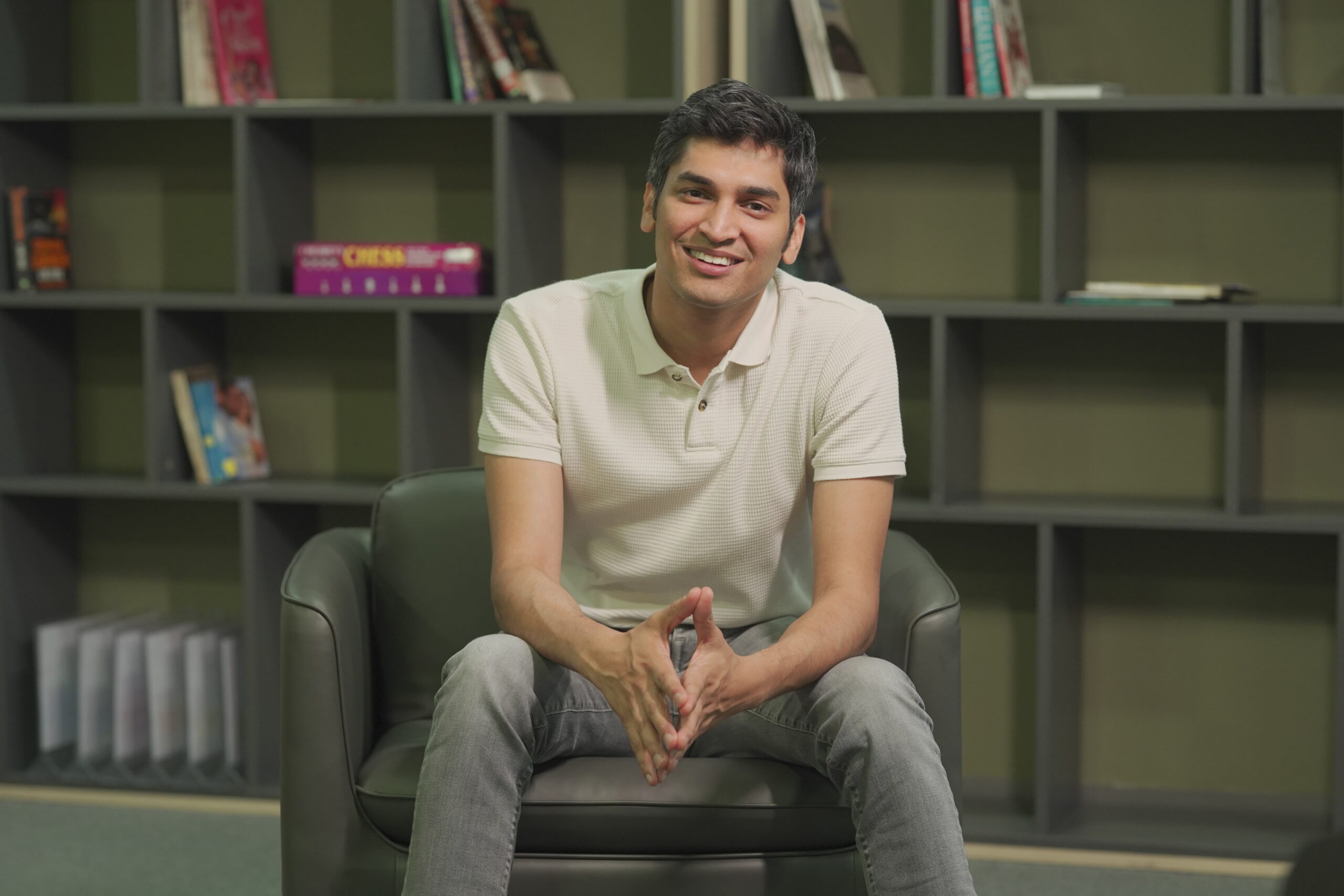 Pratham Mittal has spent his career at the intersection of technology, education, and venture — and he’s betting that the traditional business school model is overdue for disruption. As founder of Tetr College of Business, a learn-by-doing institution built explicitly for the startup era, he’s backed that conviction with something more than rhetoric.
What was the moment you realised the traditional business school model wasn’t fit for purpose?
“It was not a single dramatic moment. It was something I kept noticing over time. I would meet very intelligent graduates who had done everything right on paper with strong grades and strong universities, but when they had to make a decision without a clear framework in front of them, they hesitated. They were comfortable analysing someone else’s business in hindsight. They were less comfortable owning something uncertain in real time.
Covid made that tension more visible. When campuses shut, students were still paying significant tuition, but the experience suddenly looked very different. That forced a deeper question about what the value actually was. Was it access to lectures, a network, a signal, or something more tangible? Around the same time I was speaking to recruiters who told me they were retraining graduates from scratch anyway. That disconnect between what universities were proud of and what employers actually needed became difficult to ignore.”
How misaligned is the current higher education model from a business perspective?
“If you look at how most universities operate, they optimise for stability. Long established faculty structures, fixed syllabus, large campuses. In business you optimise for responsiveness. Markets move quickly. Tools change quickly. Customer behaviour shifts quickly.
Recruiters used to rely heavily on institutional reputation as a proxy for capability. Now they are much more interested in evidence. They ask candidates “what you have built, who has paid you, what decisions have you owned?” That is a different filter. When expectations change at the hiring end, the education model has to respond.”
Why is this model emerging now and what has changed in the last five years?
“Several forces have converged. Technology has compressed execution. With AI, tasks that once required a team can now be done by one person in hours. That changes what competence looks like at 19 or 20.
Careers are no longer linear. The model used to be that after graduating people joined large companies and stayed there for decades. Today whole industries are being reshaped within a few years. Students sense that instability. They want exposure, not just credentials.
At the same time tuition globally has risen to levels where families are asking harder questions about return on investment. That scrutiny is new. When people start questioning value, new models naturally emerge.”
How does AI reshape what future leaders actually need to learn?
“AI makes it easier to execute ideas, but it does not decide which ideas are worth pursuing. A student can now run market research, draft a financial model, generate branding options and build a website in a single afternoon. That speed is extraordinary.
But deciding whether to build a streetwear brand or a fintech product, whether to target a premium customer or a mass market, whether to double down or pivot, that still requires judgement. In some ways AI increases the importance of discernment. When information is abundant, the ability to ask the right question becomes more valuable than the ability to recall the right answer.
At Tetr our students use tools like ChatGPT, Claude and Gemini constantly. But they are accountable for the decisions those tools inform.”
Launching businesses during a degree sounds high risk. Why build that into the core model?
“Because consequence accelerates learning. When students know a real customer is going to respond with either money or silence, they approach decisions differently.
In Delhi, 28 of our student teams set up physical stalls in a live high street market called Cyber Hub and sold products they had designed, sourced and manufactured themselves. One student built a streetwear brand called 1000 AQI inspired by air pollution in India and generated around 5,000 dollars in revenue within weeks. Another cohort in Southeast Asia raised 60,000 dollars on Kickstarter in under thirty minutes for products they had developed during the term.
Those experiences change confidence levels. It is no longer theoretical. They have negotiated with suppliers, handled returns, dealt with disappointed customers. That exposure cannot be simulated in a case study.”
What evidence do you have that this model works?
“Our first undergraduate cohort of 110 students launched 44 ventures in their first year, generating over 324,000 dollars in combined revenue. Several of those ventures have since raised external investment. Students have secured internships at organisations that rarely take undergraduates, including Formula One teams and global asset managers such as BlackRock.
In terms of accreditation, Tetr students earn a degree awarded by Middlesex University in London, delivered in academic partnership with UBI Business School. That means students graduate with a recognised UK degree while studying across multiple global campuses. We operate within accredited frameworks rather than outside them.
Externally, we were awarded the QS Gold Award for innovation in business education, which assesses institutions on demonstrable outcomes and international exposure. But the clearest evidence is the trajectory of our students.”
What convinced investors like Owl Ventures and Bertelsmann to back Tetr?
“When we raised 18 million dollars co-led by Owl Ventures and Bertelsmann India Investments, we were able to show operating proof points rather than projections. Admissions were coming from Latin America, Europe, India and the Middle East. Students were building ventures with real revenue. The model had been tested in multiple geographies.
We also run asset light. Instead of investing heavily in real estate, we partner with established campuses in Dubai, Europe and elsewhere and bring our curriculum and faculty into those spaces. That flexibility reduces capital intensity and increases scalability. Investors saw a working system rather than a theoretical disruption story.”
Can this model scale or is it inherently boutique?
“It can scale, but only if culture scales with it. Growth in education is not about adding buildings. It is about preserving rigour. We are disciplined about who we admit and about the expectations we set. Students are expected to build, to ship, to iterate. If that intensity drops, the model loses its edge. That is what we guard carefully.”
Do you see Tetr as a university or as something closer to talent infrastructure?
“Tetr is a university in structure. Students earn an accredited degree from Middlesex University through our partnership with UBI Business School. But philosophically we think of it as a system for developing operating capability. The degree is important. What matters more is whether a graduate can make decisions under uncertainty.”
Who do you actually compete with?
“We compete for ambitious students who do not want to wait until they are 25 to feel responsibility. Some students prioritise heritage and campus life above all else. Others want exposure to markets, founders and real customers from year one. We are designed for that second group.”
We are seeing students sue universities over pandemic teaching. Does that validate your thesis?
“It is a fascinating shift. Students are behaving more like investors. When they feel the experience did not match the cost, they push back. That signals a broader change in expectations. Higher education is no longer beyond scrutiny. That accountability will shape how institutions think about outcomes.”
Why prioritise campuses in Europe, the US and Dubai?
“Business is increasingly global. A pricing decision in India feels different in Dubai. Consumer behaviour in Europe is not identical to Southeast Asia. When students rotate across campuses, they experience regulatory, cultural and economic variation firsthand. That builds perspective and empathy in a way a single campus experience cannot.”
Education is heavily regulated. How do you innovate without breaking compliance?
“We work within accredited frameworks and through recognised partners. Our degrees are formally awarded by Middlesex University and delivered via UBI Business School. Innovation for us is about pedagogy and exposure, not about ignoring regulation. There is more room to experiment within compliant structures than many assume.”
What does success look like in 10 years?
“If a Tetr graduate walks into a room and does not need to rely on brand signalling because their portfolio speaks for them, that would be meaningful. I would like to see students known for what they have built, not just where they studied.”
What have you had to unlearn as a founder building an education institution?
“In technology you can pivot weekly. In education trust builds slowly. Parents and students are making multi-year decisions. I have had to learn patience. Credibility compounds gradually.”
Is higher education structurally resistant to change?
“It is, because longevity is often equated with legitimacy. Being old is seen as proof of quality. But students, employers and technology are applying pressure. That pressure is unlikely to ease.”
What has been harder, building the model or convincing the market?
“Convincing the market. Building a system is within your control. Changing perception takes time. Once outcomes become visible, resistance softens.”
The post Pratham Mittal on Building Tetr College of Business and Reinventing Business Education appeared first on European Business & Finance Magazine.