
















Orphaned at 4. Billionaire at 35. Sanctioned at 55. The Roman Abramovich Story, Explained
Quick Answer
Roman Abramovich’s rise is the ultimate case study in “Informational Advantage.” By navigating the chaotic 1990s Russian privatization with a unique proximity to power, he turned a $250 million investment in oil (Sibneft) into a $13 billion exit. Even after being forced out of Chelsea FC due to 2022 sanctions, his ability to secure a 30x return on a sports asset proves his “Method” remains one of the most effective—and controversial—blueprints in business history.
The Business Case- From Orphan to Billionaire to Sanctioned Oligarch
In this special report, The EBM Editorial Team analyzes the “Abramovich Method”—a masterclass in wealth, power, and the 30x exit that is now being studied by the world’s most elite private equity firms.
Before the billions, there was a struggle for survival. Orphaned at age four and raised in the frozen Russian north, Abramovich learned the value of resourcefulness early, selling rubber ducks and cigarettes to eat. This “outsider” status allowed him to see the gaps in the Soviet system that others, blinded by legacy thinking, missed entirely. Nick
In the winter of 1991, the Soviet Union was dying. Seventy years of communist certainty were dissolving into chaos, corruption and extraordinary opportunity. For most people, it was terrifying. For a 25-year-old entrepreneur from Saratov who had already survived orphanhood, a Siberian childhood and a failed business that landed him briefly in a cell, it was the moment he had been waiting for.
Roman Abramovich had grown up with nothing. Orphaned at four after his mother died and his father was killed in a construction accident, he was raised by relatives in the frozen city of Ukhta, deep in the Russian north. As a teenager he sold rubber ducks, gasoline and cigarettes on the street to eat. He later trained as a mechanic and ran a small toy business. His first company was investigated for theft. He was briefly detained. He survived.
Then the Soviet Union started cracking open. New rules. New markets. New opportunities that nobody had mapped yet. Abramovich saw the gap before almost anyone else did.
The $250 Million Bet That Changed Everything
By the early 1990s, Abramovich had made his way to Moscow and into the orbit of Boris Berezovsky — one of the most powerful and well-connected oligarchs in Russia, a man with direct lines to the Kremlin and to President Boris Yeltsin himself. The partnership was one of the most consequential in Russian business history.
Together they entered the privatisation auction for Sibneft — one of Russia’s largest oil companies. The auction was, by any objective assessment, rigged. The loans-for-shares scheme that defined Russia’s privatisation era was a mechanism designed to transfer state assets into the hands of a small group of politically connected insiders at a fraction of their real value. Abramovich and Berezovsky paid $250 million for a company worth billions. It was the deal of the century — and it was available only to those who understood exactly who held power and how to stay close enough to benefit from it.
The most dangerous skill in any system is knowing exactly how it works. Abramovich had that skill to a degree that very few people in history have matched. It is the same instinct that defines Europe’s most powerful private companies — the ones that operate without public scrutiny, accumulate wealth across generations, and move before the opportunity is visible to anyone else.
Building the Empire
Through the late 1990s, Abramovich managed the complex and genuinely dangerous politics of Russia’s oligarch era with extraordinary care. Where contemporaries were arrested, exiled, or worse, Abramovich cultivated relationships rather than enemies. He became a significant donor to Kremlin-aligned causes, a major employer in the Chukotka region where he served as governor, and a figure who was seen as reliable and loyal rather than threatening.
In 2005, he sold Sibneft back to the Russian state — specifically to Gazprom — for $13 billion. He had paid $250 million. The return was approximately 52 times the investment, making it one of the most profitable single asset sales in business history. It was not luck. It was the product of reading a system perfectly, positioning himself correctly within it, and knowing precisely when to exit.
This is the same dynamic that the world’s central banks are now applying to US Treasuries — recognising when an asset that has served you well is becoming a liability, and exiting before the political environment makes that exit impossible. Abramovich understood this instinctively, thirty years before it became a mainstream conversation in global finance.
The Chelsea Play
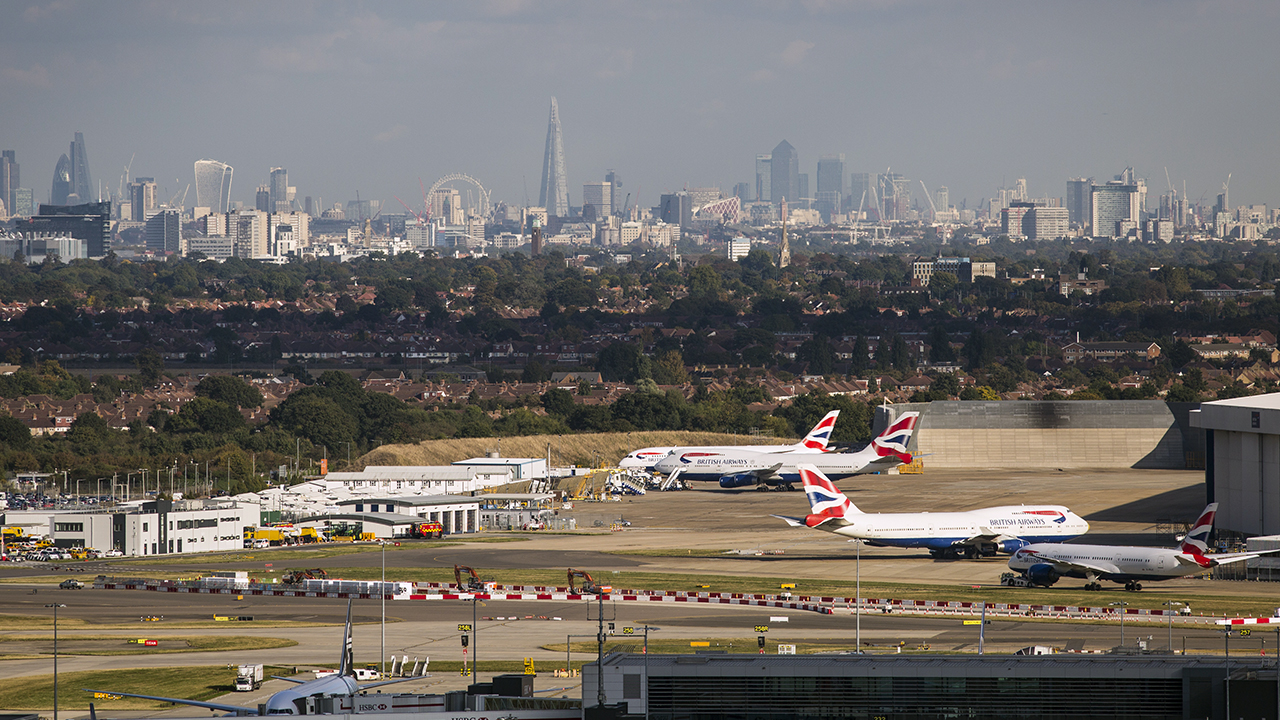
By this point, Abramovich had already made the move that would make him famous outside Russia. In 2003, he bought Chelsea Football Club for £140 million. He poured money in — over £1.5 billion in transfer fees alone during his ownership — and built one of the most dominant clubs in European football. Five Premier League titles. Two Champions League trophies. A struggling west London club transformed into a global brand with supporters on every continent.
The Chelsea project was partly vanity, partly genuine passion for football, and partly strategic. A high-profile asset in London gave him residency, public profile, and a context the British public could understand. The billions in the background became secondary to the silverware in the foreground. It was, in retrospect, one of the most effective reputation management exercises in modern business history — and one that private equity investors now looking at European football clubs are studying carefully as they assess what the right ownership narrative unlocks in terms of commercial value.
Chelsea under Abramovich also demonstrated something that the current ownership group has discovered the hard way. The club posted a record £262 million pre-tax loss in its most recent financial year under Todd Boehly — a reminder that spending without strategic discipline, even at the highest levels, produces extraordinary losses. Abramovich spent heavily too, but he understood that the asset itself — the brand, the location, the freehold land at Stamford Bridge — was appreciating regardless of what happened on the pitch.
The System That Made Him Turned on Him
In February 2022, Russia invaded Ukraine. Within days, the British government began sanctioning Russian oligarchs with close ties to Vladimir Putin. Abramovich was on the list. His assets were frozen. His yachts were seized in ports across Europe. His ability to operate Chelsea became legally untenable, and under extraordinary time pressure he was forced to sell.
Chelsea sold for £4.25 billion. He had bought it for £140 million. Even forced out under sanctions, even with his assets frozen, even with the full weight of Western governments aligned against him — he still turned a football club into a 30x return.
The sanctions episode illustrated something that is now shaping the behaviour of sovereign wealth funds and central banks globally. When assets held in Western financial infrastructure can be frozen by political decree, the calculus around where to hold wealth changes fundamentally. The world’s central banks have been quietly repositioning away from dollar-denominated assets ever since Russia’s reserves were frozen in 2022 — a direct consequence of the same geopolitical logic that cost Abramovich his Chelsea ownership.
The proceeds of the sale were placed in escrow. Abramovich indicated the money would go to victims of the war in Ukraine. He remains a billionaire. Still moving. Still quiet. The orphan from Siberia who learned in every room he walked into exactly who held power and exactly how to use proximity to it.
What the Abramovich Story Actually Teaches
The temptation when writing about Abramovich is to frame the story as one of morality — of wealth built on corruption, of sanctions as justice delayed. That framing is not wrong. The loans-for-shares privatisation was theft on a national scale. The political connections that protected Abramovich through the 1990s were the same connections that enabled Putin’s consolidation of power. These things are true.
But they are not the complete story. What Abramovich’s career also demonstrates is something more universal about how power works and how wealth is built in environments where the rules are either absent or written by those who already have them.
Every era has its version of the privatisation auction. The difference is usually geography and legality rather than fundamental logic. Private equity firms now deploying billions across European sports infrastructure are operating on exactly the same principle — identifying assets where the gap between current value and potential value is large, acquiring them before the opportunity is widely understood, and building the narrative that justifies a dramatically higher exit price.
The private credit markets that BlackRock and others have built operate on similar logic — deploying capital into assets and situations that public markets cannot or will not touch, at a premium that reflects genuine informational advantage rather than simple risk tolerance. Abramovich’s entire career was built on informational advantage in the most extreme possible environment.
He never had connections by birthright. Never had capital by inheritance. Never had protection by family name. He survived the most dangerous business environment in modern history by understanding who held power and staying close enough to benefit — without ever becoming a threat.
The most dangerous skill in any system is knowing exactly how it works. Roman Abramovich had it to a degree that even his enemies have never disputed. What he did with it is a question that history will argue about for a very long time.
The post Orphaned at 4. Billionaire at 35. Sanctioned at 55. The Roman Abramovich Story, Explained appeared first on European Business & Finance Magazine.