




















Oil Falls 3.5% on Iran Diplomacy Hopes — But Markets Aren’t Buying It
Quick Answer: Brent crude fell nearly 3.5% during the Asian session on Tuesday as reports of backchannel diplomatic progress between Washington and Tehran triggered profit-taking after a strong recent rally. The move is a recalibration of risk premium rather than a fundamental shift — the Strait of Hormuz remains effectively closed, actual supply disruptions are intensifying and Trump’s diplomatic signals have already proved unreliable on multiple occasions.
What Moved Markets
The sell-off came on reports that the US and Iran have made some progress through informal diplomatic channels, even as their official positions remain sharply at odds. Tehran continues to deny any direct talks are taking place. Washington insists progress is being made. White House Press Secretary Karoline Leavitt told reporters on Monday that “talks are continuing and going well” and that “what is said publicly is, of course, much different than what’s being communicated to us privately.” ANI News
That discrepancy is precisely the problem for traders trying to price oil. The market has been here before — twice in the past week alone — and each time the pattern has been the same: Trump signals progress, Iran denies it, oil drops sharply, then reality reasserts itself and prices recover. When Trump first claimed “very good and productive conversations” with Iran last week, Brent fell more than 7% to around $104 a barrel, having plunged by more than 13% at one point — before recovering as Iran’s denial hardened. CNN
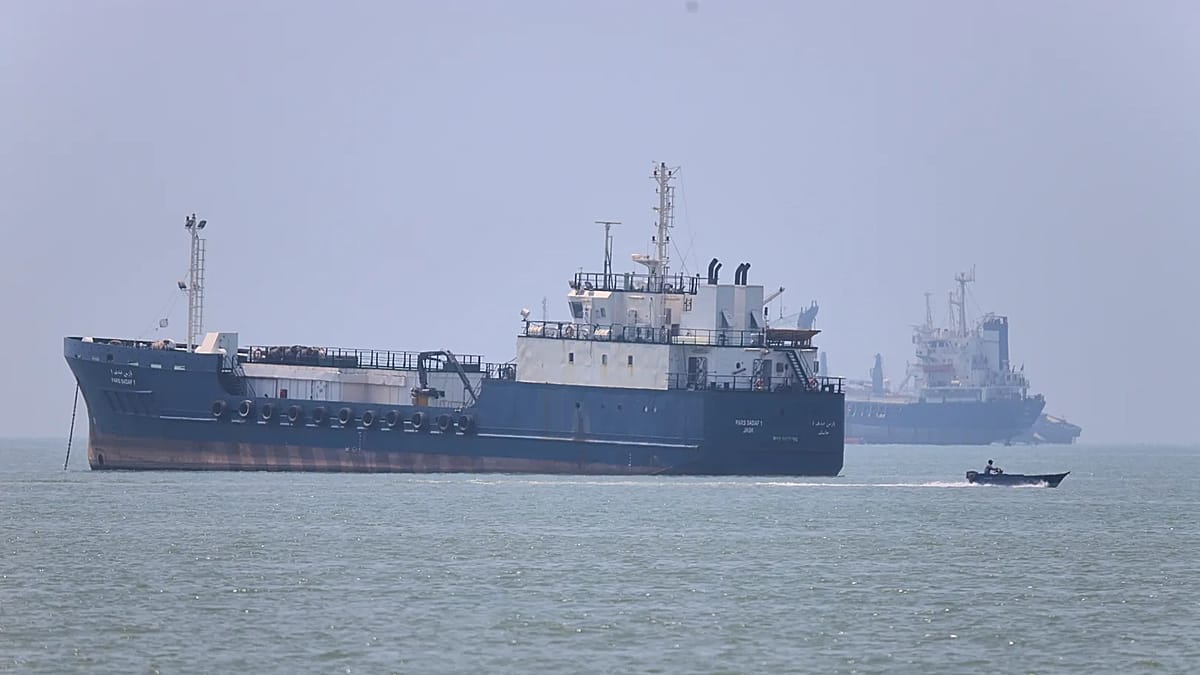
Tuesday’s 3.5% move follows the same template. The actual situation on the ground has not changed. The Strait of Hormuz remains effectively closed to most international traffic. Hundreds of tankers are stranded. QatarEnergy’s LNG facilities remain partially offline. The IEA has described this as the largest supply disruption in the history of global oil markets. None of that has been resolved by a White House press briefing.
A Recalibration, Not a Reversal
The technical picture is instructive. Oil had rallied sharply in the previous session on renewed escalation fears — Trump’s threat to seize Kharg Island, the Houthis firing missiles at Israel, Iran’s parliament warning it was waiting to “set US troops on fire.” The diplomatic signal has removed some of the freshly added risk premium. It has not removed the underlying premium that has been building since 28 February.
As Goldman Sachs noted last week, crude prices are currently trading almost entirely on geopolitical risk. That risk has not diminished — it has temporarily been obscured by diplomatic noise. The market is not pricing in peace. It is pricing in slightly reduced odds of immediate escalation, which is a very different thing.
In the near term, oil is likely to remain headline-driven with elevated two-way volatility. Any development involving shipping route disruptions, attacks on energy infrastructure or a breakdown in the backchannel process could reverse Tuesday’s move within hours.
Trump’s Mixed Messages: A 150-Word Analysis
The diplomatic confusion surrounding this conflict traces directly to a consistent pattern in Trump’s communication strategy. Within a 72-hour window last week, he threatened to “obliterate” Iran’s power plants, then spoke of “winding down” the war, then claimed “very productive conversations” with Tehran, then floated seizing Kharg Island, then extended his deadline by ten days.
Markets rallied when Trump said the US and Iran were “in negotiations right now,” then reversed when Iran denied it — underscoring investors’ sensitivity to incremental changes in tone even when the underlying substance remains unclear. CNBC
The White House appears to be using optimistic diplomatic framing as a market management tool — releasing positive signals when prices spike too aggressively and hardening rhetoric when it wants to maintain pressure on Tehran. For oil traders, this creates a near-impossible environment. As one investor put it: “you just have to kind of grin and bear it.” The signals are contradictory by design. The volatility is the point.
The post Oil Falls 3.5% on Iran Diplomacy Hopes — But Markets Aren’t Buying It appeared first on European Business & Finance Magazine.