





























No Discounts, No Panic, No Problem: Why Ferrari Is the Most Untouchable Business Model in Europe
Quick Answer
As of 10 April 2026, Ferrari maintains operating margins above 26% on just 13,600 cars per year — higher than almost any manufacturer on earth — by ensuring its waiting list never clears, a strategy that has made it uniquely insulated from the tariff pressures currently hammering European luxury rivals. Unlike Swiss watch brands navigating a full market correction, Ferrari has not discounted once. Experts say the model is close to unbreakable today — but the company’s first fully electric model will be the first real test of whether desire survives without the combustion engine’s roar.
EBM Exclusive Take Ferrari is the clearest proof in European business that the most powerful competitive moat is not technology, not scale, and not distribution — it is desire, carefully rationed. Every strategic decision Ferrari makes is oriented around a single objective: ensuring that the number of people who want a Ferrari always exceeds the number of Ferrari’s available. That asymmetry is the entire business. When analysts talk about Ferrari’s pricing power, they are describing a symptom. The cause is a brand management operation of extraordinary discipline that has been running continuously for over seven decades and shows no sign of wavering. In an era when luxury is bifurcating sharply between the ultra-resilient and the dangerously exposed, Ferrari sits in a category so rarified it barely touches the cycle at all.
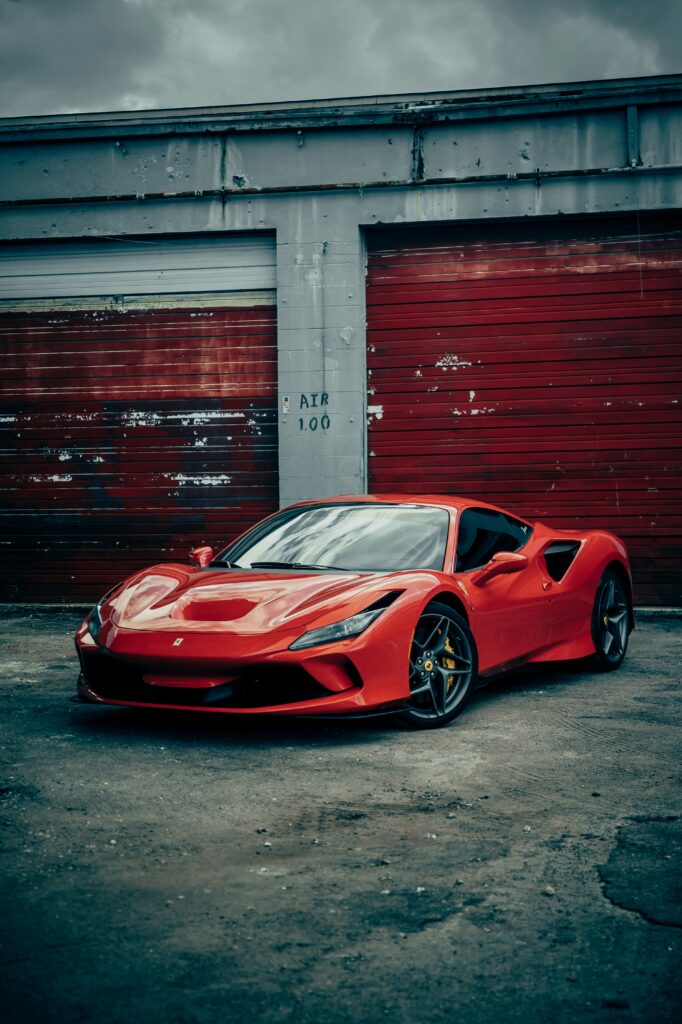
There is a number that tells you almost everything you need to know about Ferrari as a business. In its most recent financial year, the company produced approximately 13,600 cars. Porsche, by comparison, produced more than 300,000. Yet Ferrari’s operating margin — consistently above 26% — puts it in a class almost entirely occupied by software companies and pharmaceutical patent holders rather than manufacturers of physical objects assembled from steel, aluminium and carbon fibre.
That margin is not an accident. It is the output of a business model that has been constructed, refined and protected over decades with a clarity of strategic purpose that most European companies would struggle to articulate, let alone execute. As the broader European luxury sector navigates a period of acute pressure from softening Chinese demand and rising US tariff risk, Ferrari’s insularity from those forces is not luck. It is architecture.
The Waiting List as a Weapon
 The central mechanism of Ferrari’s model is supply constraint. Ferrari does not produce cars to meet demand. It produces cars to a number it has decided in advance — a number calibrated not to clear the waiting list but to ensure the waiting list never disappears. At any given moment, a customer ordering a new Ferrari through a standard dealership relationship is looking at a wait measured in years, not months. For certain models, the wait is effectively indefinite — allocation is managed not by price but by relationship history with the brand.
This inverts the logic of almost every other manufacturing business on earth. Conventional manufacturers treat excess demand as a production problem to be solved. Ferrari treats it as the product itself. The waiting list is not a failure of capacity planning — it is the primary evidence that the brand remains healthy. The moment Ferrari could satisfy all demand immediately, the model begins to break down.
Pricing Power Nobody Else Has
The consequence of permanent excess demand is pricing power of a kind that exists almost nowhere else in the physical goods economy. Ferrari has raised prices consistently and significantly over the past decade without measurable demand destruction. The SF90 Stradale launched at approximately €450,000. Successor and special series models have pushed well beyond that. The company’s limited series and Icona models — produced in tiny quantities for clients with long relationship histories — command prices that make the standard range look modest.
Critically, Ferrari does not discount. Not in downturns, not to clear inventory, not to compete with rivals. That discipline mirrors the approach that has made Richemont’s watch brands resilient through the current Swiss watch market correction — the refusal to compromise on price is simultaneously a margin protection mechanism and a brand protection mechanism. Every discount is a small withdrawal from the account of desire.
The EV Transition on Ferrari’s Own Terms
Where Ferrari’s strategic confidence is most visible is in its approach to electrification. While European automakers have faced an existential reckoning over EV transition timelines, cost structures and charging infrastructure, Ferrari has managed the shift entirely on its own terms. The company introduced its first hybrid models — the SF90 and the 296 — not as concessions to regulation but as performance upgrades, framing electrification as a tool for making faster cars rather than greener ones.
Its first fully electric model is planned for later in the decade. Ferrari has been explicit that it will not rush this timeline to satisfy regulatory pressure or investor sentiment. The company’s position — essentially that Ferrari customers will wait for a Ferrari EV rather than defect to a competitor — is either extraordinarily arrogant or an accurate reading of its customer base. The evidence strongly supports the latter.
The Client Relationship as a Moat
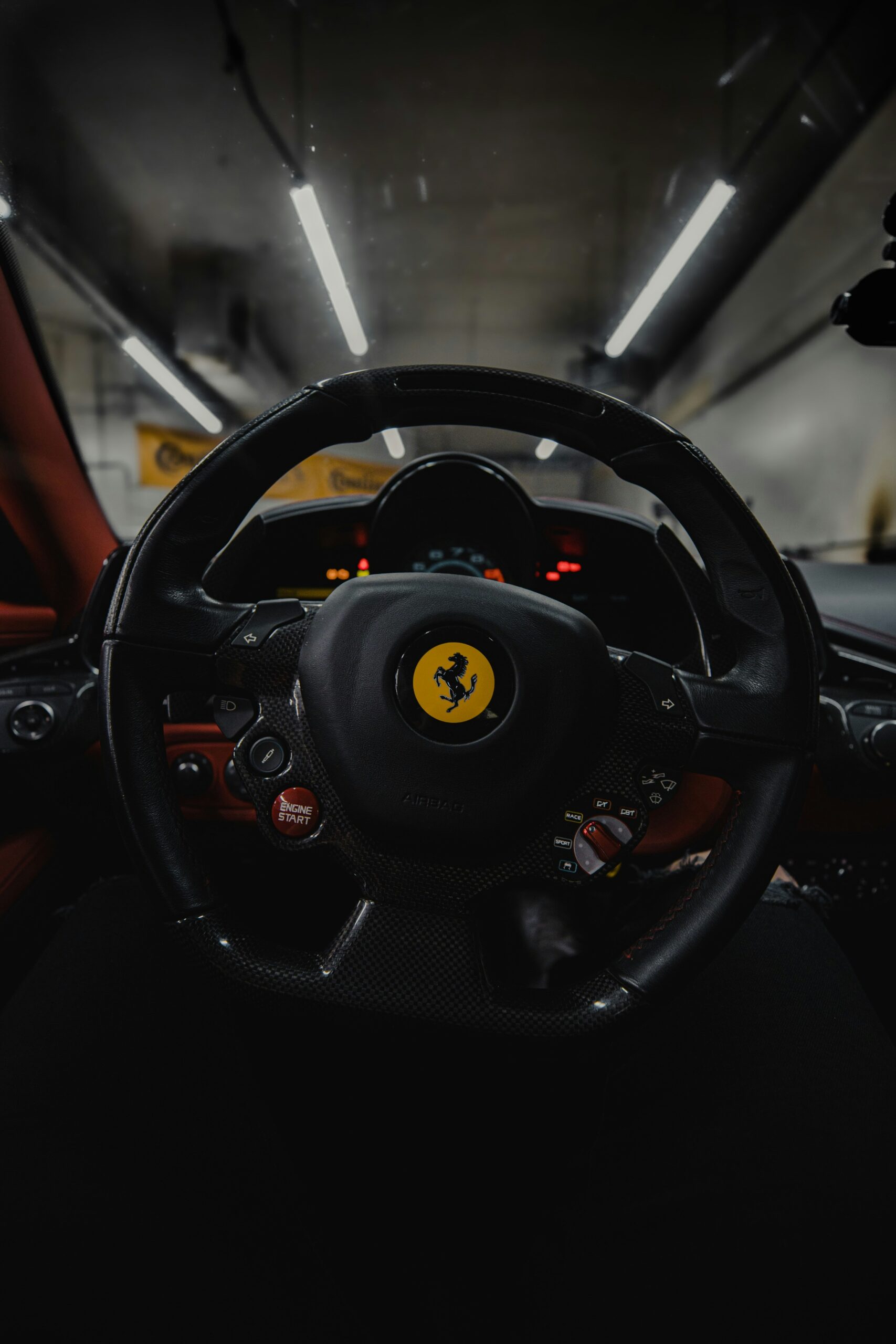 Ferrari’s dealer and client management operation is as important to the business model as the cars themselves. Access to the most desirable and limited models is controlled not through open market pricing but through allocation decisions made on the basis of purchase history, brand loyalty and relationship depth. A first-time buyer does not receive an allocation of a LaFerrari or a Daytona SP3. Those cars go to clients who have demonstrated, over years and multiple purchases, a commitment to the brand that goes beyond a single transaction.
This creates a self-reinforcing loyalty structure. The behavioural economics of exclusivity dictate that the harder access is to obtain, the more valuable it feels — and the more valuable it feels, the more effort clients will invest in maintaining the relationship that provides it. Ferrari’s most loyal clients are not loyal because the cars are the best in the world, though many would argue they are. They are loyal because loyalty is the price of access, and access is what they are actually buying.
Why This Model Is Nearly Impossible to Replicate
The frustrating reality for any business attempting to study Ferrari is that the model is almost entirely path-dependent. Ferrari’s pricing power exists because of Ferrari’s history. The waiting list functions because of seven decades of motorsport heritage, design mythology and cultural resonance that cannot be manufactured in a shorter timeframe. According to Bloomberg, Ferrari consistently ranks as one of the world’s most powerful brands by value relative to revenue — a ratio that reflects how much of the company’s worth exists in perception rather than physical assets.
New entrants to the ultra-luxury automotive space — Rimac, Pagani, Koenigsegg — can produce extraordinary machines and command extraordinary prices. None of them has a waiting list that functions as Ferrari’s does, because none of them has Ferrari’s history. The moat is not the product. The moat is time.
In a European business landscape navigating tariff shocks, demand softness and margin compression across almost every sector, Ferrari sits in a position of almost serene detachment. It will sell approximately the same number of cars this year as last year. The waiting list will remain full. The margins will hold. The desire will not diminish.
That is not a business. That is a force of nature with an EBITDA margin.
Related Analysis
- LVMH and the Tariff Wall: How Trump’s Trade War Threatens European Luxury’s American Engine
- Richemont and the Watch Market Correction: Two Strategies, One Crisis
- Europe’s Automakers and the EV Rec
The post No Discounts, No Panic, No Problem: Why Ferrari Is the Most Untouchable Business Model in Europe appeared first on European Business & Finance Magazine.