






























New York Luxury Office Market Booms as Companies Seek High-End Amenities
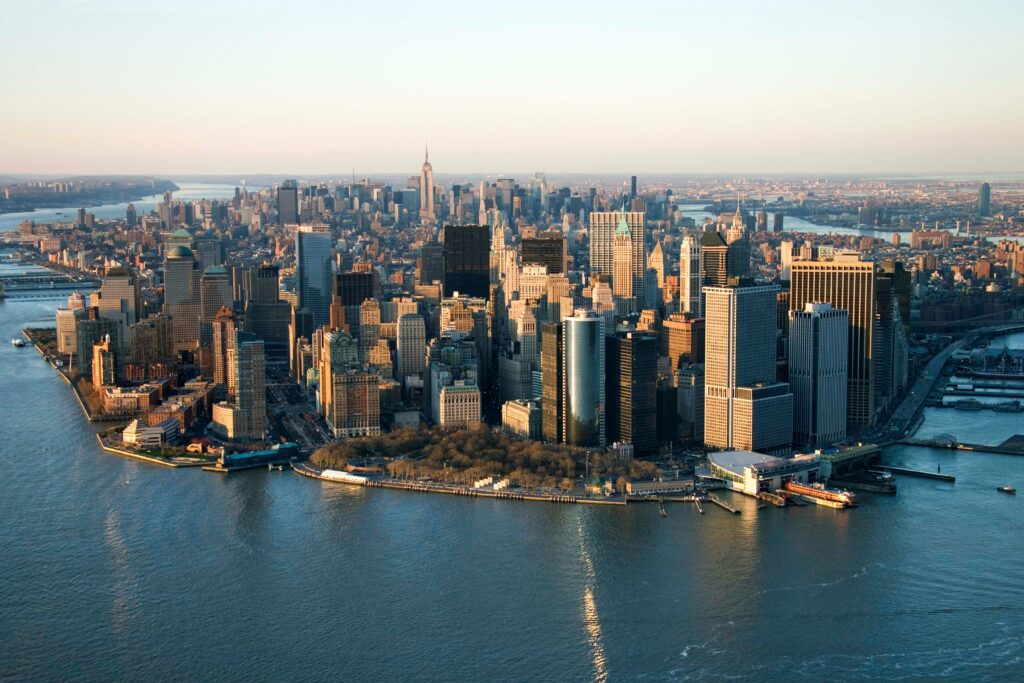
Manhattan’s office market has shattered records in 2025, with a dramatic surge in demand for premium workspace that signals a decisive shift in corporate real estate strategy. The number of leases signed for space priced at $100 or more per square foot reached an all-time high, as companies across finance, technology and professional services compete for trophy buildings offering world-class amenities and modern infrastructure.
According to analysis from JLL, tenants signed 313 leases at $100 per square foot or above in 2025, spanning 125 buildings and totaling approximately 9.96 million square feet. This represents a 48% increase from the previous year’s record of 212 such leases, and accounts for roughly one-third of all Manhattan leasing activity. The trend underscores a fundamental reordering of priorities in the post-pandemic workplace, where companies are investing heavily in physical space as a tool for talent retention and collaboration.
The ultra-premium segment has become particularly competitive. Twenty-eight transactions in 2025 started at $200 per square foot or higher, including six deals exceeding $250 per square foot. SL Green’s One Vanderbilt set a new benchmark at $305 per square foot, establishing what industry observers now regard as the ceiling for Manhattan’s most coveted addresses. These figures dwarf asking rents in other major American cities and rival only London’s Mayfair district on a global comparison basis.
Trophy space availability has tightened dramatically, falling below 12% citywide and to just 7.5% in Midtown’s prime corridors. Hudson Yards, Union Square and the Grand Central district have all seen availability rates compress, with some marquee buildings achieving occupancy levels above 95%. Franklin Wallach, executive managing director of research at Colliers in New York, described 2025 as “a watershed moment in the Manhattan office market’s recovery,” noting that tenant demand matched pre-pandemic volume while supply tightened for the longest continuous quarterly period in nearly two decades.
Financial services firms have led the charge, with major players including Citadel, Jane Street Capital and Guggenheim Partners all committing to substantial long-term leases. Jane Street expanded its footprint to nearly one million square feet at 250 Vesey Street, while Citadel secured 850,000 square feet at 350 Park Avenue—one of Manhattan’s most prestigious addresses. These moves reflect a broader trend among leading financial institutions seeking to project stability and permanence through their real estate commitments.
Technology and media companies accounted for nearly one-third of top-dollar leasing activity, marking a reversal from earlier pandemic-era trends when these sectors downsized aggressively. Amazon, Bloomberg, Universal Music Group and several artificial intelligence startups collectively leased more than one million square feet of premium space, driven by return-to-office mandates and competition for engineering talent. AI companies alone signed deals totaling one million square feet, predominantly concentrated in Midtown South’s tech corridor.
The amenities driving these premium rents extend far beyond basic infrastructure. Trophy buildings now routinely offer rooftop terraces, full-service fitness centers, conference facilities with advanced audiovisual systems, curated food and beverage programs, dedicated wellness rooms and concierge services. One Vanderbilt features a 30,000-square-foot amenity floor with panoramic city views, while JPMorgan Chase’s new $3 billion headquarters at 270 Park Avenue includes meditation rooms and extensive gardens. These features have become essential differentiators as employers seek to create destinations rather than mere workplaces.
Landlord dynamics have shifted accordingly. Vornado Realty Trust leased the largest volume of top-dollar space, totaling approximately 2.6 million square feet across 47 deals. The firm’s Penn 1 and Penn 2 towers near Penn Station emerged as the most active buildings by transaction count, benefiting from their proximity to transit infrastructure and extensive recent renovations. Strategic real estate positioning has become a critical competitive advantage in an increasingly landlord-favorable market.
Asking rents citywide reached a record $60.09 per square foot, far exceeding the national average of $36.35 per square foot. Class-B asking rents in Manhattan hit a record $68.61 per square foot in the fourth quarter, up 1.1% from the previous quarter, demonstrating that the premium trend is lifting pricing across quality tiers. Midtown’s trophy space now commands asking rents approaching $191 per square foot, up 12% year-over-year.
The market bifurcation has created challenges for budget-conscious tenants. Older Class-B and Class-C buildings face availability rates exceeding 20% as tenants migrate toward newer stock. More than two million square feet of outdated office space exited the market in 2025 for planned conversions to residential use, further tightening supply of quality workspace. This reshaping of urban commercial real estate mirrors trends observed in London, Paris and other major European capitals.
Industry analysts project the momentum will continue through 2026. Several major office towers broke ground in 2025, including Related’s development at 70 Hudson Yards, but delivery timelines extend well into 2027. With limited new supply and sustained tenant demand, landlords have regained pricing power for the first time since the pandemic. For corporations planning relocations or expansions, the message is clear: premium office space in gateway cities has become a sellers’ market, and companies willing to commit to long-term leases in trophy buildings can expect to pay record prices for the privilege.
The post New York Luxury Office Market Booms as Companies Seek High-End Amenities appeared first on European Business & Finance Magazine.