














Most Iconic La Liga Midfielders Who Dictated Play
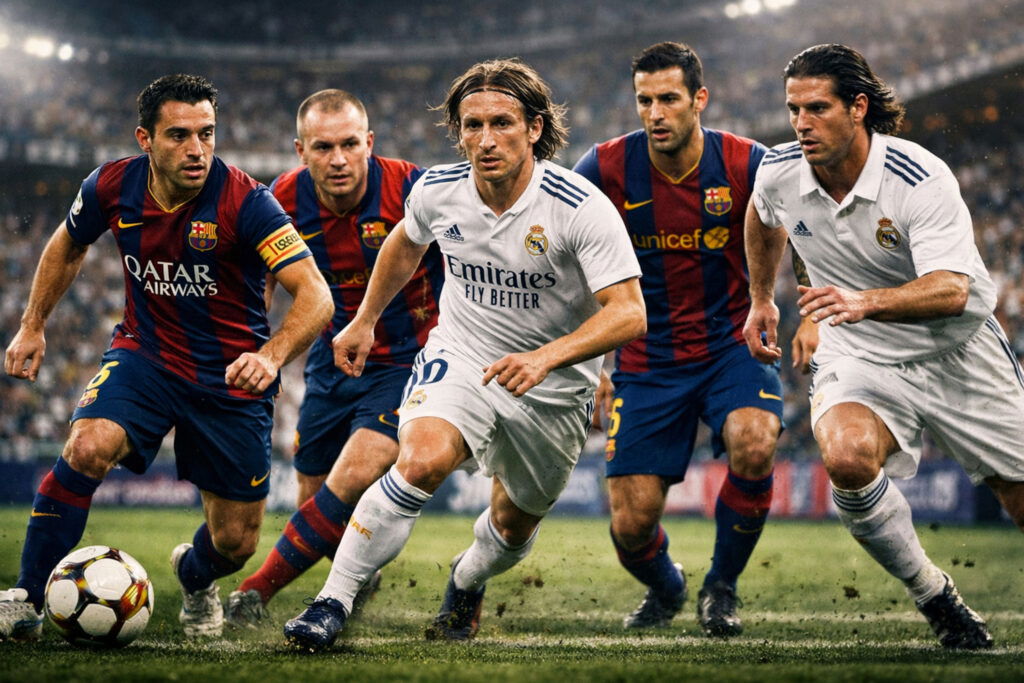
La Liga has always treated midfield control as a craft. Tempo, angles, patience, nerve. The league rewarded players who could slow a match to walking pace, then accelerate it with a single decision. What follows is not a highlight reel of screamers from 30 yards, but a look at the conductors who shaped games, seasons, and in a few cases, football itself.
Xavi Hernández
Xavi turned possession into an ideology. At Barcelona, the ball rarely felt loose or rushed. His genius sat in timing rather than flair. He knew when to recycle, when to split lines, and when to suffocate an opponent by denying them oxygen, also known as the ball. Under Guardiola, Xavi became the metronome of tiki-taka, but his influence extended beyond systems. Opponents knew that chasing him was a waste of energy. He had already passed and moved before the press arrived.
Barcelona La Liga titles during his peak years were built on territorial dominance. Xavi often completed over 90 passes per match in league play, with accuracy that made pressing plans collapse by minute twenty.
Andrés Iniesta
Iniesta dictated play in a quieter way. Where Xavi controlled rhythm, Iniesta dissolved pressure. Tight spaces became invitations rather than traps. He carried the ball through midfield lines when passing lanes closed, turning defensive blocks into broken shapes.
In La Liga, Iniesta was often the release valve in games where Barcelona faced deep defensive lines. He did not dominate through volume, but through timing. One carry, one disguised pass, and the match tilted. His ability to control tempo while moving forward separated him from almost everyone else who played the role.
Luka Modri?
Modri? brought a different flavour to La Liga control. Less positional, more elastic. At Real Madrid, he balanced chaos. Surrounded by runners, finishers, and transitions, Modri? ensured the game never slipped into panic.
What defined him was adaptability. He could slow matches in European knockouts, then turn league fixtures into controlled counter-attacking displays. His passing range allowed Madrid to bypass presses rather than absorb them. Even in his mid thirties, Modri? remained the player teammates looked for when a game needed calming.
Sergio Busquets
Busquets dictated games without appearing to move much at all. His influence sat in positioning and anticipation. He cut passing lanes before they opened and played forward passes before opponents set their feet.
In La Liga, Busquets often touched the ball more than anyone else on the pitch. He linked defence to midfield, midfield to attack, and did so with minimal fuss. His reading of space allowed Barcelona’s full-backs and interiors to take risks, knowing the safety net was already in place.
Fernando Redondo
Before possession football became a doctrine, Redondo controlled matches through elegance and authority. At Real Madrid in the late 1990s, he blended Argentine technique with European discipline. He could slow games to a crawl, then explode through midfield with a surge that felt almost theatrical.
Redondo’s La Liga influence was about balance. He defended without wrecking rhythm and attacked without losing structure. His style felt ahead of its time, a prototype for the modern deep-lying playmaker.
Other Midfielders Who Shaped the League
La Liga’s history is deeper than any shortlist. Players like Pep Guardiola set the foundations for positional control in the 1990s, while Juan Carlos Valerón ran Deportivo’s title challenge through intelligence rather than power. Each reflected the league’s preference for brains over brawn.
La Liga Control Midfielders at a Glance
| Player | Clubs | Primary Role | La Liga Titles | Defining Trait |
|---|---|---|---|---|
| Xavi Hernández | Barcelona | Deep playmaker | 8 | Tempo control |
| Andrés Iniesta | Barcelona | Interior creator | 9 | Press resistance |
| Luka Modri? | Real Madrid | Advanced controller | 3 | Game management |
| Sergio Busquets | Barcelona | Holding midfielder | 9 | Positional intelligence |
| Fernando Redondo | Real Madrid | Deep controller | 2 | Balance and elegance |
Why La Liga Produced So Many Controllers
The league’s tactical culture rewarded patience. Technical security mattered more than physical dominance, and youth systems prioritised spatial awareness from an early age. Matches were often decided by who controlled midfield zones rather than who won aerial duels. That environment allowed players like Xavi and Iniesta to thrive, and encouraged others like Modri? to refine their craft rather than abandon it.
Final Thoughts
Dictating play in La Liga has never been about shouting instructions or crunching tackles. It has been about knowing when to wait, when to accelerate, and when to deny the opponent any meaningful choice at all. The midfielders above did not just play the game. They authored it.
Optional Alternative Title
The Midfield Conductors Who Defined La Liga’s Rhythm
SEO Meta Description
Explore the most iconic La Liga midfielders who dictated play, from Xavi and Iniesta to Modri? and Redondo, with analysis, stats, and tactical insight.