


















Iran’s New Supreme Leader Just Threatened to Choke the World’s Oil Supply — and Markets Are Panicking
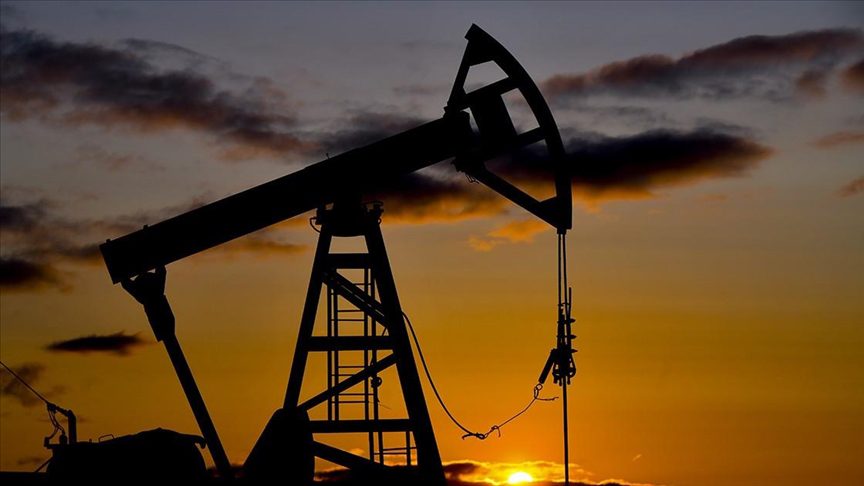
Mojtaba Khamenei, Iran’s newly appointed supreme leader, has called for the Strait of Hormuz to remain closed and warned of continued strikes on US Gulf bases. Oil has surged back above $100 a barrel, the IEA has declared the largest supply disruption in history, and global markets are selling off sharply.
The world’s most important oil chokepoint now has a name attached to it — and that name is Khamenei.
In his first public statement since being appointed Iran’s supreme leader, Mojtaba Khamenei has called for the Strait of Hormuz to “remain closed”, according to written remarks distributed by Iranian state media. In the same statement, he warned that Iran would continue to target US military bases throughout the Gulf region — a declaration that lands not merely as rhetoric but as policy.
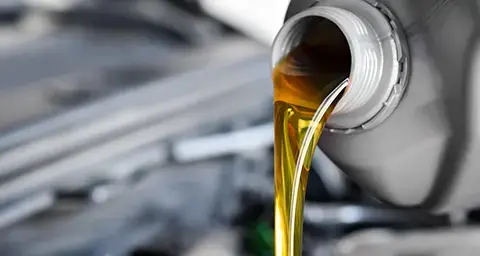
The consequences were immediate. Brent crude surged back above $100 a barrel. US equities fell sharply in early trading, with the S&P 500 shedding 1.3 per cent and the Nasdaq sliding 1.6 per cent. The International Energy Agency delivered its starkest assessment yet, warning that oil markets are suffering what it described as “the largest supply disruption in history.”
This is no longer a crisis being managed at the margins. It is escalating at the centre.
A Wounded Leader, an Unbowed Stance
Western officials believe Khamenei sustained injuries during the conflict with the US and Israel, according to people familiar with intelligence assessments. That detail matters — not because it diminishes his authority, but because it contextualises the ferocity of his opening statement. His first public words were not an olive branch. They were a warning.
The Strait of Hormuz is the jugular vein of global energy. Roughly 20 per cent of the world’s oil supply passes through this 33-kilometre-wide corridor between Iran and Oman on any given day. A sustained closure — even a partial or threatened one — is not an inconvenience to oil markets. It is a structural shock. The IEA’s language reflects that reality plainly.
For European economies still navigating the aftershocks of years of energy volatility, the timing could scarcely be worse. Energy costs that had begun to stabilise now face a renewed upward spiral, with knock-on effects for inflation, monetary policy, and consumer confidence across the continent. European Business Magazine has previously reported on the fragility of [europeanbusinessmagazine.com] European energy security and the ongoing scramble to diversify supply away from politically unstable corridors.
Trump’s Calculation
Donald Trump, for his part, signalled that the economic pain is a price he is willing to accept — at least for now. In a social media post that itself sent Brent crude climbing before markets partially retraced, Trump said that eliminating Iran’s nuclear threat was of “far greater interest and importance” than the surge in oil prices.
That framing is significant. It tells financial markets that Washington is not about to blink at $100 oil. It tells Tehran that the pressure will not lift. And it tells allies — many of whom depend on stable energy prices to fund public services and manage debt — that they are secondary considerations in this particular calculus.
The S&P 500’s 1.3 per cent decline in early trading reflects a market beginning to price in a prolonged, rather than brief, period of disruption. [europeanbusinessmagazine.com] Energy stocks are among the few beneficiaries, with oil majors gaining ground as crude climbs. For investors tracking [europeanbusinessmagazine.com] commodity markets and geopolitical risk premiums, the picture is shifting fast.
The Wider Stakes
What makes this moment particularly dangerous is the convergence of factors. A new, unproven supreme leader with something to prove. A military conflict that has already drawn in the United States and Israel. A chokepoint under threat. And an energy market the IEA says has never been more disrupted.
The question now is whether Khamenei’s statement hardens into a sustained strategy or whether back-channel pressure opens space for de-escalation. History suggests neither outcome is guaranteed. What is guaranteed is that every day the Strait remains closed or threatened, the [europeanbusinessmagazine.com] global economic cost rises — and the room for a clean diplomatic exit narrows.
FAQs
Why is the Strait of Hormuz so important to global oil supply? Approximately 20 per cent of the world’s daily oil supply transits the Strait of Hormuz, making it the single most critical maritime chokepoint for energy markets. Any disruption — whether physical or through threat alone — triggers immediate price responses across global commodity markets.
What has the IEA said about the current oil supply disruption? The International Energy Agency has described the current situation as the largest supply disruption in oil market history, signalling that the conflict’s impact on energy flows has already exceeded any previous comparable crisis in scale.
How are financial markets responding to the Strait of Hormuz crisis? Brent crude has risen back above $100 a barrel, while US equities have sold off, with the S&P 500 down 1.3 per cent and the Nasdaq off 1.6 per cent in early trading. Analysts expect continued volatility for as long as the situation in the Gulf remains unresolved.
The post Iran’s New Supreme Leader Just Threatened to Choke the World’s Oil Supply — and Markets Are Panicking appeared first on European Business & Finance Magazine.