





















Inflation surged in March as Iran war's energy impact hit consumers

Inflation surged in March as consumer prices jumped amid the economic disruptions caused by the Iran war's impact on the energy market.
The Bureau of Labor Statistics on Friday said that the consumer price index (CPI) – a broad measure of how much everyday goods like gasoline, groceries and rent cost – rose 0.9% from a month ago and is 3.3% higher than last year. The annual figure jumped from last month's 2.4% reading, while the monthly increase also rose markedly from last month's 0.3% reading.
Both the 0.9% monthly increase and 3.3% annual rise were in line with the expectations of economists polled by LSEG.
So-called core prices, which exclude volatile measurements of gasoline and food to better assess price growth trends, were up 0.2% on a monthly basis and 2.6% from a year ago. Both of those figures were slightly cooler than economists' predictions of 0.3% and 2.7%, respectively.
The core CPI figures were slightly hotter than February's readings, which showed prices rose 0.2% on a monthly basis and 2.5% from the prior year.
FED OFFICIAL SAYS INTEREST RATE HIKE POSSIBLE AS GAS PRICES, INFLATION REMAIN ELEVATED
Economists have noted that inflation data from December 2025 through April 2026 will be affected due to data collection interruptions resulting from last fall's 43-day government shutdown.
During the shutdown, the BLS wasn't able to gather data and used a carry-forward methodology to make up for the lack of an October CPI report and missing data in November's report. Economists say this is likely to impart a downward bias on inflation data until this spring, when fresh data will negate the discrepancy.
High inflation has created severe financial pressures in recent years for most U.S. households, which are forced to pay more for everyday necessities like food and rent. Price hikes are particularly difficult for lower-income Americans, because they tend to spend more of their already-stretched paychecks on necessities and have less flexibility to save.
Food prices were flat on a monthly basis in March, and were up 2.7% from a year ago. The food at home index declined 0.2% for the month and is up 1.9% over the last year, while the food away from home index is 3.8% higher than a year ago after a 0.2% increase on a monthly basis.
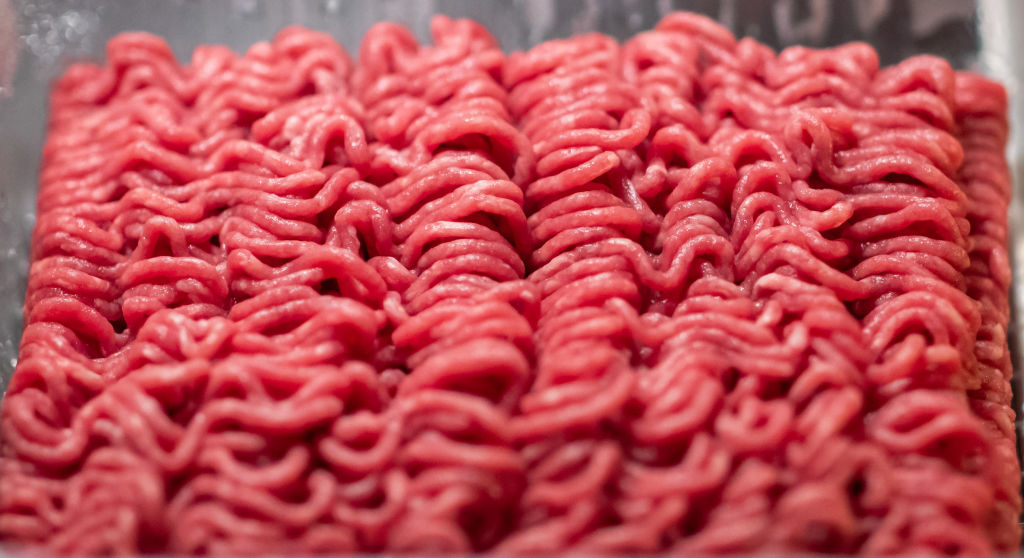
Meats, poultry and fish prices were down 0.5% for the month but remain 5.6% higher than a year ago. Beef and veal prices fell 0.6% in March and are 12.1% higher than last year. Egg prices continued to decline following an avian flu outbreak that impacted supply, with prices down 3.4% for the month and 44.7% from a year ago. The fruits and vegetables index rose 1% in March and is up 4% on an annual basis.
IS GROCERY RELIEF A MYTH? WHY COFFEE AND BEEF PRICES ARE ERASING YOUR SAVINGS AT THE CHECKOUT
Energy prices surged 10.9% in March amid the Iran war's disruption of Middle Eastern oil supplies, with prices up 12.5% in the last year. The BLS noted energy accounted for nearly three quarters of the overall monthly CPI increase.
Gasoline prices jumped 21.2% in March and are up 18.9% from a year ago. Utility gas service prices declined 0.9% on a monthly basis and are up 6.4% from a year ago. Electricity costs were up 0.8% in March and have risen 4.6% in the last year.
Housing prices rose 0.3% in March and are up 3% over the last year. Tenants' and household insurance costs were up 0.9% for the month and are up 7.4% from a year ago.
Transportation service prices were up 0.6% for the month and 4.1% from a year ago. Motor vehicle maintenance and repair costs increased 1.3% on a monthly basis and 6.1% annually. Auto insurance prices were flat in March and are up 0.8% compared with a year ago. Airline fares rose 2.7% in March and are up 14.9% from last year.
FED'S FAVORED INFLATION GAUGE REMAINED ELEVATED IN FEBRUARY, DELAYED REPORT SHOWS
"As expected, today's inflation jump mirrored the surge in energy prices," said Ellen Zentner, chief economic strategist for Morgan Stanley Wealth Management. "Markets may continue to wrestle with concerns that sticky inflation could become a quagmire as long as oil remains elevated, but the Fed will likely continue to run its ‘cautious’ playbook – not pivot to rate hikes."
LPL Financial chief economist Jeffrey Roach said that, "Since the Hormuz chokepoint was closed for an extended period, we should expect another one or two hot inflation prints, driven by transportation services and some durable goods categories. The second order effects will likely add another 0.2 over the next few months. The Fed is clearly on hold for the next several meetings."
GET FOX BUSINESS ON THE GO BY CLICKING HERE
EY-Parthenon chief economist Gregory Daco noted that "absent the downward bias from the BLS methodology used to fill data gaps during the October government shutdown, we estimate CPI inflation would have been 0.3-0.4 percentage points higher."
He added that "an energy- and food-driven bump to push headline CPI inflation to 3.6% in April-May, with core CPI temporarily rising toward 2.9% in May-June. We have raised our December 2026 forecast to 3.0% y/y for headline CPI inflation and now see core inflation around 2.6% y/y."