


















How the Forgotten Saudi Oil Pipleine Just Became the Most Critical Energy Artery on the Planet
Saudi Arabia Built Its Oil Escape Route 45 Years Ago — The World Is Only Now Paying Attention
In 1981, with the Iran-Iraq War raging and oil tankers burning in the Persian Gulf, Saudi Arabia made a decision that most of the world promptly forgot. It began constructing a 1,200-kilometre pipeline across the Arabian Peninsula — not because it needed one then, but because it understood it might need one later.
Forty-five years later, that moment has arrived.
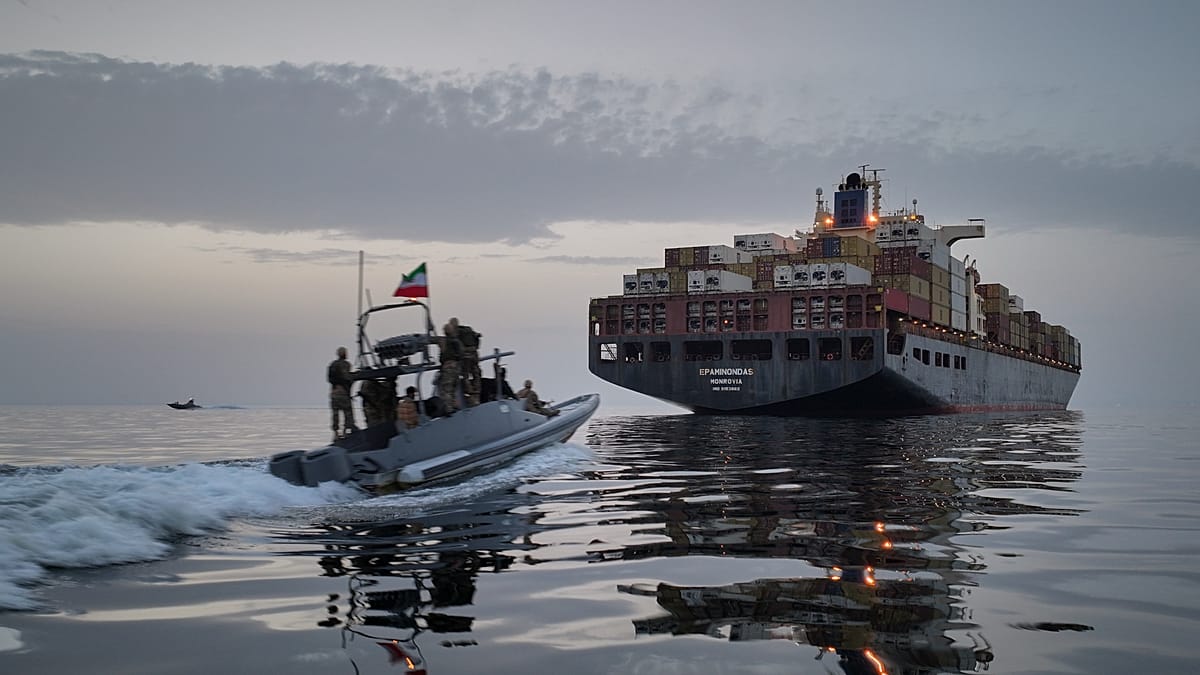
Saudi Aramco chief executive Amin Nasser confirmed this week that the company is ramping up crude flows through the East-West Pipeline, and that it will hit its full daily capacity of seven million barrels within days. The pipeline, known as Petroline, runs from the Abqaiq oil processing complex on Saudi Arabia’s eastern Gulf coast to the Red Sea port of Yanbu — bypassing the Strait of Hormuz entirely. With Iran having effectively closed the strait to non-Iranian vessels since early March, it has become, almost overnight, the most strategically significant piece of oil infrastructure on the planet. The closure of Hormuz represents the largest supply disruption in the history of global energy markets, and the pipeline’s activation is the most significant practical response yet attempted.
What the Pipeline Actually Is
Saudi Arabia’s East-West Crude Oil Pipeline was constructed in 1981 during the Iran-Iraq War, after Riyadh first confronted the vulnerability of routing the bulk of its exports through Hormuz. The 1,200-kilometre, dual-pipe system connects the Abqaiq oil processing complex in the Eastern Province to the Red Sea export terminal at Yanbu, running 48-inch and 56-inch lines across the Arabian Peninsula. It was built to provide breathing room, not carry Saudi Arabia’s full export load.
The original design capacity was 5 million barrels per day. In 2019, following Houthi drone strikes on Aramco’s Abqaiq facility, the company converted parallel natural gas liquids lines to carry crude oil, raising emergency capacity to 7 million barrels per day — a figure never tested at sustained flows until now. It was converted to full capacity on March 11, 2026, due to the Iran war and the associated closure of the Strait of Hormuz to non-Iranian vessels.
Yanbu’s oil exports have surged to around 2.47 million barrels per day — a 330 per cent increase compared with pre-war levels, according to maritime AI company Windward. The terminal is handling volumes it was not designed to sustain indefinitely.
The Gap Between Headline Capacity and Reality
The social media narrative around Petroline — that Saudi Arabia has a secret weapon capable of replacing Hormuz — significantly overstates what the infrastructure can actually do. While Petroline’s pipe can now move 7 million barrels per day, the port’s two terminals — Yanbu North and Yanbu South — have a nominal combined loading capacity of about 4.5 million barrels per day. Market sources put the effective, operationally tested figure closer to 4 million barrels per day, with energy consultancy Vortexa estimating terminals could handle roughly 3 million barrels per day under current wartime conditions.
The arithmetic is sobering. The Strait of Hormuz normally carries approximately 20 million barrels per day. The IEA estimates there is between 3.5 and 5.5 million barrels per day of available capacity to export crude on alternative routes through Saudi Arabia’s pipeline to the Red Sea and via the UAE’s pipeline to Fujairah. International Energy Agency The gap between that and 20 million barrels per day is not a rounding error.
There is also a deeper structural constraint. Maximising Petroline’s crude throughput means abandoning its role carrying natural gas liquids and products. “If the East-West pipeline is converted to carry all of Aramco’s crude oil exports to Yanbu, then it can’t also carry natural gas or products,” energy consultant Ellen Wald told Middle East Eye. Engineering News-Record The result is a partial solution that forces a trade-off: crude exports can be maintained at reduced levels, but refined product flows — the diesel, jet fuel and petrochemicals that industry and transport actually run on — remain severely disrupted. Aramco’s own CEO has already warned of catastrophic consequences if the conflict continues — a stark signal that Riyadh itself does not regard the pipeline as a sufficient answer to the crisis it is now managing.
A New Vulnerability
The pipeline’s activation has also introduced a risk that did not exist when Saudi Arabia’s exports flowed primarily through the Gulf. Oil leaving Yanbu for Asian buyers — which account for 75 per cent of Saudi crude exports — must now transit the Bab el-Mandeb strait between Yemen and Djibouti before reaching the Indian Ocean. “This makes the Houthis important,” Greg Priddy, a senior fellow at the Center for the National Interest, told Middle East Eye. “All that infrastructure is still exposed to drones, and the oil leaving Yanbu going to Asia has to pass through the Bab el-Mandeb.” Middle East Eye
Saudi Arabia has, in effect, solved one chokepoint problem by creating exposure to another. The pipeline bypasses Hormuz but not Houthi drones. Those tracking the broader oil shock and its implications for investor portfolios will recognise that a Bab el-Mandeb disruption would compound rather than replace the Hormuz closure. Europe is particularly exposed — already staring at a fresh inflation crisis driven by surging energy costs with gas storage at multi-year lows entering the conflict.
The Lesson in the Infrastructure
The Petroline’s story is ultimately one about strategic patience and the returns to long-term infrastructure thinking. Saudi Arabia built a bypass it hoped never to use, maintained it across four decades of relative Hormuz stability, expanded its capacity quietly in 2019, and is now deploying it in the precise scenario it was designed for. That is a form of national resilience that most energy-importing countries — and many energy-exporting ones — simply do not have.
Iran understands this too. Its yuan-denominated offer to reopen Hormuz selectively suggests Tehran is thinking in decades, not news cycles — using the strait not as a weapon of destruction but as leverage in a generational contest over who controls the financial architecture of global energy. The pipeline is genuinely impressive. It is also, by itself, nowhere near enough.
FAQs
Can Saudi Arabia’s East-West Pipeline replace the Strait of Hormuz? No. The pipeline can move up to 7 million barrels per day in theory, but terminal constraints at Yanbu limit practical throughput to around 3 to 4.5 million barrels per day. The Strait of Hormuz normally carries approximately 20 million barrels per day — a gap the pipeline cannot bridge, particularly as it cannot simultaneously carry both crude oil and the refined products that industry depends on.
When was the East-West Pipeline built and why? Construction began in 1981 during the Iran-Iraq War, when Saudi Arabia recognised the strategic vulnerability of routing all its exports through the Strait of Hormuz. The pipeline was designed as a contingency bypass, not a primary export route. Its capacity was expanded to 7 million barrels per day in 2019 following Houthi drone strikes on Abqaiq, converting parallel natural gas liquids lines to carry crude.
What is the new risk created by rerouting oil through Yanbu? Oil shipped from Yanbu to Asian buyers must transit the Bab el-Mandeb strait between Yemen and Djibouti, which passes through Houthi-controlled threat zones. The pipeline bypasses one chokepoint but creates exposure to another, meaning the Red Sea route is not an unconditional safe alternative.
The post How the Forgotten Saudi Oil Pipleine Just Became the Most Critical Energy Artery on the Planet appeared first on European Business & Finance Magazine.