






















How Social Media and Mobile Apps Have Changed the Way We Watch Football
About two decades ago, following a football match was a fairly “fixed” experience. Fans had to sit in front of the TV at a specific time or wait for the next morning’s sports news to find out the results of late matches. However, the explosion of social media and mobile apps has created a complete revolution. Today, football is no longer confined to 90 minutes on the pitch—it has become a 24/7 digital experience, anytime and anywhere.
1. From the “Main Screen” to the “Second Screen” Phenomenon
In the past, television was the center of the football experience. Today, the concept of the “Second Screen” has become an essential habit for billions of fans. While our eyes follow the ball on TV, our hands constantly scroll through our phones.
Why this shift? Simply because TV provides the visuals, while smartphones provide “everything else.” Fans use their phones to check lineups, view player heat maps, or look up head-to-head records between teams. Apps like Cafescore have become ideal companions, offering in-depth statistics that TV commentators sometimes don’t have time to cover.
2. Social Media: Turning Football into a Global Community Experience
In the past, we could only discuss matches with a few friends at a café. Today, social media platforms (X/Twitter, Facebook, TikTok) have broken that barrier.
2.1. Real-time interaction
Just seconds after a missed shot or a controversial VAR decision, millions of posts appear online. Fans can debate, celebrate, or express frustration with others who share the same passion—even if they are on the other side of the world.
2.2. Meme culture and short-form videos
Funny moments and spectacular goals are turned into short TikTok clips or Reels lasting just a few seconds. This allows football to reach even the busiest people—those who don’t have 90 minutes to watch a full match but still want to catch the highlights.
3. The Rise of Livescore Apps and Real-Time Data
One of the biggest changes is the speed of information updates. Modern mobile apps are so fast that users sometimes receive goal notifications on their phones before seeing the ball hit the net on TV (which is often delayed by a few seconds).
Following live football scores has become part of modern life. You might be in a meeting, driving, or shopping, yet still stay updated on match developments through a simple phone vibration. Platforms like Cafescore or live updates from Ten Sports TV ensure that whether it’s a Champions League final or a lower-tier league in South America, you are never left behind.
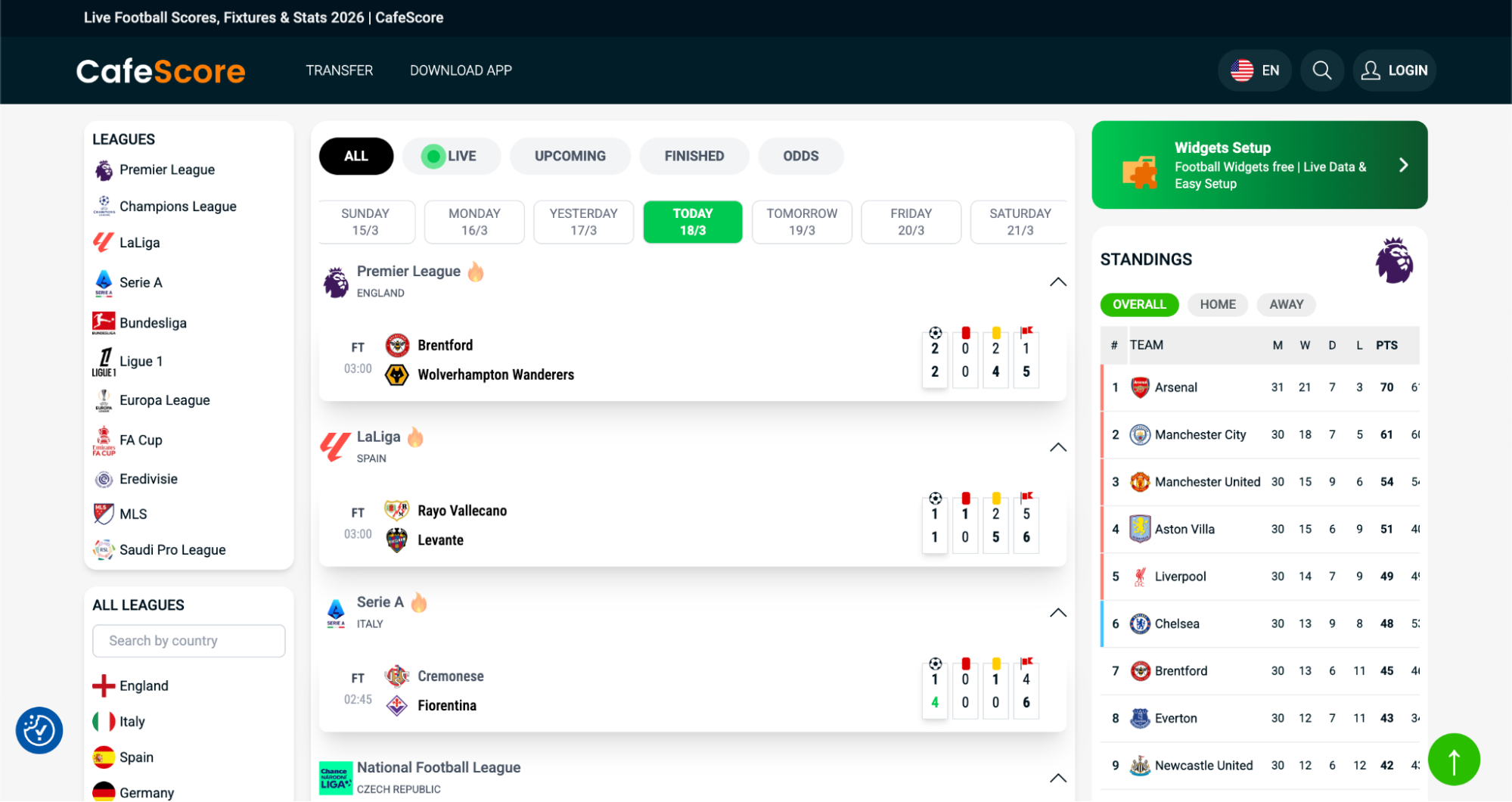
Below is an example of how a modern livescore platform presents real-time football data:
Real-time football dashboard showing live scores, match stats, and league standings on CafeScore
4. Personalizing the User Experience
Mobile technology allows every fan to “design” their own football experience. Instead of consuming generic information, users can choose to:
- Follow their favorite teams
- Receive notifications for red cards, substitutions, or corners
- Set reminders for key matches of the week
This personalization helps reduce information overload and allows fans to focus only on what truly matters to them. On Cafescore, users can easily manage their favorite match list, making it easier than ever to follow multiple games happening at the same time.
5. Data Analysis: From “Viewer” to “Expert”
Social media and mobile apps have democratized data that was once reserved for tactical experts. Metrics such as expected goals (xG), pass accuracy, and successful ball recoveries are now displayed right in the palm of fans’ hands.
Access to this data elevates fans’ understanding of the game. Discussions are no longer based purely on emotion but on concrete statistics. This also drives the growth of betting and analytical communities—where data becomes the common language.
Conclusion
Social media and mobile apps have not replaced traditional ways of watching football—they have become the perfect complements, making the experience more dynamic and engaging. We are living in an era where football fits in our pockets, connects us with millions of others, and turns every moment on the pitch into something timeless through digital data.
Whether you are a traditional fan or a tech-savvy younger viewer, leveraging the power of digital platforms will keep your passion for football burning bright. Let technology guide your love for the beautiful game!
The post How Social Media and Mobile Apps Have Changed the Way We Watch Football appeared first on Ten Sports TV.