































How iPhone Sales Drove Apple to a Record $144bn Quarter
Quick Answer: Apple reported record quarterly revenue of $144 billion driven by blockbuster iPhone sales, defying predictions of smartphone market saturation and economic headwinds. The iPhone alone generated approximately $70-75 billion in the December quarter, with China demand rebounding and premium iPhone Pro models commanding higher average selling prices that boosted profitability despite flat unit volumes.
What Drove Apple’s Record Quarter?
Apple’s fiscal Q1 2026 results (covering October-December 2025) shattered Wall Street expectations with $144 billion in total revenue—up approximately 8% year-over-year and representing the company’s largest quarterly revenue in history. The performance defied analyst concerns about smartphone market saturation and macroeconomic pressures that have constrained consumer spending across other technology categories.
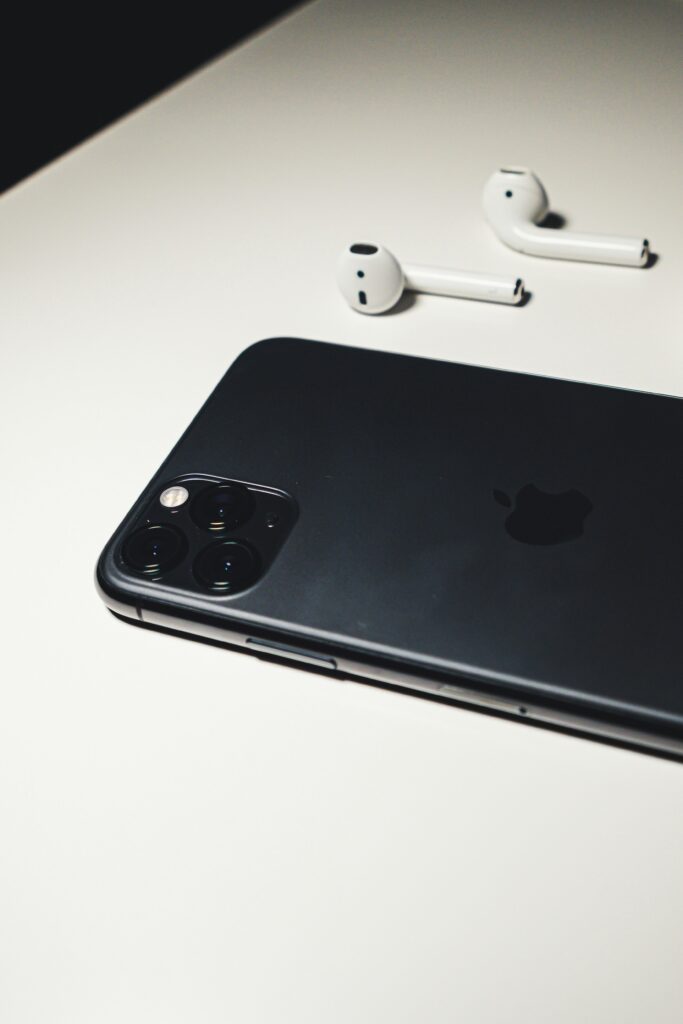
iPhone revenue of approximately $70-75 billion accounted for just over half of total quarterly revenue, continuing the device’s role as Apple’s financial engine. While unit sales grew only modestly—perhaps 3-5% year-over-year—average selling prices increased substantially as consumers gravitated toward premium iPhone 15 Pro and Pro Max models priced at $999-1,199 rather than base models starting at $799.
The product mix shift toward higher-priced models reflects Apple’s successful positioning of Pro features—including advanced camera systems, titanium construction, and faster processors—as worth premium pricing. Consumers who might have purchased mid-tier models in previous cycles increasingly stretched budgets to access Pro capabilities, generating more revenue per device sold and expanding profit margins beyond what unit growth alone would deliver.
China market recovery provided crucial boost after several quarters of weakness where local competitors including Huawei gained market share. Apple’s December quarter iPhone sales in Greater China increased approximately 15-20% year-over-year, suggesting Chinese consumers’ premium preferences overcame nationalist sentiment favoring domestic brands. The rebound validates Apple’s strategy of maintaining premium positioning rather than chasing market share through price cuts.
Services revenue of approximately $25 billion continued steady growth trajectory, providing high-margin recurring income that offsets hardware cyclicality. App Store commissions, Apple Music subscriptions, iCloud storage, AppleCare warranties, and Apple TV+ collectively generate profit margins exceeding 70%—far higher than 35-40% hardware margins—making services growth strategically critical to overall profitability expansion.
Why iPhone Demand Remains Resilient
Apple’s ability to generate record iPhone revenues during period when overall smartphone market declines or stagnates reveals several competitive advantages and market dynamics that insulate the company from broader industry challenges.
Ecosystem lock-in creates switching costs that retain customers across upgrade cycles. iPhone users who’ve purchased apps, accumulated iCloud storage, integrated Apple Watch and AirPods, and embedded themselves in iMessage conversations face substantial friction migrating to Android alternatives. This installed base loyalty means Apple competes primarily against customer decisions to delay upgrades rather than losing users to competitors.
The ecosystem’s value compounds over time as customers add devices and services. Someone who owns iPhone, Apple Watch, AirPods, and MacBook experiences seamless integration—messages sync across devices, AirPods switch automatically between screens, and continuity features enable starting tasks on one device and finishing on another. These conveniences create emotional attachment beyond pure functionality that rational price comparisons cannot capture.
Premium brand positioning enables Apple to target affluent consumers less affected by economic pressures that constrain mass-market spending. While budget-conscious consumers delay phone upgrades or trade down to cheaper Android alternatives, Apple’s customer base skews toward higher-income demographics who prioritize device quality and ecosystem benefits over initial purchase price.
This positioning proves particularly valuable during economic uncertainty when premium brands often maintain strength while mass-market segments weaken. Luxury goods frequently demonstrate resilience during recessions as wealthy consumers continue discretionary spending even when middle-income households retrench—pattern that applies to $1,000+ smartphones positioned as premium products rather than commodity devices.
Carrier subsidies and installment plans reduce purchase friction by spreading costs over 24-36 months rather than requiring upfront payment. When consumers see “$41.67 per month” instead of “$1,000 upfront,” psychological barriers diminish and upgrade cycles compress. US carriers particularly aggressive with trade-in offers that reduce effective iPhone Pro costs to $10-20 monthly when trading recent models—making annual upgrades affordable for middle-income consumers who couldn’t justify $1,000 yearly phone purchases.
Product innovation cycles maintain consumer interest through meaningful feature additions that justify upgrades. The iPhone 15 Pro’s titanium construction, improved camera systems, and Action button represent visible, tangible changes that create desire among users with two-to-three-year-old devices. While critics claim smartphones reached maturity with diminishing innovation, Apple’s ability to deliver features that resonate with mass audiences—better photos, longer battery, more durable materials—proves sufficient to sustain upgrade demand.
What About Other Product Categories?
While iPhone dominates headlines and revenues, Apple’s other hardware segments delivered mixed results that illustrate challenges in mature product categories and emerging opportunities in wearables and services.
Mac revenue of approximately $10 billion reflected modest growth as Apple Silicon’s performance advantages continue attracting buyers, though PC market overall remains weak. The transition to Apple-designed processors rather than Intel chips enabled dramatic performance and battery life improvements that justify premium pricing, while also improving profit margins as Apple captures value previously paid to chip suppliers.
However, Mac growth faces natural limits as the installed base upgrades to Apple Silicon. Most users who prioritized performance already purchased M1, M2, or M3 Macs during the past three years, leaving primarily price-sensitive buyers and those satisfied with older Intel models. Future Mac growth depends on attracting Windows switchers or convincing satisfied customers to upgrade for incremental improvements rather than transformational changes that drove initial Apple Silicon adoption.
iPad revenue around $8 billion showed slight decline, continuing multi-year trend where tablets struggle for relevance between large-screen smartphones and lightweight laptops. The iPad’s positioning challenges persist: too limited for primary computing (despite Apple’s “what’s a computer?” marketing), yet too expensive and capable for casual content consumption where smartphones suffice. Education market provides stable institutional sales, but consumer iPad demand remains constrained by unclear value proposition.
Wearables revenue (Apple Watch, AirPods, accessories) of approximately $12 billion demonstrated continued growth in category Apple created and dominates. Apple Watch’s health monitoring features—ECG, blood oxygen, fall detection, irregular rhythm notifications—provide genuine utility that justifies $399-799 pricing, while AirPods’ seamless iPhone integration and superior user experience maintain dominance despite cheaper competitor alternatives.
The wearables category’s importance extends beyond current revenue to strategic positioning for future product launches. Apple Watch established wrist-worn computing as normalized behavior, creating foundation for augmented reality glasses. AirPods’ success proved consumers accept premium-priced accessories when integration and experience justify costs—pattern Apple hopes to replicate with Vision Pro headset transitioning from niche product to mainstream adoption.
Why Services Growth Matters More Than Hardware
Apple’s $25 billion quarterly services revenue represents the company’s most important strategic achievement—transforming hardware-dependent business model into diversified operation where high-margin recurring revenue provides stability and valuation premium that pure hardware companies cannot achieve.
Margin comparison illustrates services’ financial attractiveness: hardware gross margins of 35-40% mean $100 iPhone sale generates $35-40 profit, while services gross margins exceeding 70% mean $100 App Store revenue generates $70+ profit. As services grow from 15% to potentially 30% of total revenue over coming years, overall company margins expand even if hardware margins stay constant.
Recurring revenue predictability enables better financial planning and valuation multiples. Hardware sales fluctuate with product cycles and economic conditions—iPhone revenue might decline 10% one quarter then surge 15% the next. Services revenue grows steadily 10-15% annually with minimal volatility, providing financial predictability that investors value through higher price-to-earnings multiples.
Customer lifetime value increases dramatically when Apple monetizes users beyond initial hardware purchase. A customer who buys $1,000 iPhone every three years generates $333 annual hardware revenue, but if they also subscribe to iCloud ($36 yearly), Apple Music ($120 yearly), Apple TV+ ($120 yearly), and purchase apps/games ($100 yearly), that same customer generates $709 annual recurring revenue—more than doubling their value to Apple.
The strategic imperative becomes maximizing services penetration among the 2+ billion active Apple devices globally. If Apple increases average revenue per device by just $10 annually through additional service subscriptions, it generates $20+ billion incremental high-margin revenue—equivalent to selling 30 million additional iPhones without manufacturing costs or supply chain complexity.
Regulatory risks shadow services growth as antitrust authorities scrutinize App Store commissions, payment restrictions, and ecosystem control. Epic Games’ lawsuit challenged Apple’s 30% commission and prohibition on alternative payment methods, with courts ruling Apple must allow developers to link to external payment options—potentially reducing App Store revenue by billions annually.
European Union’s Digital Markets Act forces more substantial changes, requiring Apple to allow third-party app stores, alternative payment systems, and browser engines beyond WebKit. These regulatory interventions could reduce services revenue by 10-20% in affected markets while increasing security risks that undermine customer experience—creating tension between regulatory compliance and business model protection.
What China Recovery Means
Apple’s China revenue rebound of 15-20% year-over-year growth reverses concerning multi-quarter decline where Huawei’s 5G phone launches and nationalist sentiment threatened Apple’s position in the world’s largest smartphone market. The recovery validates several strategic decisions while raising questions about sustainability.
Premium positioning resilience demonstrates Chinese consumers’ continued appetite for high-quality foreign brands despite government pressure favoring domestic alternatives. While Huawei recaptured market share in mid-tier segments with 5G-enabled devices priced competitively, Apple maintained dominance in premium category where build quality, ecosystem integration, and brand prestige justify higher prices.
This bifurcation—domestic brands winning mid-market, Apple dominating premium—mirrors patterns in automotive and luxury goods where Chinese consumers signal status through foreign premium brands despite availability of capable domestic alternatives. As long as China’s upper-middle class continues growing, Apple can sustain business through premium focus even if overall market share declines.
Retail expansion including new stores in smaller cities extends Apple’s physical presence beyond coastal metropolises into inland regions where rising incomes create new premium buyers. Each Apple Store becomes experiential destination that builds brand affinity beyond what online channels achieve, particularly important in markets where Huawei and Xiaomi maintain extensive retail networks.
Services localization through partnerships with local payment providers (Alipay, WeChat Pay), content providers for Apple TV+, and developers creating China-specific apps increases ecosystem stickiness. Chinese iPhone users who’ve invested in local services through Apple’s platforms face switching costs comparable to Western users, reducing defection risk even if nationalist pressures increase.
However, geopolitical risks remain substantial. Deteriorating US-China relations could trigger government restrictions on iPhone sales, state-enterprise purchasing bans, or consumer boycotts that rapidly erode Apple’s China business. The company’s concentration risk—China represents 15-20% of total revenue—means adverse regulatory or political developments could significantly impact overall financial performance.
What This Means for Competition
Apple’s $144 billion quarter and iPhone’s sustained premium pricing power illustrate competitive dynamics in global smartphone markets where market fragmentation creates winner-take-all outcomes at the high end while commodity economics prevail in mid-and-low tiers.
Samsung’s premium challenge intensifies as Apple captures increasing share of high-end market where profit pools concentrate. While Samsung ships more total smartphones globally through leadership in budget and mid-tier segments, Apple dominates $800+ category where gross margins reach 40%+ versus 20-25% margins on mainstream devices. This means Apple captures disproportionate industry profits despite smaller market share.
Samsung’s foldable devices—Galaxy Z Fold and Z Flip—represent attempts to differentiate beyond Apple’s rectangular slab form factor, attracting early adopters willing to pay premium prices for novel experiences. However, limited sales volumes and production challenges mean foldables remain niche category that hasn’t dented Apple’s premium dominance, though they establish Samsung’s innovation credentials.
Chinese manufacturers including Xiaomi, Oppo, Vivo, and Huawei compete primarily on value, offering feature-rich devices at prices 30-50% below comparable Apple/Samsung models. This strategy succeeds in price-sensitive markets including India, Southeast Asia, and Latin America where consumers prioritize functionality over brand, but struggles in developed markets where premium positioning and ecosystem lock-in favor Apple.
Huawei’s resurgence in China demonstrates local champions can leverage nationalism and government support to compete against foreign brands domestically, but its inability to access Google services outside China limits global expansion. The fragmentation creates scenario where no single Android manufacturer can match Apple’s scale advantages in component purchasing, R&D investment, or services development—perpetuating Apple’s profitability leadership.
Key Takeaways
✓ Apple’s record $144 billion quarter driven by iPhone sales of $70-75 billion, with premium iPhone Pro models commanding higher prices that boost profitability despite modest unit growth ✓ China market recovery of 15-20% reverses concerning decline, though geopolitical risks remain substantial threat to 15-20% of total revenue concentrated in single market ✓ Services revenue of $25 billion at 70%+ margins provides high-margin recurring income that strategically diversifies beyond hardware cyclicality and improves overall profitability ✓ Ecosystem lock-in through integrated devices and services creates switching costs that insulate Apple from competition and enable sustained premium pricing power ✓ Premium market concentration means Apple captures disproportionate smartphone industry profits despite modest global market share as high-end customers generate superior margins and lifetime value
Related EBM Coverage:
- Smartphone Market Dynamics: Premium vs Mass Market Economics
- Apple China Strategy: Balancing Growth and Geopolitical Risk
- Technology Services Revenue Models: Recurring Income Transformation
- Ecosystem Lock-In Effects: How Platforms Retain Customers
The post How iPhone Sales Drove Apple to a Record $144bn Quarter appeared first on European Business & Finance Magazine.