





























Gold Is Rising for a Third Straight Session — But the Investment Picture Is More Complicated Than Price Suggests
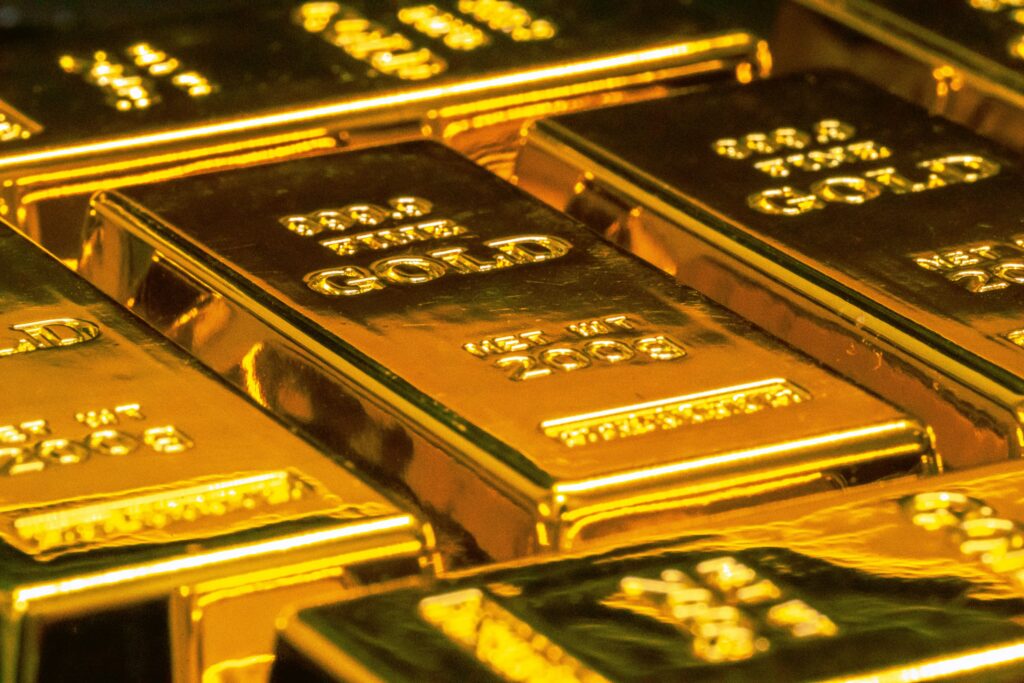
Quick Answer: Gold rose for a third consecutive session on Tuesday, trading around $4,556 as Federal Reserve Chair Jerome Powell’s comments eased fears of an imminent rate hike and Treasury yields continued to decline. Safe-haven demand driven by the Iran war is providing support, but significant headwinds remain — gold-backed ETFs saw outflows of around 34 tonnes last week alone, and reports of substantial gold sales by Turkey’s central bank have raised concerns about further central bank selling pressure.
What Is Driving Tuesday’s Move
Gold is drawing support from a pullback in US Treasury yields following comments by Fed Chair Jerome Powell, who affirmed that inflationary pressures remain “well anchored” despite higher energy prices — cooling hopes for immediate rate hikes. FXStreet For a non-yielding asset like gold, falling yields reduce the opportunity cost of holding the metal, making it relatively more attractive compared to Treasuries and cash. The 10-year yield dropped nearly 9 basis points on the session, providing a meaningful tailwind.
The Iran war continues to underpin safe-haven demand. With the Strait of Hormuz effectively closed to most international traffic, energy prices elevated and geopolitical uncertainty showing no signs of resolution, gold retains its core appeal as a store of value in times of crisis. As one gold analyst put it: “Gold is not responding to war. Gold is simply responding to the fact that the Federal Reserve might not lower interest rates as anticipated.” Investing News Network That framing captures the current dynamic precisely — it is the monetary policy implications of the war, not the war itself, that are doing most of the work on gold pricing.
The Problem With the Bull Case
Despite three consecutive sessions of gains, the investment picture for gold is more nuanced than the price action implies. ETF outflows have been substantial and sustained. Last week saw withdrawals of approximately 34 tonnes across all major regions — a significant figure that reflects institutional investors reducing exposure rather than adding to positions. When ETF outflows coincide with rising spot prices, it typically signals that the gains are being driven by futures positioning and short-term hedging rather than structural demand accumulation.
The Turkey central bank story adds a further complication. Reports of significant gold sales by Ankara to defend the lira have raised concerns that other emerging market central banks facing similar currency pressures could follow suit. Central bank buying has been one of the most important structural supports for gold over the past three years — averaging close to 1,000 tonnes annually. Any reversal of that trend, even if partial, would remove a significant demand pillar from the market. No Fed rate cuts are currently expected in 2026, real Treasury yields have moved higher, and the dollar has strengthened on safe-haven demand from the Iran conflict — factors that together make holding gold less appealing compared to bonds. FX Leaders
The Inflation Paradox
Gold’s relationship with inflation in the current environment is unusually complex. Normally, rising inflation supports gold as a hedge against the erosion of purchasing power. But the inflation being generated by the Iran war — driven by an energy price spike rather than monetary excess — is simultaneously pushing central banks toward tighter policy stances, which raises real yields and works against gold. The Federal Reserve held rates steady at its last meeting but warned explicitly of the risks that surging energy costs could generate a more persistent inflation spike. That hawkish undertone caps gold’s upside even as the inflationary environment might otherwise be expected to support it.
Gold has posted its third consecutive weekly loss ahead of Tuesday’s session, its worst streak since March 2020. FX Leaders The three-day recovery needs to be seen in that context — a bounce from oversold levels rather than a resumption of the structural bull trend that took gold to a record high of $5,595 earlier in the year.
What Comes Next
The near-term outlook for gold will be shaped by two parallel tracks. The first is the Iran war — any genuine diplomatic breakthrough that eases oil prices and reduces inflation expectations would likely be negative for gold in the short term, even if it improves the broader economic outlook. The second is the upcoming US economic data calendar, which includes JOLTS job openings on Tuesday, ADP employment and Manufacturing PMI on Wednesday and the critical non-farm payrolls report on Friday.
A weak payrolls print — particularly anything at or below 50,000 — could force a reassessment of the Fed’s rate path and push Treasury yields sharply lower, providing the catalyst gold needs to break through the key $4,600 resistance level that has capped recent sessions. A strong number, by contrast, would reinforce the no-cuts-in-2026 consensus and likely resume downward pressure.
JP Morgan continues to forecast gold prices averaging $5,055 per ounce by the final quarter of 2026 J.P. Morgan, with UBS targeting $6,200 by mid-year. The structural bull case remains intact. But in the near term, as stagflation fears and mixed central bank signals dominate market sentiment, gold is likely to remain volatile, headline-sensitive and caught between its dual role as an inflation hedge and a rate-sensitive asset.
The post Gold Is Rising for a Third Straight Session — But the Investment Picture Is More Complicated Than Price Suggests appeared first on European Business & Finance Magazine.