














Germany Admits It Has No Alternative to Gas — And It’s Starting to Reconsider Nuclear
Germany’s economy minister has broken with years of political orthodoxy, publicly calling for a fundamental rethink of her country’s decision to abandon nuclear power — a stance that would have been unthinkable in German politics just a few years ago.
Katherina Reiche, a member of Chancellor Friedrich Merz’s Christian Democratic Union, made the remarks as she launched a new investor conference designed to attract foreign capital to Europe’s largest economy. Her comments land at a moment of acute energy anxiety across the continent, and signal that the post-nuclear consensus in Berlin may finally be cracking.
“We need gas to secure our supply — that is the only baseload supply I have left,” Reiche told the Financial Times. “Politically speaking, I have no alternative.”
The admission is striking in its candour. Germany’s nuclear phaseout was one of the defining policy decisions of the Merkel era, accelerated in the wake of the Fukushima disaster in 2011 and completed under former chancellor Olaf Scholz. The closure of the final reactors was presented as a triumph of Germany’s Energiewende — its much-celebrated green transition. But the long-term consequences are now impossible to ignore.
The Cost of Phaseout Comes Due
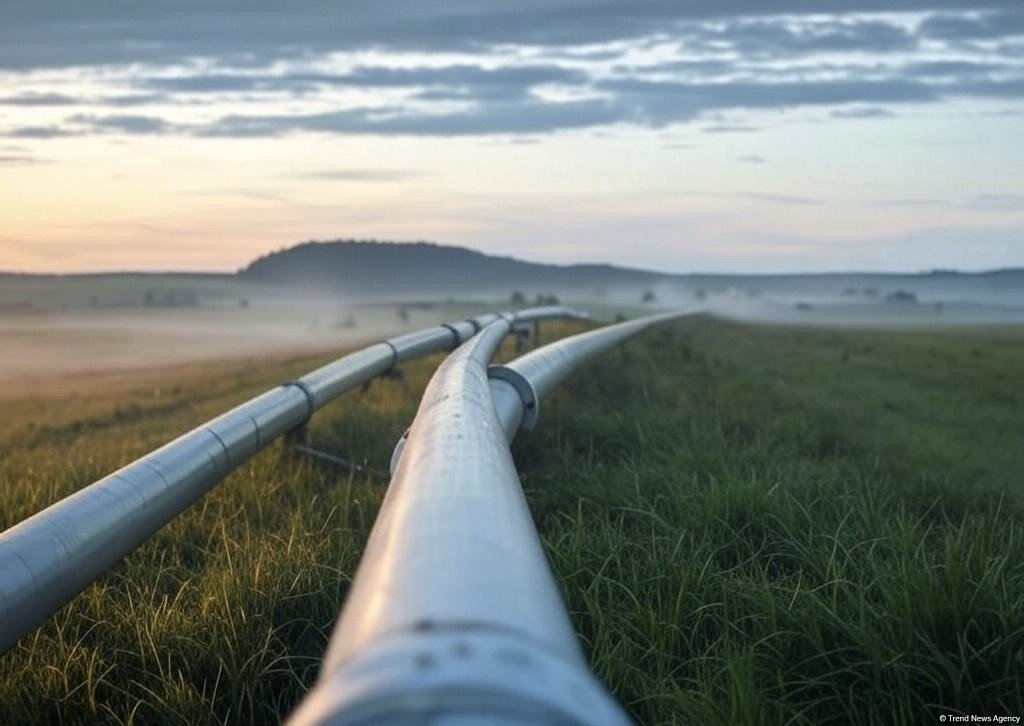
While the phaseout was paired with an aggressive buildout of renewables, wind and solar cannot provide the reliable, round-the-clock baseload electricity that nuclear once delivered. Gas filled that gap. And gas, as Germany is discovering again, comes with geopolitical strings attached.
European gas prices have surged more than 60 per cent since the start of the Iran conflict, delivering the continent’s second major energy price shock in under five years. The ripple effects on German industry and households have been severe. German electricity prices for May delivery, based on futures contracts on the EEX energy exchange, are running at roughly four times the equivalent French price — a gap directly attributable to France’s continued reliance on nuclear generation.
That comparison has become increasingly difficult for German policymakers to wave away. France, the continent’s largest nuclear power producer, has been largely insulated from the worst of the price spikes. Sweden and Poland are investing in new reactors or extending existing plant lifespans, drawn by nuclear power’s combination of low carbon emissions and dependable output. Germany, meanwhile, is paying a premium for the choices made over a decade ago, and the wider cost of the Iran war on European energy markets continues to mount.
A Window Opening in Berlin
Reiche’s remarks suggest that window may be opening, at least at a rhetorical level. “We can decide that we are not interested,” she said. “Then we stick to gas and become more dependent on one energy source. Or we can say that we are interested in technology again.”
The framing is careful. Reiche is not announcing a policy reversal or committing to new reactor construction — Germany’s decommissioned plants cannot simply be restarted, and building new capacity would take well over a decade. But the political signal matters. A senior CDU minister publicly legitimising the nuclear debate is a meaningful shift from the cross-party consensus that has held since 2011, and fits a broader pattern of Europe’s nuclear revival gathering momentum as governments reassess energy security assumptions.
Europe’s broader energy reckoning has accelerated this kind of rethinking. The Iran war’s disruption to global energy markets has forced governments across the continent to revisit assumptions about supply security that looked reasonable in calmer times. Germany’s vulnerability — self-inflicted, many would argue — is now a live political liability for Merz’s government.
The investor conference Reiche launched is itself a symptom of the challenge: Germany must convince international capital that it remains a competitive, reliable destination for business even as its energy costs soar relative to neighbours. Germany’s economic competitiveness has become one of the defining political questions of the Merz era, with industrial heavyweights increasingly vocal about the damage inflicted by high energy costs.
What Comes Next
Whether Reiche’s call for an openness to nuclear translates into concrete policy remains to be seen. The political resistance within Germany remains significant, particularly on the left. But with electricity prices four times those of France and gas dependency growing, the burden of proof has shifted. Those defending the phaseout now have to explain what replaces it — and EU energy policy was never designed around a Germany that simultaneously rejected nuclear and remained dependent on Russian and Middle Eastern gas.
Gas, as Reiche herself acknowledges, was never meant to be a permanent answer. The question now is whether Germany’s political class is finally ready to say so out loud.
The post Germany Admits It Has No Alternative to Gas — And It’s Starting to Reconsider Nuclear appeared first on European Business & Finance Magazine.