






















From the Swoosh to Swiss Clouds: How Roger Federer’s Partnership with On Running Became a Multi-Billion Dollar Success Story
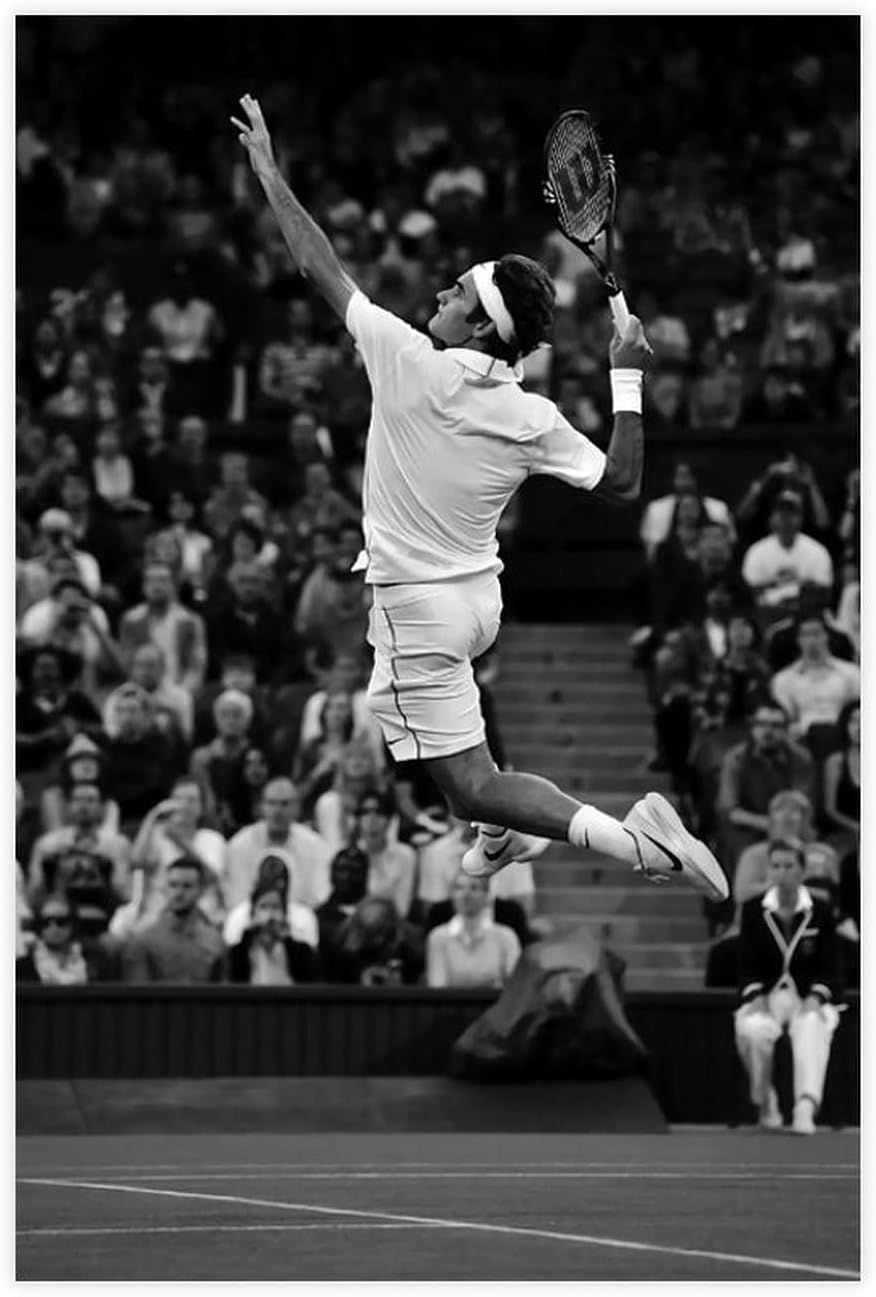
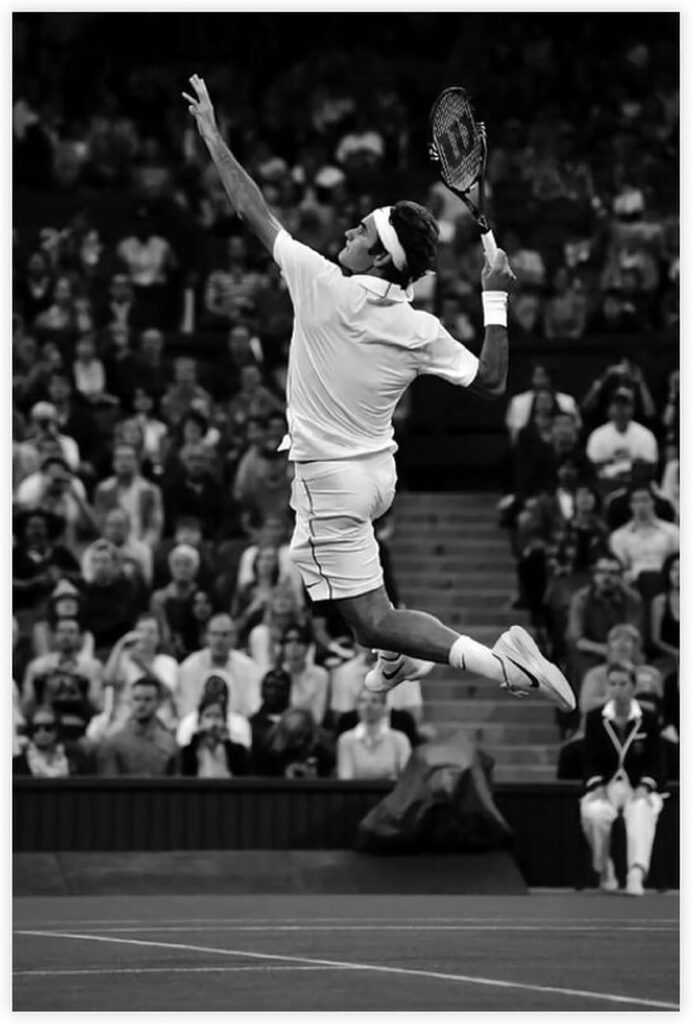
In 2018, the sports world watched in astonishment as Roger Federer, one of tennis’s greatest champions, walked onto Wimbledon’s hallowed grass wearing Uniqlo instead of Nike—ending a 24-year partnership with the swoosh. What seemed shocking then was merely the opening chapter of an even more remarkable story. Behind the scenes, Federer was orchestrating a business move that would ultimately make him one of the world’s billionaire athletes, not through his racquet, but through his investment in an upstart Swiss running shoe company called On.
The Nike Split: When the Swoosh Said No
 For two decades, Roger Federer and Nike seemed inseparable. Since signing with the brand at age 13 in 1994, Federer had become synonymous with Nike’s tennis dominance. The partnership produced iconic moments, the famous RF logo, and helped establish Federer as one of the most marketable athletes in history.
But in 2017, as Federer’s contract neared expiration, something unexpected happened: Nike hesitated. According to Federer’s agent Tony Godsick, who revealed the story on Andy Roddick’s ‘Served’ podcast in 2025, “He didn’t leave Nike. Nike kind of left him, you know? We were trying to re-sign, and they chose not to re-sign. He would have stayed.”
The issue wasn’t performance—Federer was in the midst of a remarkable late-career renaissance, winning three Grand Slams in a single year at age 36. Rather, Nike’s corporate principles around sponsorship spending created an impasse. The company maintained a policy of not spending more than 10% of overall revenue on athlete deals, and with Serena Williams, Rafael Nadal, and other superstars already on the roster, Nike couldn’t justify the investment Federer commanded.
Godsick spent an entire year trying to negotiate a renewal. On the final day of Federer’s contract, he left Nike headquarters without a deal. “I cannot believe this,” Godsick recalled thinking. “I’m gonna go down as the agent who could not renew. Not just the greatest guy, but the greatest tennis player in history. And he won a bunch of majors recently. What a loser, Tony.”
When Federer and Godsick entered the open market, the reception was surprisingly cool. Other brands were skeptical. As Godsick recounted, one brand said, “He’s already branded Nike. We’re not interested.” Another wanted to wait a year to avoid diluting their founder’s anniversary celebrations.
Enter Japanese retailer Uniqlo, which saw what others missed. In June 2018, Uniqlo signed Federer to a 10-year, $300 million deal—three times what he was earning with Nike at $10 million per year. Crucially, the deal covered only apparel, not footwear, leaving Federer free to pursue other opportunities.
The Birth of On: From Garden Hoses to Global Brand
 While Federer was navigating his Nike exit, a revolutionary running shoe company was taking shape in his backyard. On Running was founded in Zurich in 2010 by three friends with a simple yet ambitious goal: to revolutionize the sensation of running.
The story began with Olivier Bernhard, a former professional triathlete and three-time world duathlon champion who had won six Ironman titles. Plagued by running injuries during his career, Bernhard became obsessed with finding the perfect running shoe—one that could provide both a cushioned landing and an explosive push-off. His experiments began unconventionally: he literally glued pieces of garden hose to the soles of shoes, creating a prototype that would eventually become On’s signature CloudTec cushioning technology.
Bernhard pitched his innovation to Nike, his sponsor at the time, but received a polite “no.” Undeterred, he turned to his former agent Caspar Coppetti and friend David Allemann, both marketing executives. Despite initial skepticism about competing against industry giants, the trio was convinced they had something unique.
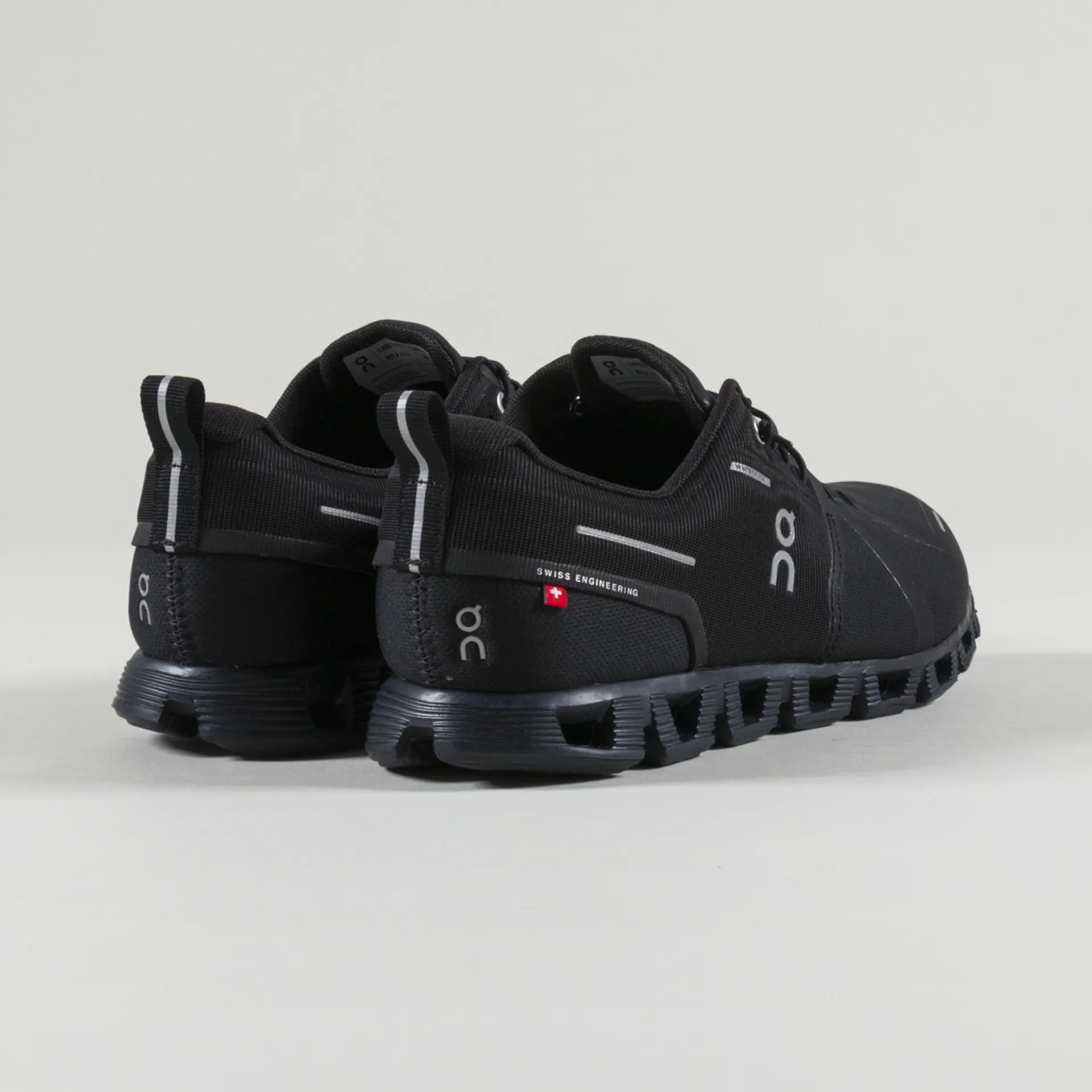 In January 2010, they officially founded On, with each investing $150,000 and agreeing to forfeit their shares if they took another job within three years. The commitment was total. Just one month later, their prototype won the prestigious ISPO BrandNew Award, and they left the trade show with over half a million Swiss francs in orders.
Switzerland’s small market forced On to think globally from day one. As co-founder Coppetti explained, “In a country as small as Switzerland, you simply can’t make enough sales with a running shoe brand. We had to get out into the world right away and launched in six countries at the same time.” By 2019, On held 40% of Switzerland’s running shoe market and was rapidly expanding internationally.
The Perfect Match: How Federer Found On
The partnership between Roger Federer and On Running didn’t follow the traditional athlete endorsement playbook. It began organically, almost serendipitously. Federer and his wife Mirka had been wearing On shoes casually for years, impressed by the minimalist Swiss design and cloud-like comfort. The brand’s clean aesthetic and functional innovation resonated with Federer’s own sensibilities.
On’s founders noticed Federer wearing their shoes around the world and simply reached out. “We noticed Roger wearing On shoes and reached out to him,” co-founder Olivier Bernhard explained. “That’s when we found out he is a longtime fan of On and, of course, we are longtime fans of his. Switzerland is a small place and we started having dinner together.”
What started as casual meetings between Swiss compatriots evolved into something more profound. Federer wasn’t just looking for a sponsorship deal—he wanted to be part of building something. “I’ve been a fan of On and its products for a while,” Federer said, “but after talking to the founders I realised we have a lot more in common than just our Swiss roots.”
In November 2019, Federer became a “co-entrepreneur” and investor in On, purchasing a 3% stake for approximately $50 million. This wasn’t a traditional endorsement—it was an entrepreneurial partnership. As Bernhard noted, “It became clear that there was a unique opportunity to forge a joint entrepreneurial path that is very different from an athletic sponsorship that a big company would do.”
More Than a Face: Federer’s Active Role
Unlike typical celebrity endorsements, Federer took an active role in On’s business. He became involved in product development, marketing strategy, and building the company’s “athlete spirit.” His first major contribution was designing “The Roger”—a line of tennis-inspired lifestyle sneakers that launched in July 2020.
The Roger line represented On’s first major move beyond traditional running shoes. The all-white sneakers, priced at $200, combined tennis heritage with On’s CloudTec technology. They sold out almost instantly and became a cultural phenomenon, appearing on fashion influencers and sneakerheads worldwide.
Federer also helped On expand into performance tennis footwear. In 2021, the company launched The Roger Pro, a performance tennis shoe that Federer helped design. This was significant—On was primarily known for running shoes, and breaking into tennis required deep sport-specific knowledge that only someone of Federer’s caliber could provide.
Beyond product development, Federer brought expertise in brand building and global marketing. As he told The New York Times, “Brand building and global marketing… How to connect with fans across cultures. And I think I can motivate employees from a leadership perspective too, on how to stay humble but dream big.”
Going Public: The $746 Million IPO
 On September 15, 2021, On Running went public on the New York Stock Exchange in spectacular fashion. True to the brand’s ethos, the founders and about 100 other runners jogged along the Hudson River to Wall Street, where they rang the opening bell. The symbolism was perfect—a running brand literally running to its IPO.
The company priced its IPO at $24 per share and ultimately raised $746 million after underwriters exercised their option to purchase additional shares. On offered 31.1 million shares total, with 25.4 million new shares and 5.7 million from existing shareholders. The initial market valuation reached approximately $7.3 billion—though the stock surged 46% on its first day of trading, pushing the valuation even higher.
For Federer, the IPO represented a financial home run. His 3% stake, purchased for around $50 million just two years earlier, was suddenly worth approximately $300 million. Combined with his $300 million Uniqlo deal, Federer had engineered roughly $600 million in earnings from deals that followed his Nike departure—nearly six times what he would have earned staying with the swoosh.
The IPO timing was remarkable. In 2020, On had recorded net sales of 425.3 million Swiss francs ($465.4 million). By the first half of 2021, revenues had surged 85% year-over-year to 315 million Swiss francs ($342.5 million). The company achieved profitability for the first time in 2021, with $4 million in net income, while also generating $32 million in operating cash flow.
Explosive Growth: From Startup to Multi-Billion Dollar Powerhouse
The years following the IPO saw On Running achieve growth that stunned the athletic footwear industry. The company’s trajectory defied conventional wisdom about competing against Nike and Adidas in a mature market.
Key milestones in On’s financial journey:
- 2021 (IPO year): $746 million in revenue with first-time profitability
- 2022: Broke the $1 billion sales barrier
- 2023: Revenue reached approximately $2 billion
- 2024: Sales exceeded 2.32 billion Swiss francs (approximately $2.6 billion USD), a 29.4% increase
- 2024 net profit: 242.3 million Swiss francs—more than triple the previous year’s 79.6 million
- 2025 forecast: At least 2.94 billion Swiss francs (approximately $3.3 billion USD), representing 27% growth
Within just two years of going public, On had doubled its revenue to nearly $2 billion. By early 2025, the company achieved a market valuation exceeding $19 billion—making it the third most valuable publicly traded footwear brand in the world behind only Nike and Adidas. This was particularly remarkable as Nike’s shares fell 29% during the same period that On’s stock doubled.
The growth wasn’t just in traditional running markets. On’s direct-to-consumer sales surged 40.3% in 2024, outpacing wholesale growth of 22.8%. The company expanded its retail footprint to nearly 50 owned stores globally. In the Asia-Pacific region, sales exploded by 84.5%, while Americas sales grew more than 25%.
The Federer Effect: From Running Shoes to Cultural Icon
Federer’s involvement did more than just provide capital—it transformed On’s brand perception. His association lent instant credibility and opened doors that would have remained closed to a pure running brand. The partnership helped On transition from a specialty running shoe company to a lifestyle brand that resonated far beyond endurance athletes.
The Roger collection became a catalyst for On’s expansion into the sneakerhead and fashion markets. Collaborations with Kith’s Ronnie Fieg in 2022 (the “RF Squared” collection featuring hand-rubbed clay shoes) generated massive buzz. Subsequent partnerships with luxury brands like Loewe, celebrity stylists like Law Roach, and artists like FKA Twigs and Zendaya elevated On from performance footwear to high fashion.
High-profile athletes followed Federer’s lead. On signed world number one women’s tennis player Iga Świątek and rising stars Ben Shelton and João Fonseca. Even celebrities outside sports, like Drake, became brand ambassadors through organic adoption. The SoHo On store in New York became notorious for daily lines outside its doors—a phenomenon typically reserved for Supreme or limited-edition sneaker drops.
Federer’s star power also proved valuable during major sporting events. On’s presence at the 2024 Paris Olympics, combined with the success of On-sponsored athletes and partnerships with icons like Zendaya, drove significant brand awareness. The company’s innovative LightSpray technology—using robotic manufacturing to create shoe uppers from continuous filaments—generated headlines at the Olympics and reinforced On’s image as an innovation leader.
Federer’s Billionaire Status: Beyond the Court
 In 2025, Forbes confirmed what industry observers had suspected: Roger Federer had joined the exclusive billionaires club. Remarkably, his investment in On Running played a decisive role in reaching this milestone—potentially more significant than his $130 million in career prize money.
As On’s market valuation grew from $7 billion at IPO to over $19 billion by 2025, Federer’s stake increased proportionally. While exact figures remain private due to the dual-class share structure that gives founders voting control, estimates suggest Federer’s On holdings could be worth $400-600 million depending on market conditions—representing an 8-12x return on his initial $50 million investment in just five years.
This wealth creation stands in stark contrast to what might have been. Had Federer renewed with Nike at their offered terms, he would have earned perhaps $50 million over the same period. Instead, his combination of the Uniqlo deal ($300 million) and On investment (potentially $400-600 million) could represent more than $700 million in total value—roughly 14 times his alternative with Nike.
The On investment also demonstrates a broader shift in athlete compensation models. Rather than accepting traditional endorsement fees, elite athletes increasingly seek equity stakes in growing brands. This approach aligns incentives—success for the brand means success for the athlete investor—and can generate exponentially greater returns than fixed sponsorship deals.
The Business Model: What Made On Different
On’s success wasn’t accidental—it resulted from strategic choices that differentiated the brand in a crowded market:
- Innovation-First Approach: On’s CloudTec cushioning technology provided genuine functional innovation, not just marketing. The hollow pods that compress vertically and horizontally offered a distinctive running sensation that built word-of-mouth buzz.
- Premium Positioning: Rather than competing on price, On positioned itself as a premium brand with shoes typically priced $140-200. This strategy protected margins while attracting quality-conscious consumers.
- Multi-Channel Distribution: On balanced wholesale relationships (selling through specialty retailers) with direct-to-consumer channels. By 2024, DTC represented a significant and growing portion of sales, providing higher margins and direct customer relationships.
- Swiss Identity: On leaned into its Swiss heritage, emphasizing precision engineering, minimalist design, and quality craftsmanship. This differentiated them from American giants Nike and Adidas and German competitor Puma.
- Sustainability Focus: On introduced initiatives like the Cyclon subscription program with fully recyclable shoes, appealing to environmentally conscious consumers.
- Category Expansion: While maintaining running as the core, On strategically expanded into tennis (via Federer), lifestyle sneakers, and apparel, ultimately surpassing 100 million Swiss francs in apparel sales by 2024.
The company’s gross profit margins reached approximately 60.5% by 2025, among the highest in the industry. This profitability, combined with efficient operations, allowed On to achieve an adjusted EBITDA margin targeting 17-17.5% in 2025, progressing toward an 18%+ target by 2026.
Market Position: Taking on the Giants
By 2025, On had established itself as a legitimate force in the global athletic footwear market, despite being less than 15 years old. While Nike’s market capitalization exceeded $150 billion and Adidas topped $40 billion, On’s nearly $20 billion valuation represented a stunning achievement for a brand that didn’t exist before 2010.
Market share data tells the story of On’s disruption. In Switzerland, On commanded 40% of the running shoe market by 2019. In Germany, it held 10%. In the United States—the world’s largest athletic footwear market—On captured approximately 6.6% of the performance running category. Globally, On was estimated to hold 2% of the athletic footwear market, a figure that continued growing rapidly.
These percentages might seem small, but in a $127 billion global athletic footwear market (as of 2021, projected to reach $196 billion by 2030), even single-digit market share represented billions in revenue. On was growing at 25-35% annually while Nike and Adidas struggled with single-digit growth or declines.
What worried Nike and Adidas most wasn’t On’s current size but its trajectory. On was winning in premium segments, capturing younger consumers, and building brand heat that the established giants struggled to match. The fact that On achieved a $20 billion valuation with roughly $3 billion in annual revenue—while Nike’s $150 billion valuation came with $45 billion in revenue—showed investors believed On had tremendous room for growth.
Looking Ahead: The Dream On Strategy
 As On celebrated its 15th anniversary in 2025, the company launched its “Dream On 2026” strategy with ambitious targets. Management aims to double sales between 2023 and 2026, requiring sustained growth rates above 25%. The company forecasts 2025 revenue of at least 2.94 billion Swiss francs ($3.3 billion USD), with continued expansion through 2026.
Strategic priorities include:
- Geographic expansion, particularly in Asia-Pacific markets where growth exceeded 84% in 2024
- Continued retail expansion toward 50+ owned stores globally
- Accelerating apparel growth beyond the 100 million Swiss franc milestone achieved in 2024
- Technology innovation, including scaling LightSpray manufacturing and developing new performance technologies
- Category expansion from running into adjacent sports and lifestyle segments
- Brand elevation toward becoming “the most premium global sportswear brand”
Federer remains deeply involved in these initiatives. Despite retiring from professional tennis in 2022, his role with On expanded. He continues contributing to product development, appears in major marketing campaigns (including a 2025 Super Bowl commercial with Elmo), and serves as a bridge between On’s Swiss roots and global aspirations.
Lessons from the Federer-On Partnership
The Roger Federer and On Running partnership offers several insights for athletes, brands, and investors:
- Equity Over Endorsements: Traditional sponsorship deals provide predictable income but limited upside. Equity stakes align interests and can generate exponentially greater returns when betting on the right partner.
- Authenticity Matters: Federer’s genuine affection for On products—he wore them before any business relationship—created authentic advocacy that resonated with consumers. Forced partnerships lack this credibility.
- Active Participation Drives Value: Federer wasn’t a passive investor. His involvement in product design, marketing strategy, and brand building created real value beyond his celebrity.
- Innovation Beats Budget: On succeeded not by outspending Nike and Adidas but by offering genuinely differentiated products. CloudTec technology and Swiss design philosophy created competitive advantages money couldn’t easily replicate.
- Premium Positioning Works: In an age of discounting and fast fashion, On proved consumers would pay premium prices for quality, innovation, and brand cachet.
- Right Time, Right Partner: Federer’s 2019 investment came at an inflection point—On had proven its concept but needed capital and brand power to scale. The timing benefited both parties.
- Global From Day One: On’s necessity to think internationally from inception—due to Switzerland’s small market—created a mindset that served the company well during rapid expansion.
Conclusion: A New Model for Athlete Business
When Nike declined to renew Roger Federer’s contract in 2018, the company made a decision that seemed rational by traditional corporate metrics but proved spectacularly short-sighted. Nike saved perhaps $30-40 million annually but lost association with one of sport’s most beloved figures and the opportunity to participate in On Running’s remarkable growth.
For Federer, what could have been a painful rejection became the catalyst for his greatest business success. By betting on On—a company that shared his Swiss values, commitment to innovation, and vision for the future—Federer didn’t just find a new shoe sponsor. He became an entrepreneur and, ultimately, a billionaire.
The partnership worked because both parties brought complementary strengths. On provided the innovation, manufacturing expertise, and entrepreneurial drive. Federer contributed capital, global credibility, product insights, and marketing genius. Together, they built something neither could have achieved alone.
As On Running enters 2026 with revenues approaching $3.5 billion and a market value exceeding $19 billion, the company stands as proof that even mature industries have room for disruption when innovation meets excellent execution. And as Roger Federer enjoys his status as a billionaire athlete—with his On stake potentially worth more than all his tennis prize money combined—he represents a new model for how elite athletes can build wealth that outlasts their playing careers.
The story of Roger Federer and On Running isn’t just about shoes or money. It’s about vision, partnership, timing, and the courage to say yes to opportunity when convention suggests otherwise. From garden hoses glued to shoe soles in a Swiss garage to a $20 billion global brand, the journey has been nothing short of extraordinary—and it’s far from over.
The post From the Swoosh to Swiss Clouds: How Roger Federer’s Partnership with On Running Became a Multi-Billion Dollar Success Story appeared first on European Business & Finance Magazine.