Switching clubs is routine business in football. Switching sides in a derby is something else entirely. These moves hit nerves because they cut straight through identity, memory, and tribal loyalty. Shirts matter in derbies. So do scars.
Some players made the leap for footballing reasons, others chased trophies or stability, and a few simply burned every bridge available. The reactions ranged from frosty silence to full-scale fury. What follows is not a list of villains or heroes, but a clear-eyed look at how these transfers happened and why they still linger in the sport’s collective memory.
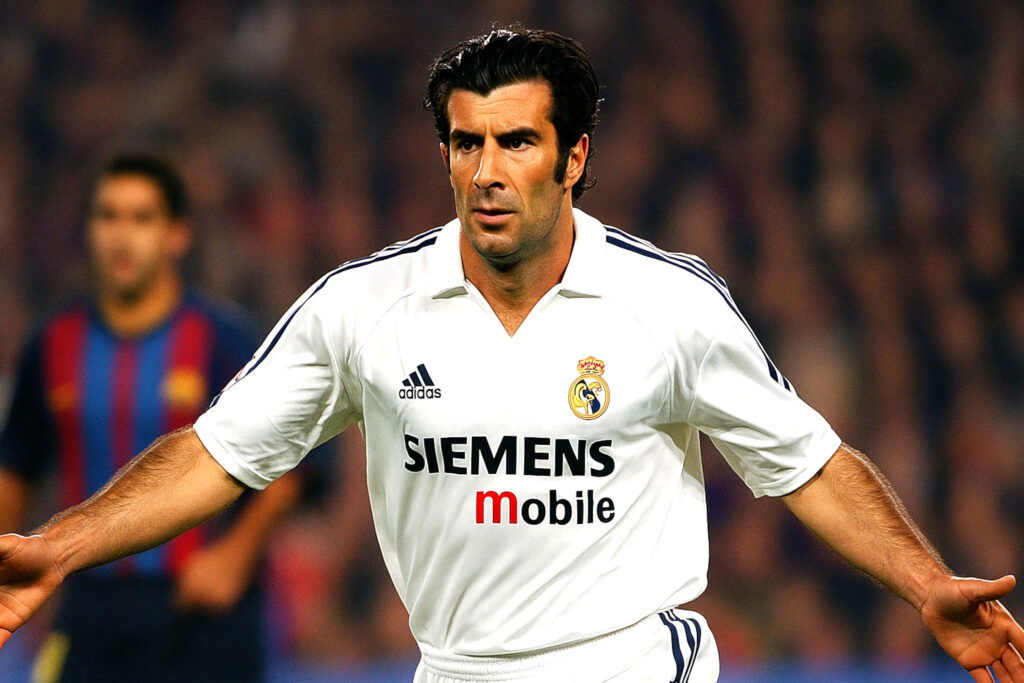
Luis Figo, Barcelona to Real Madrid
No derby switch has landed harder than this one. Figo leaving Barcelona for Real Madrid was not just a transfer, it was a public betrayal played out on the biggest stage.
The move became political, cultural, and deeply personal. Barcelona fans saw it as a direct insult, amplified by the fact it was engineered by Florentino Pérez as part of his presidential campaign. When Figo returned to Camp Nou, the hostility was raw and theatrical. A pig’s head landing near the corner flag summed up the mood better than any banner.
From Madrid’s side, it was ruthless brilliance. Figo delivered elite performances and became a central figure in the Galácticos era. From Barcelona’s side, his name became shorthand for treachery.
Sol Campbell, Tottenham to Arsenal
Campbell’s switch across North London detonated on impact. Tottenham supporters believed he was staying. Arsenal supporters barely believed he had arrived.
What made this move cut so deep was the silence. Campbell ran down his contract, gave little warning, then appeared in red. Spurs fans felt deceived rather than outbid. The reaction followed him for years, often ugly, sometimes genuinely hostile.
At Arsenal, Campbell justified the chaos. He became a defensive cornerstone, won titles, and scored in a Champions League final. Professionally, the move worked. Emotionally, it never healed.
Carlos Tevez, Manchester United to Manchester City
Tevez did not just cross Manchester, he rubbed it in. His move from United to City symbolised a shift in power that was only just beginning.
City’s marketing poured fuel on the fire, most famously with the billboard declaring “Welcome to Manchester.” United fans saw arrogance and provocation. City fans saw a statement of intent.
On the pitch, Tevez delivered goals and aggression, helping City shed their underdog skin. In hindsight, the transfer feels less shocking now that City dominate English football, but at the time it marked the moment the rivalry turned from noisy to serious.
Andrea Pirlo, Inter to AC Milan
Not all derby switches are explosive. Some arrive quietly, then rewrite history.
Pirlo left Inter as a talented but underused midfielder. At Milan, he became the metronome of an era. Titles followed. So did a complete redefinition of his role.
Inter fans did not riot. Milan fans did not gloat immediately. It took time for the significance to sink in. This was not betrayal fuelled by drama, but a reminder that misjudging a player can hurt more than losing one loudly.
Gonzalo Higuaín, Napoli to Juventus
In Italy, rivalries carry long memories, and Napoli’s relationship with Juventus is soaked in resentment. Higuaín’s move north reopened every old wound.
The release clause made it legal. The timing made it brutal. Napoli had built their hopes around him. Juventus dismantled those hopes with a cheque.
Higuaín scored goals in Turin, but the warmth never fully followed. In Naples, his name still provokes anger. This was a transfer that made sense on paper and hurt everywhere else.
Ashley Cole, Arsenal to Chelsea
Cole’s departure was shaped by money, pride, and a breakdown in trust. Arsenal fans never forgave the way it unfolded. Chelsea fans welcomed one of the best left backs of his generation.
What makes this move endure is how successful Cole was afterward. League titles, cups, and a Champions League win gave him a legacy Arsenal supporters had to watch from afar.
It was not a sudden shock like Campbell’s move, but the bitterness lingered longer. Sometimes resentment grows slowly.
What These Switches Tell Us
Derby transfers endure because they challenge the idea that footballers are extensions of clubs rather than employees with short careers and limited chances.
Fans invest emotionally. Players invest professionally. When those priorities clash, the reaction is rarely rational, but it is always revealing.
Some players embraced the chaos. Others underestimated it. A few thrived because of it. None escaped unchanged.
These moves remind us that rivalries are not just fixtures on a calendar. They are stories people carry. Cross the wrong line, and you inherit every chapter that came before.