

























Europe’s new friction economy: how border checks, supply-chain shocks and industrial policy are reshaping business

Europe likes to describe itself as a single market. In practice, it is becoming something more complex — a friction economy. Not because of a single crisis, but because border controls, geopolitical risk and state intervention are now reshaping how business actually works on the ground.
For companies operating across Europe, the old assumptions of frictionless movement, stable regulation and predictable supply chains no longer hold. What is emerging instead is a business environment where small changes in policy or enforcement can trigger major operational consequences.
This shift is subtle, but profound. And it is changing how capital is allocated, how factories are located, and how companies manage risk.
Borders Are Becoming Business Infrastructure
For decades, European businesses planned on the assumption that people and goods could move freely. Engineers could fly at short notice. Executives could cross borders in a day. Components could arrive just in time.
That model is now under strain.
The introduction of biometric border controls, tighter entry systems and new digital verification processes is turning border management into a critical piece of economic infrastructure. Even small increases in processing time at airports and ports create cascading effects — missed connections, delayed freight, and rising staffing costs.
For companies, this means mobility is no longer a background assumption. It is becoming a cost centre that must be managed, scheduled and insured against. Firms that depend on fast movement of people — from consultancies to advanced manufacturing — are discovering that the practical meaning of the “single market” is changing.
Supply Chains Are No Longer Neutral
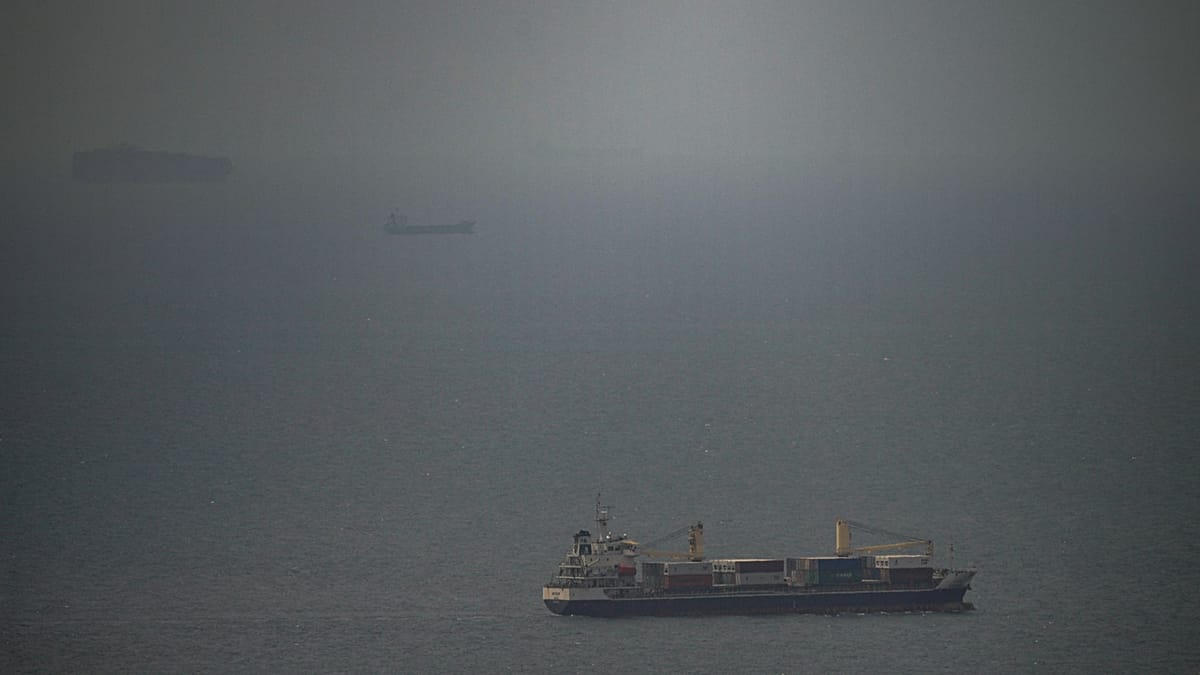
At the same time, Europe’s supply chains are becoming increasingly politicised.
Globalisation once meant sourcing from wherever was cheapest and most efficient. Today, it means navigating sanctions, trade rules, ethical scrutiny and national security concerns — all at once.
What makes this dangerous is not only the big shocks, but the small ones. A regulatory decision, a customs dispute or a reputational issue in one country can now cascade through entire industries.
Food, chemicals, energy inputs and industrial components are all vulnerable to sudden disruption. Companies that thought they were buying a simple commodity often discover they were relying on fragile and concentrated global networks.
This forces businesses to rethink procurement as a strategic function, not just a cost-cutting exercise.
Industrial Policy Is Back — and It Shapes Where Money Flows
Europe has also returned to industrial policy in a serious way. Governments are intervening in sectors ranging from energy and defence to semiconductors and electric vehicles, using subsidies, regulations and mandates to guide investment.
The intention is to secure strategic industries and meet climate goals. The effect, however, is that companies now operate in a moving regulatory landscape.
For manufacturers, especially in the automotive and energy sectors, this creates an awkward overlap: long-term investments must be made under rules that may change before those investments pay back.
That uncertainty raises the cost of capital, slows down decision-making, and advantages companies with the balance sheets to absorb regulatory shocks.
The Hidden Cost: Management Bandwidth
One of the most damaging effects of Europe’s friction economy is how much executive time it consumes.
Senior leaders now spend far more time dealing with compliance, supply-chain risk, border rules, ESG reporting and geopolitical exposure. Every new regulation or enforcement change adds another layer of complexity.
Large multinationals can absorb this. Mid-sized companies often cannot. That creates a structural advantage for firms with scale and legal firepower — and makes it harder for Europe’s entrepreneurial businesses to compete.
Why Investors Are Paying Attention
Financial markets are not blind to these trends.
European equities increasingly trade at a discount to their US counterparts not just because of growth differentials, but because of regulatory risk and policy unpredictability. Investors prefer environments where capital rules are stable and political intervention is predictable.
In a world of rising friction, flexibility and liquidity become more valuable — which is why capital flows are shifting accordingly.
How Smart Companies Are Adapting
The firms coping best are not those hoping for stability, but those engineering for instability.
They are:
-
Building multiple supplier relationships
-
Bringing critical production closer to home
-
Designing products that can adapt to regulatory change
-
Pricing reliability and compliance into contracts
-
Treating geopolitical risk as a board-level issue
In a friction economy, certainty itself becomes a premium product.
Europe’s Strategic Choice
Europe is not becoming weaker — it is becoming more complex.
That complexity can be a source of strength if it creates higher standards, cleaner industries and safer supply chains. But it becomes a drag if it turns into permanent uncertainty. For more reports like this check EBM’s European News hub.
The post Europe’s new friction economy: how border checks, supply-chain shocks and industrial policy are reshaping business appeared first on European Business & Finance Magazine.