



















Europe’s Biggest Dealmaking Boom in a Decade Just Hit $60 Billion — And It’s Only February

QUICK ANSWER What’s happening? European M&A activity surged past $60 billion in the first ten days of February 2026, headlined by Nuveen’s £9.9 billion ($13.5 billion) acquisition of Schroders — the largest asset management takeover in EMEA history. The deal ends 222 years of independence for Britain’s biggest standalone fund manager and creates a $2.5 trillion combined group. The wave follows a record 2025 in which European deal values grew 9 percent to roughly $800 billion, banking M&A doubled, and global volumes topped $5 trillion. Analysts now predict 20 percent fewer mid-sized European asset managers will exist by 2030. The Schroders deal is not an outlier. It is the loudest signal yet that European financial services are consolidating at a pace the continent hasn’t seen since before the 2008 crisis.
The Schroder family built their fortune financing transatlantic trade in the nineteenth century. For 222 years, the name survived two world wars, the collapse of Barings, the death of merchant banking, and the rise of passive investing. On Thursday, the family sold out.
Nuveen, the investment arm of the American pensions giant TIAA, is acquiring Schroders for £9.9 billion in cash — 612 pence per share including dividends, a 34 percent premium to the previous close. The founding family’s 42 percent stake, held through four private trust companies, goes with it. Shares surged 29 percent at the open. By lunchtime, Schroders sat at the top of the Stoxx 600.
The combined entity will manage nearly $2.5 trillion in assets, with $414 billion in private markets alone. London will remain the non-US headquarters, with 3,100 staff. CEO Richard Oldfield stays in post. The Schroders brand survives. But the independence does not.
Why Now
The logic is brutally simple. Mid-sized European asset managers are being squeezed from both ends. BlackRock, Vanguard, and State Street dominate passive investing with fees that active managers cannot match. At the same time, institutional clients are demanding private market access — infrastructure, private credit, real estate — that requires balance sheet scale most European firms lack.
Schroders’ shares had fallen more than 30 percent over the previous five years. Costs were high. Growth in private markets was slower than peers. Analyst Rae Maile at Panmure Liberum put it plainly: “Schroders was a mess.” Under Oldfield, who took over in late 2024, the company had begun cutting costs and shedding peripheral businesses. Adjusted operating profit rose 25 percent in 2025 to £756.6 million. But it was not enough to change the structural equation.
Nuveen CEO Bill Huffman called it “a massive transformational step for both firms” and told Reuters the company was open to further acquisitions. That language matters. This is not a one-off; it is a consolidation wave that will reshape the European fund management landscape within the decade.
The Numbers Behind the Wave
The Schroders deal is the headline, but the broader data is what should concern European boardrooms. European banking M&A deal values quadrupled in 2025, from $17.5 billion to $73.5 billion. European insurance deal values did the same, rising from $11.1 billion to $49.2 billion. The number of non-European firms acquiring European targets rose from 107 to 119, with disclosed deal value leaping from $5.1 billion to $47.9 billion.
Bloomberg reported that European M&A had already exceeded $60 billion in the first ten days of February alone. Oliver Wyman projects that more than 1,500 European private-equity-backed assets, representing roughly $760 billion in enterprise value, could come to market in 2026 — nearly double the historical annual range. European corporates are holding approximately €2.6 trillion in cash. Private equity firms are managing aging portfolios with stretched holding periods now exceeding six years.
The structural opening for acquirers — especially well-capitalised American ones — has never been wider. European deal values grew roughly 9 percent to $800 billion in 2025, but that figure remains close to historical lows relative to GDP. The competitive pressure from US and Chinese firms is accelerating the pace at which European companies must either scale up or be absorbed.
Defence, Banking, and the Draghi Effect
The sectors driving the surge are precisely those that Mario Draghi’s competitiveness report identified as needing consolidation: financial services, defence, telecoms, and energy.
In defence, the momentum is extraordinary. Czechoslovak Group (CSG), the Prague-based munitions and armoured vehicle manufacturer, listed in Amsterdam in late January at an implied €25 billion market capitalisation. Order books were oversubscribed 14 times, with demand reportedly exceeding $60 billion. The IPO was the largest European defence listing ever, and investors who received no allocation are now hunting for the next deal.
In banking, cross-border consolidation that was previously blocked by national regulators is now being actively encouraged. Erste Bank’s €7 billion acquisition of a 49 percent stake in Santander Bank Polska was the largest deal in Central and Eastern Europe in 2025. Regulators are increasingly amenable to “4-to-3” mergers that would previously have faced competition barriers, reflecting a broader shift toward pro-growth policy at the European level.
In asset management, the Schroders deal may accelerate what Oliver Wyman projects as a 20 percent reduction in the number of European managers by 2030. Aberdeen, Amundi’s smaller competitors, and a range of Scandinavian and Benelux firms are now firmly in play. The firms that survive will be those that can invest in AI, private markets infrastructure, and global distribution — capabilities that require the kind of scale only consolidation can deliver.
The Sovereignty Question
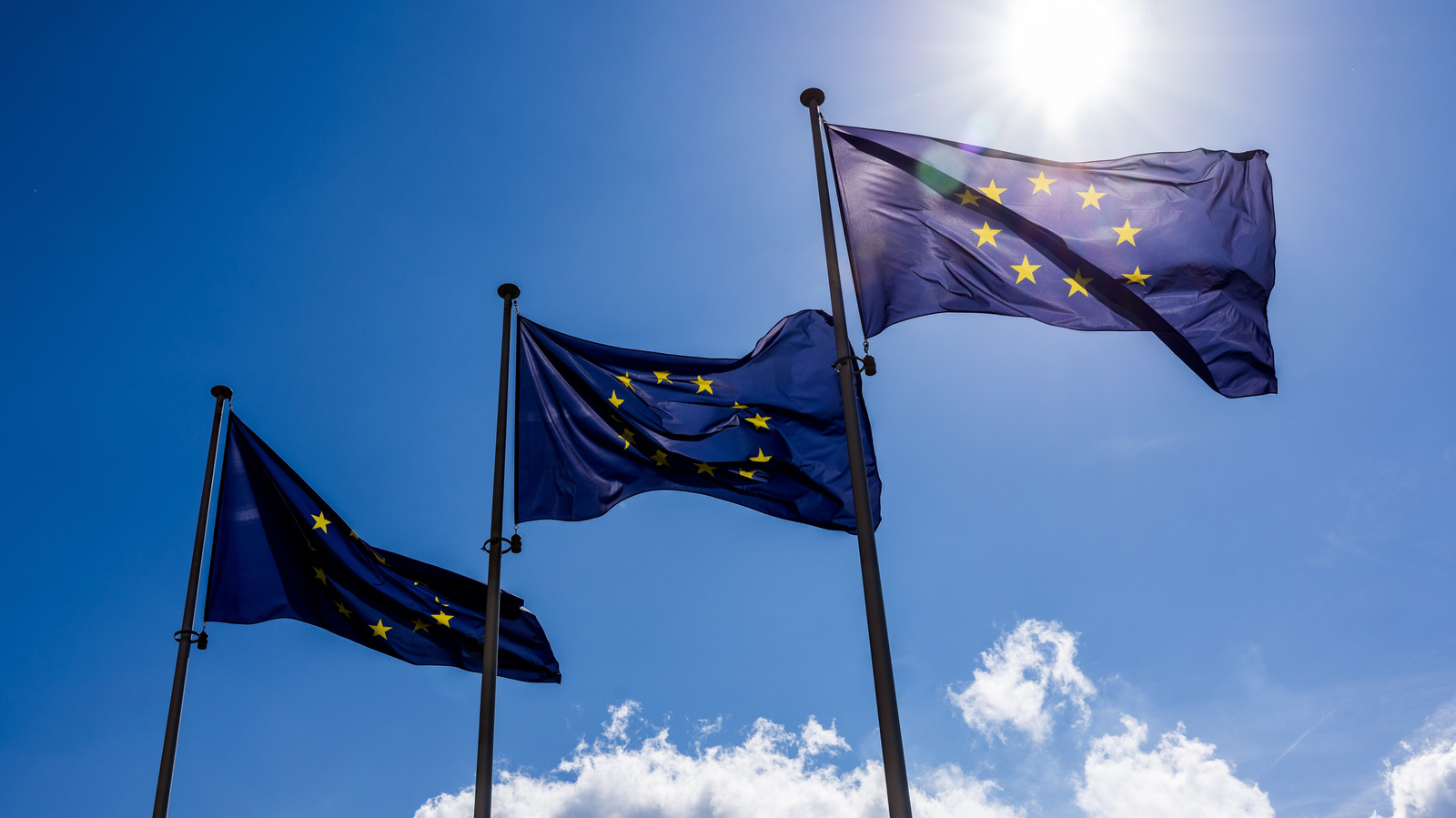
There is, however, a political tension beneath the dealmaking euphoria. The Schroders acquisition means another major European financial institution passing into American ownership. The pattern is not new — it echoes the Schroder family’s own exit from investment banking at the turn of the millennium, when Wall Street’s scale became an insurmountable advantage — but it sits uncomfortably alongside the EU’s stated ambition to build “European champions.”
CREATE-Research CEO Amin Rajan captured the sentiment: “The UK loses a national champion. The Schroders brand is widely admired. It would be a shame if the business loses its former identity post-integration.”
That concern extends beyond asset management. As European startups face their own scaling crises, the question of whether consolidation strengthens or hollows out European industry is becoming central to the policy debate. EU leaders meeting in Belgium this week to discuss competitiveness explicitly called for the completion of a Capital Markets Union and a Savings and Investment Union — mechanisms designed to channel European savings into European businesses rather than watching capital flow across the Atlantic.
What Happens Next
The pipeline for 2026 is deep. Baker McKenzie describes deal pipelines as “probably stronger than they’ve ever been.” Barclays calls it “a conviction cycle” driven by fewer, bigger transactions. Defence, technology, and financial services will lead. The EU-Mercosur trade agreement, if provisionally applied, could trigger a further wave of cross-border industrial deals.
For European businesses, the message is clear. Scale or be acquired. The era of the genteel, mid-sized European champion — the Schroders, the Aberdeens, the sub-scale telecoms operators and regional banks — is ending. What replaces it will be determined by whether the consolidation is shaped in Brussels or in New York.
urope’s Biggest Dealmaking Boom in a Decade Just Hit $60 Billion — And It’s Only February
QUICK ANSWER What’s happening? European M&A activity surged past $60 billion in the first ten days of February 2026, headlined by Nuveen’s £9.9 billion ($13.5 billion) acquisition of Schroders — the largest asset management takeover in EMEA history. The deal ends 222 years of independence for Britain’s biggest standalone fund manager and creates a $2.5 trillion combined group. The wave follows a record 2025 in which European deal values grew 9 percent to roughly $800 billion, banking M&A doubled, and global volumes topped $5 trillion. Analysts now predict 20 percent fewer mid-sized European asset managers will exist by 2030. The Schroders deal is not an outlier. It is the loudest signal yet that European financial services are consolidating at a pace the continent hasn’t seen since before the 2008 crisis.
The Schroder family built their fortune financing transatlantic trade in the nineteenth century. For 222 years, the name survived two world wars, the collapse of Barings, the death of merchant banking, and the rise of passive investing. On Thursday, the family sold out.
Nuveen, the investment arm of the American pensions giant TIAA, is acquiring Schroders for £9.9 billion in cash — 612 pence per share including dividends, a 34 percent premium to the previous close. The founding family’s 42 percent stake, held through four private trust companies, goes with it. Shares surged 29 percent at the open. By lunchtime, Schroders sat at the top of the Stoxx 600.
The combined entity will manage nearly $2.5 trillion in assets, with $414 billion in private markets alone. London will remain the non-US headquarters, with 3,100 staff. CEO Richard Oldfield stays in post. The Schroders brand survives. But the independence does not.
Why Now
The logic is brutally simple. Mid-sized European asset managers are being squeezed from both ends. BlackRock, Vanguard, and State Street dominate passive investing with fees that active managers cannot match. At the same time, institutional clients are demanding private market access — infrastructure, private credit, real estate — that requires balance sheet scale most European firms lack.
Schroders’ shares had fallen more than 30 percent over the previous five years. Costs were high. Growth in private markets was slower than peers. Analyst Rae Maile at Panmure Liberum put it plainly: “Schroders was a mess.” Under Oldfield, who took over in late 2024, the company had begun cutting costs and shedding peripheral businesses. Adjusted operating profit rose 25 percent in 2025 to £756.6 million. But it was not enough to change the structural equation.
Nuveen CEO Bill Huffman called it “a massive transformational step for both firms” and told Reuters the company was open to further acquisitions. That language matters. This is not a one-off; it is a consolidation wave that will reshape the European fund management landscape within the decade.
The Numbers Behind the Wave
The Schroders deal is the headline, but the broader data is what should concern European boardrooms. European banking M&A deal values quadrupled in 2025, from $17.5 billion to $73.5 billion. European insurance deal values did the same, rising from $11.1 billion to $49.2 billion. The number of non-European firms acquiring European targets rose from 107 to 119, with disclosed deal value leaping from $5.1 billion to $47.9 billion.
Bloomberg reported that European M&A had already exceeded $60 billion in the first ten days of February alone. Oliver Wyman projects that more than 1,500 European private-equity-backed assets, representing roughly $760 billion in enterprise value, could come to market in 2026 — nearly double the historical annual range. European corporates are holding approximately €2.6 trillion in cash. Private equity firms are managing aging portfolios with stretched holding periods now exceeding six years.
The structural opening for acquirers — especially well-capitalised American ones — has never been wider. European deal values grew roughly 9 percent to $800 billion in 2025, but that figure remains close to historical lows relative to GDP. The competitive pressure from US and Chinese firms is accelerating the pace at which European companies must either scale up or be absorbed.
Defence, Banking, and the Draghi Effect
The sectors driving the surge are precisely those that Mario Draghi’s competitiveness report identified as needing consolidation: financial services, defence, telecoms, and energy.
In defence, the momentum is extraordinary. Czechoslovak Group (CSG), the Prague-based munitions and armoured vehicle manufacturer, listed in Amsterdam in late January at an implied €25 billion market capitalisation. Order books were oversubscribed 14 times, with demand reportedly exceeding $60 billion. The IPO was the largest European defence listing ever, and investors who received no allocation are now hunting for the next deal.
In banking, cross-border consolidation that was previously blocked by national regulators is now being actively encouraged. Erste Bank’s €7 billion acquisition of a 49 percent stake in Santander Bank Polska was the largest deal in Central and Eastern Europe in 2025. Regulators are increasingly amenable to “4-to-3” mergers that would previously have faced competition barriers, reflecting a broader shift toward pro-growth policy at the European level.
In asset management, the Schroders deal may accelerate what Oliver Wyman projects as a 20 percent reduction in the number of European managers by 2030. Aberdeen, Amundi’s smaller competitors, and a range of Scandinavian and Benelux firms are now firmly in play. The firms that survive will be those that can invest in AI, private markets infrastructure, and global distribution — capabilities that require the kind of scale only consolidation can deliver.
The Sovereignty Question
There is, however, a political tension beneath the dealmaking euphoria. The Schroders acquisition means another major European financial institution passing into American ownership. The pattern is not new — it echoes the Schroder family’s own exit from investment banking at the turn of the millennium, when Wall Street’s scale became an insurmountable advantage — but it sits uncomfortably alongside the EU’s stated ambition to build “European champions.”
CREATE-Research CEO Amin Rajan captured the sentiment: “The UK loses a national champion. The Schroders brand is widely admired. It would be a shame if the business loses its former identity post-integration.”
That concern extends beyond asset management. As European startups face their own scaling crises, the question of whether consolidation strengthens or hollows out European industry is becoming central to the policy debate. EU leaders meeting in Belgium this week to discuss competitiveness explicitly called for the completion of a Capital Markets Union and a Savings and Investment Union — mechanisms designed to channel European savings into European businesses rather than watching capital flow across the Atlantic.
What Happens Next
The pipeline for 2026 is deep. Baker McKenzie describes deal pipelines as “probably stronger than they’ve ever been.” Barclays calls it “a conviction cycle” driven by fewer, bigger transactions. Defence, technology, and financial services will lead. The EU-Mercosur trade agreement, if provisionally applied, could trigger a further wave of cross-border industrial deals.
For European businesses, the message is clear. Scale or be acquired. The era of the genteel, mid-sized European champion — the Schroders, the Aberdeens, the sub-scale telecoms operators and regional banks — is ending. What replaces it will be determined by whether the consolidation is shaped in Brussels or in New York.
The post Europe’s Biggest Dealmaking Boom in a Decade Just Hit $60 Billion — And It’s Only February appeared first on European Business & Finance Magazine.