




























European investors rotate towards ETFs and equities as portfolios mature in 2025
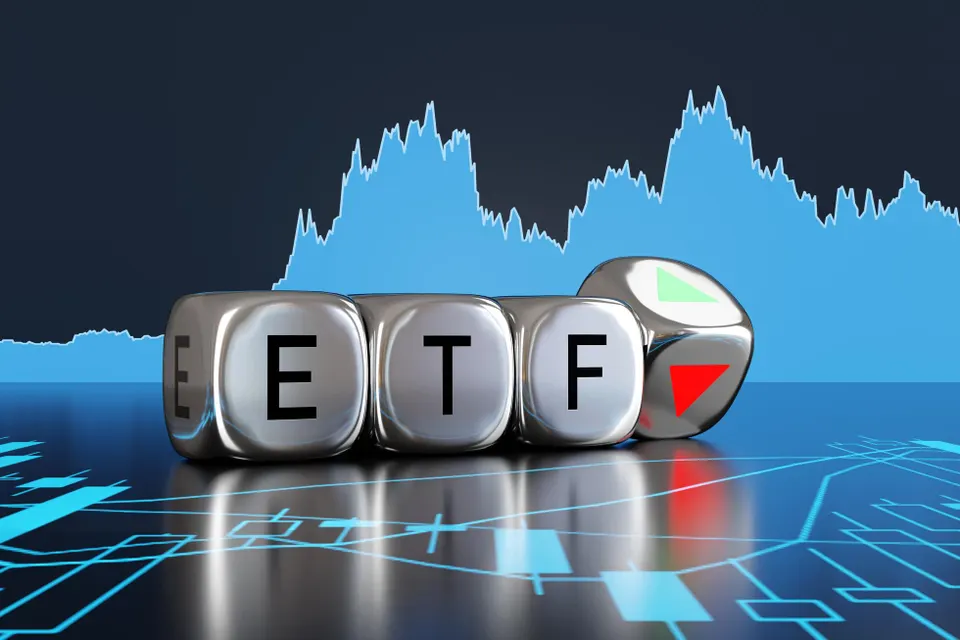
European investors increasingly favoured exchange-traded funds and listed equities in 2025, signalling a gradual but meaningful shift in portfolio construction as market volatility, macroeconomic uncertainty and greater financial literacy reshaped risk appetite across the continent.
According to a recent survey conducted by the Robocash platform, ETFs now represent the largest single asset class in European retail investor portfolios, accounting for 30 per cent of holdings. Direct equity investments follow at 21 per cent, matching the share allocated to peer-to-peer (P2P) lending, which has edged lower in proportional terms despite continued growth in absolute value.
The findings suggest that European investors are becoming more deliberate and diversified in their approach, blending traditional market exposure with alternative yield strategies rather than relying heavily on any single asset class. This evolution mirrors broader structural shifts across European financial markets, where long-term capital allocation is increasingly shaped by macroeconomic realism rather than post-pandemic exuberance.
ETFs cement their role as core portfolio holdings
The rise of ETFs to the top of European investor portfolios reflects both practicality and maturity. Once viewed primarily as passive instruments for conservative investors, ETFs are now widely recognised as flexible, low-cost vehicles capable of delivering diversified exposure across regions, sectors and asset classes.
Robocash survey data shows ETF allocations increased materially compared with 2024, benefiting from a renewed focus on cost efficiency, liquidity and transparency. For investors navigating an environment of elevated interest rates, geopolitical uncertainty and uneven growth across Europe, ETFs offer a straightforward way to manage risk without sacrificing market participation.
This trend has been reinforced by the expansion of thematic and factor-based ETFs, allowing investors to express more nuanced views on areas such as energy transition, artificial intelligence and defence spending — themes that have gained prominence amid shifting industrial and political priorities.
The growth of ETFs also reflects a broader democratisation of investment strategies once reserved for institutional players, aligning retail portfolios more closely with professional asset-allocation models.
Equity exposure rebounds as confidence stabilises
Alongside ETFs, direct investment in stocks has continued to gain ground, rising to 21 per cent of average portfolios. After a period of caution marked by inflation shocks and aggressive monetary tightening, investors appear increasingly willing to re-engage with equity markets as valuations stabilise and earnings visibility improves.
European equities, in particular, have benefited from a reassessment of regional risk. While growth remains uneven, investors are selectively identifying opportunities in sectors such as industrials, defence, energy infrastructure and financial services — areas seen as beneficiaries of structural realignment rather than cyclical recovery.
This renewed interest in equities suggests that investors are becoming more confident in their own judgement, a conclusion supported by survey responses highlighting increased reliance on personal market analysis. The shift underscores a broader move towards informed decision-making within European investing strategies, rather than purely platform-driven or trend-led behaviour.
P2P lending: smaller share, growing conviction
Perhaps the most nuanced finding of the Robocash survey concerns P2P lending. While its share of investor portfolios has declined slightly relative to ETFs and equities, the absolute size of P2P holdings continues to grow — a sign of consolidation rather than retreat.
Notably, the proportion of investors holding more than €30,000 in P2P assets has increased since 2023, indicating that confidence is deepening among experienced participants even as newer investors diversify elsewhere. This suggests P2P lending is evolving from a growth-stage novelty into a more stable, income-oriented allocation within diversified portfolios.
Robocash analysts note that reinvestment of returns remains the dominant strategy for expanding P2P exposure, cited by 52 per cent of respondents. This compounding approach reflects a long-term mindset and reinforces the view of P2P as a yield-generating complement rather than a speculative trade.
The second most common strategy — increasing exposure to previously selected platforms — highlights an important behavioural shift. Investors are prioritising platforms with established track records, signalling a preference for reliability over headline yields. This cautious pragmatism has become a defining feature of alternative finance in Europe as the sector matures.
Stability over novelty in alternative investments
The survey findings challenge the assumption that alternative investments thrive primarily on novelty and risk tolerance. Instead, European investors appear increasingly selective, favouring platforms that have demonstrated resilience through multiple economic cycles.
This emphasis on longevity reflects lessons learned from earlier phases of fintech expansion, when rapid growth often outpaced risk controls. In today’s environment, stability, transparency and governance have become decisive factors in platform selection — particularly for investors allocating meaningful capital.
Such behaviour suggests that P2P lending is entering a more institutional phase, even at the retail level. Investors are no longer chasing maximum returns at the expense of platform risk, but rather integrating P2P into balanced portfolios designed to weather uncertainty.
Economic awareness shapes decision-making
One of the most telling indicators of investor maturity is the growing influence of macroeconomic conditions on portfolio decisions. According to the survey, 38 per cent of respondents cited the state of the economy as a key factor influencing investment choices, overtaking more tactical considerations such as short-term returns.
A further 35 per cent highlighted their own market analysis as a primary driver, reinforcing the view that European investors are becoming more proactive and informed. This dual emphasis on macro context and personal research suggests a shift away from passive reliance on platform recommendations or social-media narratives.
In practice, this has translated into greater diversification, measured risk-taking and a clearer understanding of how different asset classes behave under varying economic conditions. These traits are increasingly visible across European wealth management and portfolio construction discussions.
A more balanced investment landscape
Taken together, the Robocash findings point to a European investment landscape that is both more sophisticated and more cautious. ETFs and equities are reclaiming prominence as foundational assets, while P2P lending remains an important — though more selective — component of diversified portfolios.
This balance reflects a broader recalibration of expectations. Investors are no longer seeking a single asset class to outperform across all conditions. Instead, they are combining growth, income and diversification strategies to build resilience against economic uncertainty.
Such behaviour marks a departure from the binary risk-on, risk-off cycles that characterised earlier years. Instead, European investors appear to be embracing nuance — a development likely to influence capital flows, platform strategies and product design well into 2026.
Implications for platforms and policymakers
For investment platforms, the message is clear: trust and track record now matter more than aggressive marketing or headline returns. Providers able to demonstrate stability, transparency and consistent performance are likely to retain and deepen investor relationships.
For policymakers, the findings underscore the importance of clear regulatory frameworks that protect investors without stifling innovation. As retail portfolios increasingly blend traditional and alternative assets, regulatory coherence becomes critical to maintaining confidence.
The gradual convergence of investment behaviours across asset classes suggests Europe’s retail investor base is evolving in ways that more closely resemble institutional norms — a trend with long-term implications for capital markets and financial intermediation.
A quiet but meaningful shift
The rotation towards ETFs and equities in 2025 does not represent a rejection of alternative investments, but rather a rebalancing driven by experience, economic awareness and a desire for predictability.
European investors are not abandoning innovation; they are integrating it more thoughtfully. In doing so, they are helping to shape a more resilient and diversified investment ecosystem — one where traditional assets and alternative strategies coexist rather than compete.
As 2026 approaches, the defining feature of European investing may not be risk appetite, but judgement.
The post European investors rotate towards ETFs and equities as portfolios mature in 2025 appeared first on European Business & Finance Magazine.