































European Defence Stocks Surge as Greenland Tensions Mount
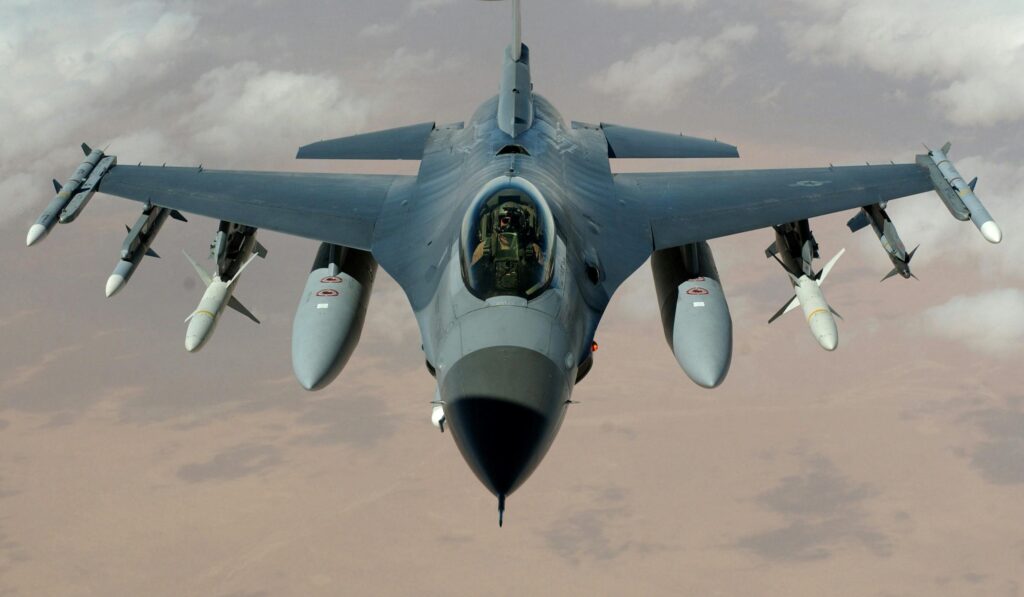
Aerospace and defence index hits all-time high amid Trump’s Arctic ambitions and NATO deployment, extending 260% rally since Russia’s 2022 invasion as investors embrace permanent war economy thesis
European defence contractors are enjoying their strongest start to a year on record, with the STOXX Europe Aerospace and Defence index surging 13% since January 1 as President Trump’s Greenland annexation threats trigger renewed military deployments across the continent. The benchmark hit all-time highs Thursday, marking seven consecutive sessions of gains and extending a remarkable 260% rally since Russia’s February 2022 invasion of Ukraine.
The latest catalyst arrived as Germany, France, Sweden, Norway, the Netherlands, Finland and the United Kingdom dispatched military personnel to Greenland for joint exercises with Denmark—ostensibly for Arctic training but carrying unmistakable symbolic significance as Washington escalates threats to seize the semi-autonomous Danish territory. Trump’s subsequent announcement of 10% tariffs on eight European NATO allies has transformed what investors initially treated as diplomatic theatre into a structural catalyst for sustained defence spending.
Market Leaders Extending Gains
UK defence stalwart BAE Systems has surged 21% year-to-date to trade near £20.88, while Germany’s Rheinmetall—Europe’s largest defence contractor—has climbed 23.7% despite recent profit-taking. French fighter jet manufacturer Dassault Aviation is up 14.8%, with Thales advancing 8.3% after winning the ‘Best Cybersecurity Innovation’ award at CES 2026 for its Samsung security chip collaboration.
Sweden’s Saab has posted the most spectacular gains, rallying 28% in 2026 alone and nearly 200% over the past 12 months, though Morningstar analysts now rate the stock significantly overvalued at SEK 695 against a fair value estimate of SEK 490. Italy’s Leonardo reached 52-week highs Thursday, trading at €59.02 after gaining 2% on the session.
“Geopolitics is the inescapable story of 2026 thus far,” observed Neil Wilson, UK investor strategist at Saxo Bank. “Clearly defence stocks are the play—along with rare earths.” The comment captures mounting investor recognition that European defence spending has shifted from emergency response to permanent structural fixture.
Defence Supercycle Thesis Gains Credibility
Bernstein analysts Adrien Rabier and Douglas Harned argue the Greenland crisis accelerates Europe’s pivot toward continental defence suppliers, noting US companies still capture approximately 60% of European military procurement. However, “as [European governments] spend more on defense, they are set to tilt towards continental suppliers amid growing concerns over the U.S.’ commitment to NATO,” the analysts wrote.
Denmark exemplifies this transformation: military spending has surged from 1.4% to 3.2% of GDP in three years, with equipment expenditure quadrupling. While Copenhagen historically purchased drones, aircraft and missiles from Washington, recent orders demonstrate decisive realignment—large combat vehicle contracts awarded to BAE Systems and Rheinmetall, with air defence systems sourced from Rheinmetall, Norway’s Kongsberg and Thales.
“We see two baskets of stocks which are well positioned to capture the opportunity,” Bernstein noted. “Firstly, European players with in-house capabilities and large government support, and secondly, local players in heavily U.S.-exposed countries.” The firm points to Norway’s £10 billion ($13.4 billion) naval order to BAE Systems as exemplifying how European nations are leveraging procurement for strategic positioning.
European NATO defence spending is forecast to reach 2.8% of GDP by 2030, up from 2.3% currently, implying 7% compound annual growth between 2024 and 2030. Bernstein models German equipment spending at 18% CAGR through 2030, compared with 9% for France and 6% for the UK, positioning Rheinmetall as particular beneficiary of Berlin’s €500 billion multi-year defence package.
Valuation Concerns Emerge
The rally has pushed European defence suppliers to approximately 30 times forward earnings—roughly double their five-year average and comparable to technology giants Microsoft and Nvidia. Globally, the MSCI World Aerospace & Defence index trades near 41 times trailing profits versus 24 times for the overall MSCI World.
Morningstar equity analyst Loredana Muharremi cautioned that while “the White House has not excluded military options for Greenland,” raising tensions and accelerating European defence integration, “we expect President Donald Trump to dial down some of his rhetoric, especially around Greenland.” Such de-escalation could trigger profit-taking in richly valued names.
XTB research director Kathleen Brooks noted that “the first week of trading in January is likely to set the tone for some time and defense is expected to be one of the key themes for the year,” though emphasized valuations leave limited room for disappointment.
Strategic Autonomy Accelerates
Peter McLean, Head of Multi-Asset Portfolio Solutions at Stonehage Fleming Investment Management, captured the secular shift: “What investors are realising is that the threat of geopolitics is not going away. While it is unlikely we see military action in Greenland, there is clearly an impetus to increase defence spending in Europe.”
The European defence industrial base is undergoing profound transformation as factories convert from civilian to military production. Supply chains from Eastern Europe to Scandinavia are being rebuilt to support weapons manufacturing, with Rheinmetall’s new ammunition plants and Leonardo’s expanded helicopter production lines exemplifying capacity scaling to meet guaranteed multi-year demand.
Raphaël Thuin, head of capital markets strategies at Tikehau Capital, told CNBC that “the depleted state of Europe’s military capability following years of underinvestment is helping drive a multi-year ‘mega-trend’ that will boost the region’s defense stocks.” The thesis has gained credibility as Trump’s transactional approach to alliances forces European capitals to reassess dependence on American security guarantees.
For investors navigating the sector, Bernstein emphasizes stock selection over broad exposure given elevated valuations. BAE Systems, Thales, Rheinmetall and Dassault Aviation remain analysts’ core European picks, balancing in-house capabilities with government backing. Yet as Greenland tensions demonstrate, the business of war increasingly operates outside traditional investment frameworks—where geopolitical risk itself becomes the fundamental driver of returns.
Further Reading
Four defense stocks key to Trump-Greenland crisis, Europe’s NATO fears – CNBC (January 16, 2026)
Analysis of BAE Systems, Rheinmetall, Dassault Aviation and Thales positioning amid European strategic autonomy push.
European defense stocks rise for 4th day as Denmark moves to rearm Greenland – CNBC (January 7, 2026)
Coverage of STOXX Aerospace and Defence index hitting record highs with sectoral performance breakdown.
European Defence Stocks Reach All-Time High Amid Tensions – European Business Magazine (January 8, 2026)
Comprehensive analysis of 260% rally since 2022 Ukraine invasion and structural shift toward permanent war economy.
European Defense Stocks Rally on War Risk—Are They Still a Buy? – Morningstar UK (January 14, 2026)
Valuation assessment with fair value estimates and analysis of “defense supercycle” investment thesis sustainability.
Defence stocks in Europe at all-time high after Trump calls for higher US defence budget – Yahoo Finance UK (January 8, 2026)
Market reaction to Trump’s $1.5 trillion 2027 defence budget proposal and implications for European contractors.
The post European Defence Stocks Surge as Greenland Tensions Mount appeared first on European Business & Finance Magazine.