























European Business Magazine talks to Lara Daniel- CEO and Co-Founder of Pulse Advertising


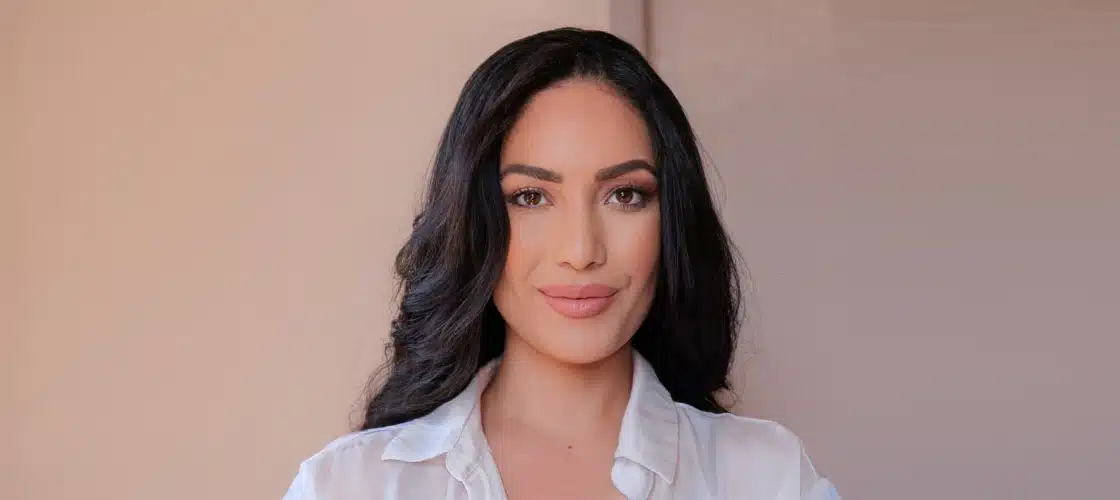
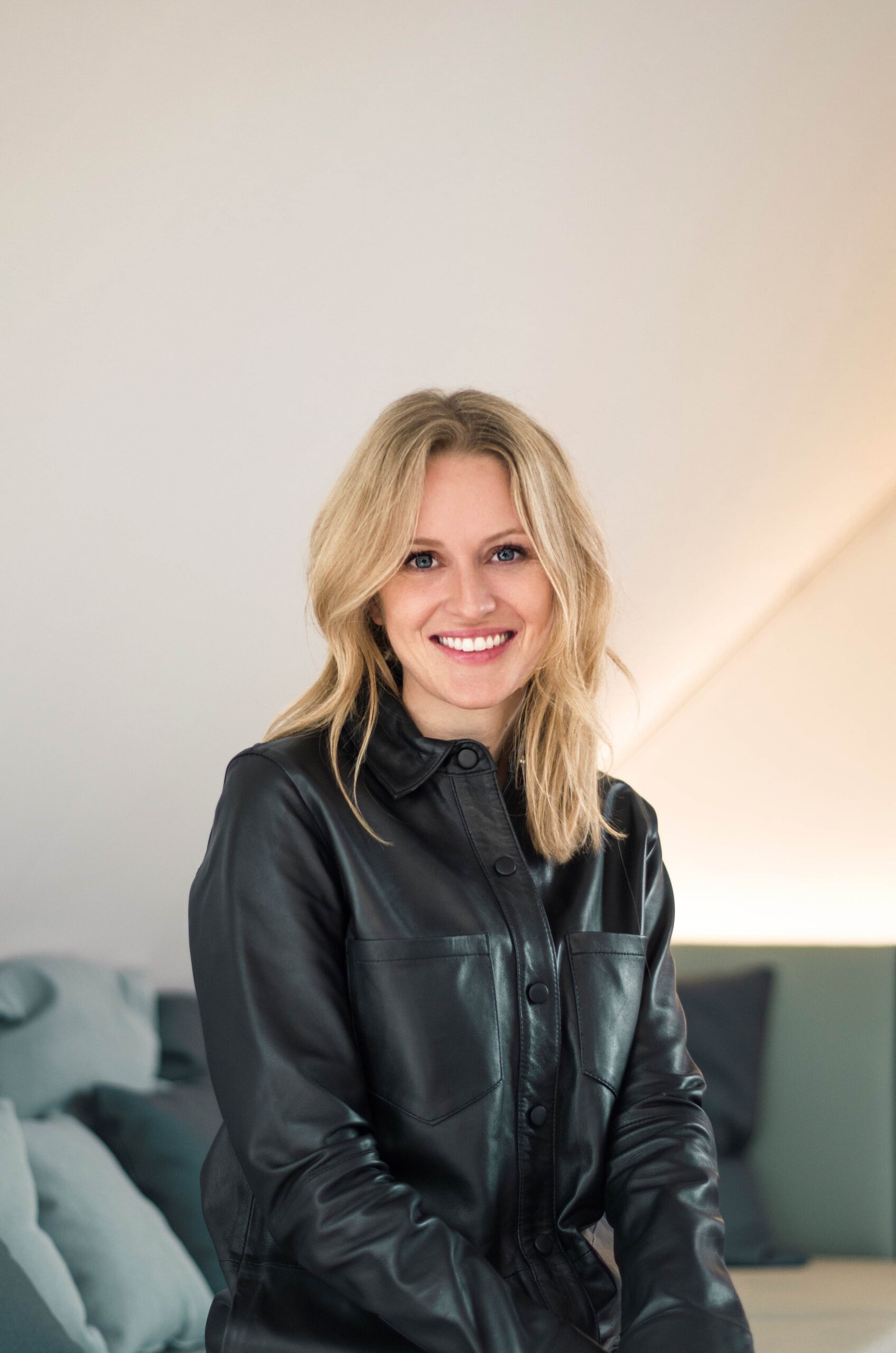 Lara Daniel is the CEO and Co-Founder of Pulse Advertising, where she leads the strategic vision and growth of a dynamic, data-driven agency helping brands amplify their impact in a rapidly evolving digital landscape. With a strong track record in integrated marketing, media innovation, and performance strategy, Lara combines creative leadership with operational excellence to deliver measurable business results for clients across sectors. Her work at Pulse Advertising is defined by a commitment to innovation, client partnership, and building future-focused advertising solutions.
- Who is Pulse Advertising and what is your background?
I co-founded Pulse Advertising in 2014 with Chris Kastenholz. Today we’re a global social media agency with 125+ people across 11 offices, working with brands like Apple, BlackRock, and Nestlé.
We make brands the first choice through social media – driving real business outcomes like sales and market share for our clients, not vanity metrics. We’re official partners of Meta, TikTok, and Google.
My background is unconventional. I’ve lived in six countries and learned early that understanding culture is a business lever, not a nice-to-have. I believe there should never be a Plan B – that conviction shapes how we build strategies for our clients.
- With social media becoming an important part of business now, how has social media become a core driver for business growth and customer connection?
5.24 billion people now use social media globally – nearly 64% of the world’s population. In Western markets like the UK and Germany, penetration exceeds 80%. In China, 97% of internet users are on social platforms. That’s where your customers are.
But attention alone isn’t the breakthrough. What’s changed is that social has collapsed the distance between discovery and purchase. TikTok Shop processed $26.2 billion in global GMV in just the first half of 2025, growing 100% year-on-year. That’s not a marketing channel – that’s a retail revolution.
For our clients, social is now the layer where brand building, customer acquisition, community, and commerce all converge. Brands treating it as a silo are operating on legacy assumptions.
- What does this mean for marketers and businesses navigating ever-changing social media platforms?
It means accepting that what worked eighteen months ago is already outdated. We help our clients treat social as core infrastructure rather than a channel to be optimised quarterly.
The key shift is measurement. Too many marketers celebrate reach while struggling to connect activity to business outcomes. We focus on Customer Acquisition Cost and Return on Ad Spend – the numbers that tell you whether your strategy is building the business.
The other change is patience. Algorithms now favour creator content over brand content – 92% of marketers report creator content outperforms their own. But authentic creator partnerships take time. Brands treating creators as media buys face the same erosion that made traditional advertising ineffective.
- With the growing interest from VCs, what do you think is the future of the creator economy and why are VCs striking more deals with influencers?
The creator economy is projected to reach $480 billion by 2027. VCs finally understand that creators are economic infrastructure, not a marketing trend. There are roughly 67 million creators globally today, growing at about 10% annually to reach 107 million by 2030.
The smart money is backing the picks-and-shovels: AI content tools, monetisation platforms, creator-led commerce infrastructure. Proven business models matter. VCs are investing in companies solving real creator problems rather than speculating on scale.
The future is professionalisation. As creators formalise their businesses and platforms expand monetisation, we’re watching an entirely new media and commerce layer emerge – built on individual influence rather than institutional brand power.
- What opportunities are available to VCs? And likewise, what are the benefits to the creator?
For VCs, AI-powered creative tools are capturing roughly 25% of deals because they solve the creator’s biggest constraint: time. Monetisation platforms take about 35% because they address income diversification – brand deals currently represent around 70% of creator revenue, which is risky.
For creators, VC backing unlocks scale that was previously impossible: production infrastructure, marketing support, data analytics, global distribution. More importantly, it signals legitimacy. When platforms reach billion-dollar valuations, it validates the entire ecosystem and creates pathways for creators to build genuine enterprises rather than depending on algorithms or a handful of brand deals.
The healthiest dynamic is capital flowing toward enabling creators rather than extracting from them. That’s where long-term value sits.
- How have Influencers and Creators contributed to the rise of social commerce?
Creators essentially invented modern social commerce. The reason TikTok Shop can project $66 billion in GMV for 2025 is that creators have trained audiences to expect entertainment and purchase to coexist seamlessly.
86% of consumers now make purchases influenced by creators. Creator content converts at 4.5 times the rate of traditional branded content. These are retail metrics, not influencer metrics.
What creators have done is collapse the funnel. Traditional advertising separated awareness, consideration, and conversion. Creators merge all three into a single piece of content. A makeup tutorial is entertainment, product education, and checkout trigger combined. For our clients, this changes everything about how we plan campaigns.
- What do you think the future of retail/e-tail will look like with influencers at the helm?
We’re heading toward a world where the most powerful retail channels are individual creators. Livestream e-commerce is projected to reach $258 billion globally by 2034. In China, live commerce already represents 20% of total retail according to Kantar. The West is three to five years behind that curve, but the direction is clear.
The future is entertainment-first commerce. Products will be discovered through content that doesn’t feel like advertising because, at its best, it isn’t. The transaction becomes almost incidental to the relationship.
For our clients, this means creator partnerships as core infrastructure, not marketing add-ons. The brands that will thrive understand they’re participating in culture – and the gatekeepers of culture are increasingly individual creators with authentic audience relationships.
- Finally, what are your predictions for social media and the business of influence for 2026?
First, creator partnerships become non-negotiable. Brands that haven’t integrated creator strategies by end of 2026 face algorithmic irrelevance.
Second, measurement catches up with investment. We’re building toward unified measurement that connects creator activity to actual sales impact – making social ROI as transparent as paid search.
Third, micro-communities eclipse mass reach. Chasing follower counts will be recognised as the vanity play it always was. The value is in deep engagement within specific communities.
Fourth, AI-generated content creates a credibility challenge. As it becomes easier to create polished content, authentic creator relationships become more valuable, not less.
Finally, social commerce expands beyond impulse categories into higher-consideration purchases as trust in creator recommendations deepens.
The brands that win in 2026 won’t just be present on social – they’ll be embedded in communities, participating rather than broadcasting, measuring what matters rather than what’s easy to count. That’s exactly what we help our clients do.
About Pulse Advertising:
Pulse Advertising makes brands the first choice through social media, enabling them to win on sales and market share. We combine human creativity with AI-powered technology to deliver end-to-end solutions — from standardised success measurement and integrated social commerce to content that converts — turning engagement into transparent results through a single, unified brand value score.
Founded in 2014 by Chris Kastenholz and Lara Daniel, Pulse Advertising has grown into a team of 125+ experts across 11 offices worldwide, working as one global unit to provide seamless, effective client support on both global and local levels.
Our clients include Apple, BlackRock, and Nestlé. An official partner of Meta, TikTok, and Google, our work is recognised worldwide for driving growth and impact, with accolades from Forbes 30 Under 30, the Influencer Marketing Awards, and TEDx.
About Lara Daniel:
Lara Daniel is recognised by Forbes 30 Under 30 as one of the most influential entrepreneurs in media and marketing. Lara’s core expertise lies in understanding cultures and building diverse, high-performance teams united towards one common goal. Combining strategic vision with sharp business acumen to deliver brand growth in the digital age. She is a sought-after speaker at TEDx, OMR, Bocconi, NYU, Imperial College and other leading institutions.
The post European Business Magazine talks to Lara Daniel- CEO and Co-Founder of Pulse Advertising appeared first on European Business & Finance Magazine.