

























Europe 2026 Outlook — Part II: Defence, Energy, Finance and the New Power Economy
If Part I showed how AI, power and cyber are reshaping Europe’s technology and infrastructure, Part II explains how defence, finance and energy are locking that transformation into place.
The result is a European economy that looks far less like a slow-growth trading bloc and far more like a strategic capital system — one where security, funding and energy now determine economic winners.
This is already visible across European markets, where defence contractors, grid operators and financial infrastructure firms are outperforming banks and consumer stocks.
Defence becomes Europe’s new industrial engine
In 2026, defence is no longer a geopolitical hedge. It is one of Europe’s largest industrial growth sectors.
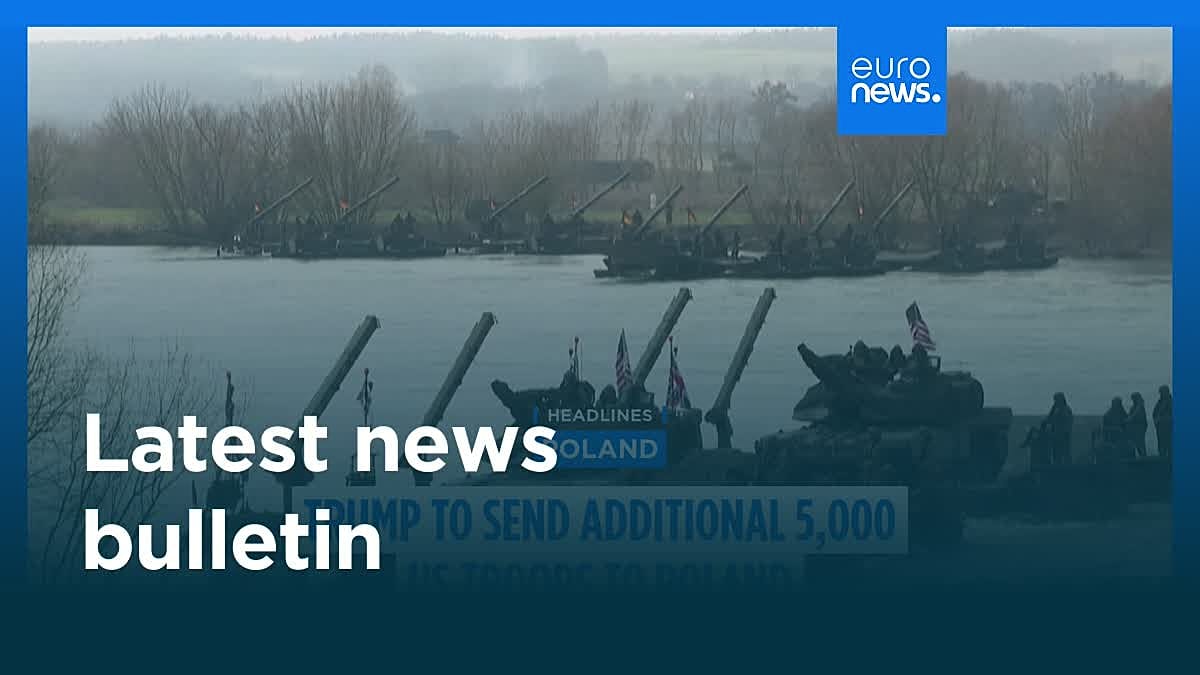
Since Russia’s invasion of Ukraine, European governments have moved from emergency spending to long-term rearmament programmes. Germany, Poland, France and the Nordic countries are now locking in defence budgets that stretch well beyond the current decade.
The corporate impact has been dramatic.
Rheinmetall, Germany’s biggest defence manufacturer, has more than doubled its order backlog over the past two years as ammunition, armoured vehicles and air-defence systems are ordered in bulk.
BAE Systems is expanding production capacity in the UK and across continental Europe to meet NATO demand.
Thales and Saab have seen surging orders in radar, electronic warfare and secure communications.
Compared with 2024, when defence stocks were still treated as politically risky, by 2026 they are being priced like strategic infrastructure — with long-dated government contracts providing earnings visibility that few other sectors can match.
This has made defence one of the strongest performers in European equity markets.
Energy security becomes the backbone of Europe’s economy
At the same time, Europe is rewriting its energy system around one overriding goal: security of supply.
The collapse of Russian gas imports forced Europe to build a new energy architecture almost overnight. By 2026, that architecture is turning into a long-term investment cycle.
Germany alone has built multiple LNG import terminals and is now converting parts of that system toward hydrogen and ammonia imports.
RWE, Uniper and E.ON are investing heavily in gas-fired power plants, grid upgrades and long-term energy contracts to stabilise supply for industry and data centres.
Iberdrola, Ørsted and Statkraft are locking in decades-long power agreements with hyperscalers and manufacturers, turning renewable energy into a core industrial asset.
Compared with a year ago, when energy companies were still priced as volatile commodity plays, many are now being valued as quasi-utilities with predictable cashflows — a major re-rating inside Europe’s energy markets.
Private credit replaces banks as Europe’s growth lender
Europe’s financial system is also being re-engineered.
Since 2024, banks have continued to retreat from complex corporate lending, squeezed by capital rules and risk limits. Into that vacuum have stepped global private-credit giants such as Blackstone, Apollo, Ares and KKR, which are now financing everything from industrial buyouts to infrastructure projects across Europe.
Direct lending volumes in Europe have surged over the past year, with private funds increasingly replacing banks in:
Mid-market buyouts
Property finance
Infrastructure lending
Corporate refinancings
For European companies, this has meant faster access to capital — but at higher cost. For banks, it has meant losing some of their most profitable business.
This structural shift is already reshaping European corporate finance, as US-based funds gain influence over European companies’ balance sheets.
Crypto and digital assets become part of Europe’s financial plumbing
After years of volatility, Europe’s crypto market is re-emerging in a new form: regulated, institutional and deeply integrated into the banking system.
Under the EU’s MiCA framework, large exchanges, stablecoin issuers and custody platforms are now operating under clear regulatory rules. That has opened the door for major banks to experiment with tokenised bonds, blockchain settlement and digital-asset custody.
UniCredit, Deutsche Bank and several French and Italian lenders have all begun issuing or settling securities using blockchain infrastructure.
European exchanges in Germany and Switzerland are launching regulated digital-asset trading platforms designed to handle tokenised equities and bonds.
This is turning crypto from a speculative sideshow into a new financial rail, increasingly visible in Europe’s digital-asset markets.
How this changes Europe’s power structure
Taken together, these forces are creating a new hierarchy of economic power in Europe.
The winners of 2026 are not consumer brands or social-media platforms. They are companies that control:
Defence production
Energy supply
Capital flows
Digital settlement systems
This is why defence contractors, grid operators, private-credit platforms and financial-infrastructure firms are becoming some of the most valuable assets in European markets.
The bottom line
By 2026, Europe will not be defined by its exports or its demographics. It will be defined by who controls security, energy and capital.
That is the new European economy — and it is already being priced into markets, company valuations and government policy.
The post Europe 2026 Outlook — Part II: Defence, Energy, Finance and the New Power Economy appeared first on European Business & Finance Magazine.