




























EU-US Tech Regulation Clash Intensifies as Trump Administration Threatens Retaliation
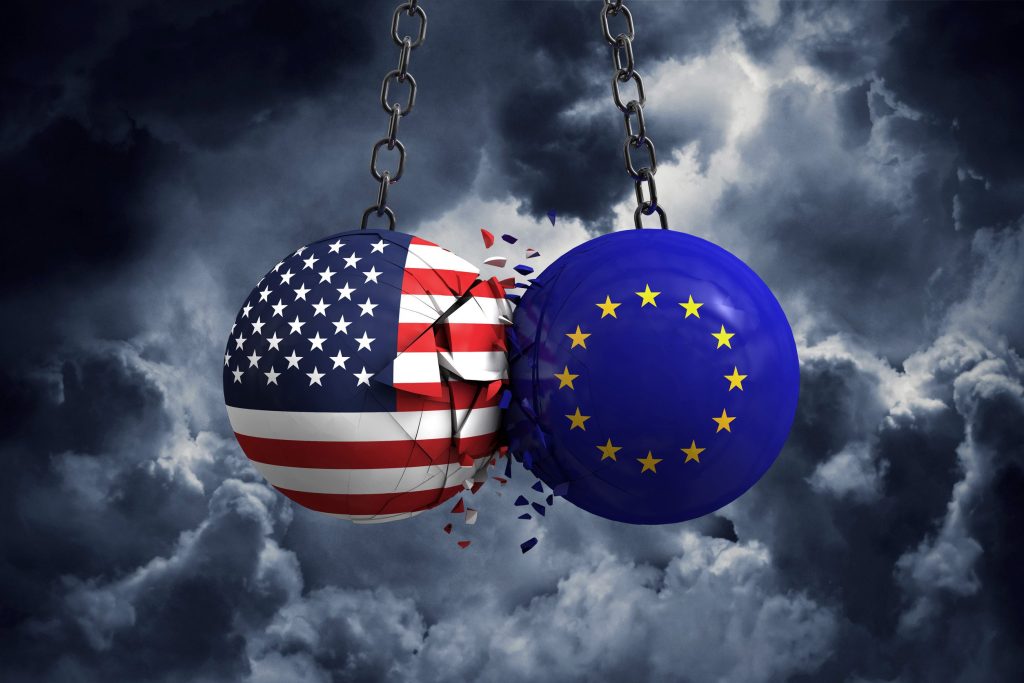
Brussels prepares aggressive enforcement of Digital Markets Act and Digital Services Act while Washington signals Section 301 tariffs targeting European companies in escalating transatlantic confrontation
The European Union is preparing to intensify enforcement of its landmark technology regulations in 2026, setting the stage for a major transatlantic confrontation as the Trump administration threatens sweeping retaliation against what it characterizes as discriminatory targeting of American companies. The collision between Brussels’ regulatory ambitions and Washington’s protectionist impulses represents one of the most serious threats to transatlantic economic relations since the trade wars of Trump’s first term, with billions of dollars in fines, tariffs, and market access hanging in the balance.
At the heart of the dispute are two EU laws that have fundamentally transformed how technology companies operate in Europe: the Digital Markets Act (DMA), which targets anti-competitive practices by “gatekeeper” platforms including Google, Meta, Apple, and Amazon, and the Digital Services Act (DSA), which governs content moderation and online safety. Both regulations require American tech giants to open their platforms to rivals, provide transparency about algorithms, and take responsibility for illegal content—requirements that have generated fierce opposition from Silicon Valley and increasingly vocal threats from Washington.
Trump Administration Prepares Section 301 Investigation
The Office of the US Trade Representative issued stark warnings in December that the United States would deploy “every tool at its disposal” to counter what it calls unreasonable and discriminatory EU measures against American service providers. The administration is preparing a Section 301 investigation under the Trade Act of 1974—the same mechanism Trump wielded against China during his first term—that would authorize punitive tariffs, quotas, or restrictions on European companies operating in American markets.
In an unprecedented escalation, the USTR specifically named prominent European firms as potential retaliation targets, including Spotify, DHL, Accenture, Siemens, SAP, Amadeus IT Group, Capgemini, Publicis Groupe, and Mistral AI. The message was unmistakable: if Brussels continues aggressive tech enforcement, European companies across sectors—not just technology—will face consequences in the massive American market where many have operated freely for decades.
Commerce Secretary Howard Lutnick has reportedly proposed that the EU roll back tech regulations in exchange for a steel and aluminum deal, while Secretary of State Marco Rubio imposed visa bans on former EU Commissioner Thierry Breton and four other officials, accusing them of participating in a “global censorship-industrial complex.” The visa restrictions, announced shortly after the Commission fined Elon Musk’s X platform €120 million for transparency violations under the DSA, represent a dramatic personalization of the dispute and signal the Trump administration’s willingness to escalate beyond traditional trade measures.
Brussels Refuses to Negotiate Digital Rulebook
Teresa Ribera, the EU’s competition chief responsible for enforcing both the DMA and DSA, has made clear that Brussels will not compromise its regulatory framework in response to American pressure. “There have been moments that we have needed to, where I have needed to, stand up and say: sorry, but we’re not going to undo our regulation just because you don’t like [it],” Ribera told the Financial Times, characterizing US tactics as “blackmail” and insisting the European digital rulebook is “not up for negotiation.”
The Commission’s enforcement agenda for 2026 includes potentially landmark decisions on Google’s dominance in search and advertising technology, Meta’s blocking of rival AI developers on WhatsApp, Apple’s App Store restrictions, and X’s content moderation practices. After years spent negotiating and implementing digital legislation, European officials describe 2026 as the year when enforcement becomes the priority—even if that triggers a trade war with the United States.
The philosophical divide runs deeper than specific regulations. American critics argue the DMA does not assess whether consumers have been harmed or whether companies have engaged in wrongdoing, but simply targets firms for being large, successful, and American. They contend that innovation is being treated as a threat while foreign rivals gain access to data and technology they could never build independently. European officials counter that unchecked market power threatens competition, innovation, and democratic values, requiring comprehensive regulatory intervention that applies equally to all companies regardless of origin.
Silicon Valley Pushback and Strategic Stakes
The major technology companies have mounted aggressive lobbying campaigns against EU enforcement, with legal and political resources deployed across both continents. Google warned that investigations into its AI models “risk stifling innovation in a market that is more competitive than ever.” Apple has demanded that Brussels scrap the DMA entirely, while Meta accused the Commission of trying to “handicap successful American business while allowing Chinese and European companies to operate under different standards.”
The corporate resistance reflects genuine concerns about compliance costs, operational constraints, and competitive disadvantages, but also strategic calculation that the Trump administration’s threats provide political leverage to extract concessions from Brussels. The €500 million fine against Apple and €200 million against Meta issued in April were criticized by some observers as surprisingly modest, fueling speculation that the Commission was attempting to avoid escalating tensions with Washington—a calculation that appears unsuccessful given subsequent developments.
The dispute intersects with broader transatlantic tensions over trade, defense spending, data flows, and geopolitical alignment. The EU committed to purchasing $750 billion in US energy over three years and pledged $600 billion in investments as part of a trade agreement that capped tariffs at 15% but provided minimal reciprocal market access. Digital regulation adds another friction layer to a relationship already strained by Trump’s threats against Greenland, criticism of NATO allies, and unpredictable foreign policy moves including the capture of Venezuelan President Nicolás Maduro.
Path Forward Remains Uncertain
The most likely scenario involves prolonged tension punctuated by tactical accommodations rather than comprehensive resolution. Neither side wants a full-scale trade war that would damage both economies, but neither is prepared to abandon core principles. The EU views strong competition enforcement as essential to economic competitiveness and democratic governance, while the Trump administration treats challenges to American tech dominance as threats to national interests requiring forceful response.
If Washington proceeds with Section 301 tariffs, Brussels would almost certainly retaliate with countermeasures targeting American exports, potentially spiraling into broader economic conflict. The timing could not be worse for transatlantic cooperation, with Europe facing security challenges from Russia, economic competition from China, and urgent needs for defense investment and technological innovation that benefit from American partnership.
Mario Marinello, a fellow at Brussels-based think tank Bruegel, warned that caving to internal or external pressure on enforcement would be “a disaster” for the European economy, arguing that competitiveness requires strong competition enforcement. Alexandra Geese, a European parliamentarian with the Greens, characterized current enforcement as “too little, too late,” noting that “there is an attack on our democracy going on, led by the tech oligarchs on social media, and we’re not really defending ourselves.”
The clash represents more than regulatory dispute—it constitutes a defining test of how democracies will govern the digital economy amid geopolitical competition. Europe has chosen comprehensive regulation using law to constrain market power, while America under Trump prioritizes protecting corporate champions even at the cost of allied relationships. The resolution will shape technology governance, transatlantic relations, and economic integration for years to come.
Related Topics:
The post EU-US Tech Regulation Clash Intensifies as Trump Administration Threatens Retaliation appeared first on European Business & Finance Magazine.