
























EU tries to land trade deal with South American countries
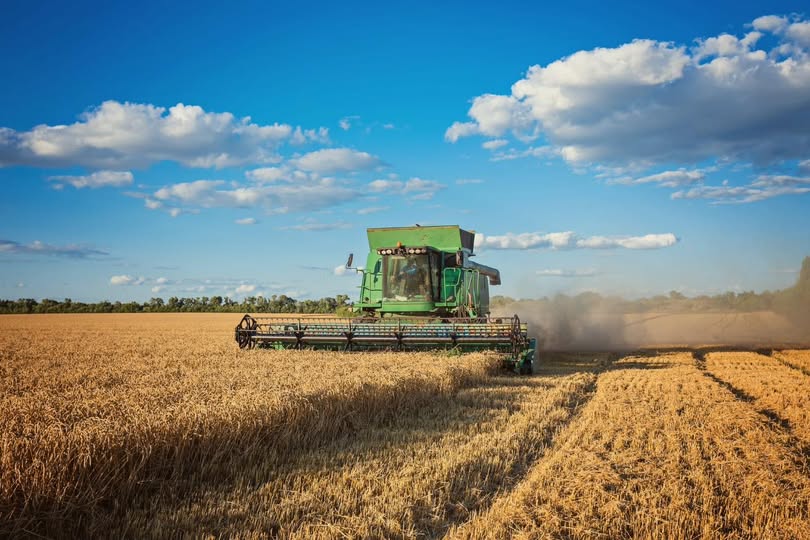
After 26 years of negotiations, the EU countries once again had to acknowledge in December that they were still internally divided on entering into a trade agreement with the South American Mercosur countries.
But now a breakthrough may be on the way.
On Wednesday, the minister for food, agriculture and fisheries, Jacob Jensen (V), is in Brussels.
There he will discuss the trade agreement and the extensive agricultural protests before Christmas.
“From the Danish side, we are pushing hard to get the trade agreement with the Mercosur countries approved in the near future,” says Jacob Jensen.
In the final stretch, however, there have been fierce protests from the agricultural sector in some EU countries.
In December, for example, farmers blocked Brussels with tractors and set off powerful fireworks from early morning.
That must have woken up several of the European heads of state and government who had arrived for December’s EU summit in the Belgian capital, where they nevertheless did not make any decision.
But now there is cautious hope that the EU countries can reach agreement this week.
The Mercosur countries are Argentina, Brazil, Paraguay and Uruguay, which are gathered in the regional trade bloc Mercosur.
If a trade agreement between the EU and Mercosur succeeds, it will create a combined market of 700 million consumers.
It will be of great benefit to countries with efficient agriculture such as Denmark.
In other EU countries such as France and Poland, however, there is concern that agriculture will be exposed to competition from South America.
Jacob Jensen hopes, however, that the EU Commission, with a new proposal, can appease primarily Italy, which, by virtue of the EU’s special rules on qualified majority, has the decisive vote.
“What the EU Commission is trying to put forward is not more money for agriculture, but a bringing forward of funds. Instead of agriculture only receiving the money in 2033, it should be moved forward to 2028.”
“The hope is that this will get some of the skeptical countries, such as Italy, to approve the agreement,” says Jacob Jensen.
If that happens, the President of the EU Commission, Ursula von der Leyen, may already next week travel to Paraguay and sign the agreement.
She was supposed to have made that trip on 20 December.
But in the end it was precisely Italy that backed France’s and Poland’s wish to postpone the agreement in order to negotiate more aid for agriculture.
If Italy says yes to the agreement, there are expected no longer to be enough countries against the agreement to be able to block it. Not even if France and Poland maintain their no.
Jacob Jensen is still carefully reading through the proposal from the EU Commission to bring forward agricultural funds. But at first glance Denmark can give the green light:
“From the Danish side, we do not see the discussion about bringing funds forward as decisive. It is far more about how we invest the money. That we invest it wisely in new technologies and innovation and simplify our rules,” says Jacob Jensen.
At the same time, the trade agreement will be a major advantage for Denmark, the agriculture minister believes.
“The EU had a trade surplus of over 60 billion euros in the food sector in 2024. So both the EU and Denmark have a huge interest in having free trade agreements with surrounding regions and countries. Not least at a time when others are building tariff walls, and there is geopolitical unrest,” says Jacob Jensen, without directly mentioning the USA and the country’s president, Donald Trump.
On Friday this week, the permanent representatives of the EU countries are expected to clarify whether there is now a qualified majority to enter into the agreement.