

































EU Readies Tougher Tech Enforcement in 2026 as Trump Warns of Retaliation

Transatlantic collision looms as Brussels doubles down on digital regulation while Washington threatens tariffs
The European Union is preparing to intensify enforcement of its landmark tech regulations in 2026, setting the stage for a major transatlantic confrontation as the Trump administration threatens sweeping retaliation against what it calls “discriminatory” targeting of American companies.
The collision between Brussels’ regulatory ambitions and Washington’s protectionist impulses represents one of the most serious threats to transatlantic economic relations since the trade wars of Trump’s first term—with billions of dollars in fines, tariffs and market access hanging in the balance.
At the heart of the dispute are two EU laws that have transformed how technology companies operate in Europe: the Digital Markets Act (DMA), which targets anti-competitive practices by “gatekeeper” platforms, and the Digital Services Act (DSA), which governs content moderation and online safety. Both came into full force in recent years and have already resulted in hundreds of millions of euros in fines against American tech giants.
Now, as Brussels prepares to ramp up investigations and penalties in 2026, the Trump administration has made clear it views these regulations as economic warfare—and is preparing to strike back.
The enforcement surge that’s triggering retaliation
The European Union has established itself as a global leader in tech regulation through landmark legislation including the AI Act, Digital Services Act and Digital Markets Act. This year alone, the bloc has stepped up enforcement of these rules to rein in the power of companies such as Amazon, Apple, Google, Meta and Microsoft.
The numbers tell the story of Brussels’ determination. In April, Apple and Meta were fined €500 million and €200 million respectively for not complying with the DMA. In September, Google was hit with a €2.95 billion fine for breaching EU antitrust rules by distorting competition in the advertising technology industry. And in December, Elon Musk’s platform X was fined €120 million for breaking the bloc’s digital rules on transparency—the first fine made under the DSA.
These are not one-off penalties but the opening salvos of what EU Competition Commissioner Teresa Ribera has promised will be sustained enforcement. Despite criticism from the US and companies around the world, Ribera has stood firm in her resolve to continue holding tech companies accountable under the bloc’s digital regulations.
The DMA, which became fully applicable in May 2023, establishes strict obligations for companies designated as “gatekeepers”—those providing core platform services that are so entrenched they can control market access for other businesses. Six companies have been designated under this framework: Alphabet, Amazon, Apple, ByteDance, Meta and Microsoft. Five of the six are American.
For European businesses navigating this regulatory landscape, the DMA represents an attempt to create fairer digital markets by preventing self-preferencing, requiring interoperability and limiting how platforms can combine user data. But from Washington’s perspective, it looks like protectionism disguised as consumer protection.
Trump’s threat: Section 301 and the return of tariff warfare
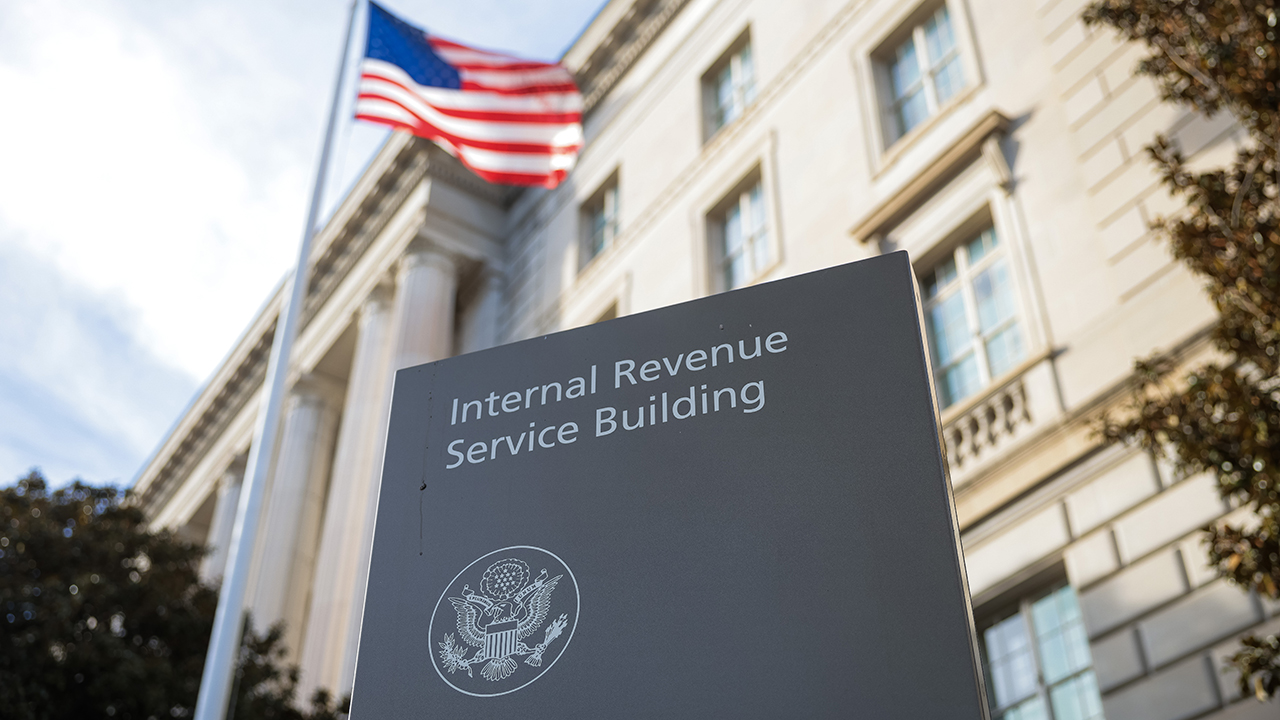
The Trump administration’s response has been unequivocal. The Office of the United States Trade Representative accused European regulators of pursuing a “persistent course of discriminatory and harassing lawsuits, taxes, fines, and directives against U.S. service providers”.
The administration has threatened to use “every tool at its disposal” to retaliate, including imposing fees and restrictions on European companies operating in American markets. Companies specifically named as potential targets include Spotify, DHL, Accenture, Siemens, SAP, Amadeus IT Group, Capgemini, Publicis Groupe and Mistral AI.
The mechanism for retaliation is Section 301 of the Trade Act of 1974, which allows the US government to investigate foreign trade practices it believes are “unjustifiable, unreasonable, or discriminatory” toward American companies. If the investigation concludes violations have occurred, the administration can impose punitive measures including tariffs or quotas on imports from the offending country.
Trump has used Section 301 before—most notably against China during his first term—and has shown no hesitation about deploying it again. In September 2025, Trump threatened the EU with higher tariffs after the Google fine, which would disrupt the trade framework established in July 2025.
The stakes are enormous. In July 2025, the US and EU agreed to a trade framework under which tariffs on most EU imports to the United States were reduced to 15 per cent, and Brussels pledged to purchase $750 billion worth of US energy products through 2028. A Section 301 investigation could unravel that agreement and trigger a new round of transatlantic trade conflict.
For European companies exposed to US markets, the threat is not theoretical. American officials have made clear they view EU digital regulations as “non-tariff barriers” that unfairly disadvantage US technology firms—and are prepared to impose reciprocal barriers in response.
The ideological gulf: Competition versus censorship
Beneath the technical arguments about market power and antitrust lies a deeper ideological divide about the role of government in regulating digital platforms.
European policymakers view the DMA and DSA as necessary responses to market failures. They argue that gatekeeper platforms have accumulated unprecedented power over digital markets, stifling competition and innovation. The regulations are designed to ensure contestability—that new entrants can compete on merit rather than being foreclosed by incumbents who control essential infrastructure.
The DSA addresses a different concern: that platforms have outsized influence over public discourse and safety, yet lack adequate accountability for the content they host. The law requires platforms to moderate illegal content, provide transparency about their algorithms and give users the ability to appeal content moderation decisions.
Former European commissioners published a commentary on January 2, 2026, arguing that the US administration’s narrative fundamentally misrepresents the purpose of the Digital Markets Act and Digital Services Act. The authors contend that these regulations are designed to curb the market dominance of “gatekeeper” platforms and ensure algorithmic accountability, rather than to police speech.
American critics see things very differently. They argue the DMA does not ask whether consumers have been harmed or whether a business has done anything wrong—it simply targets companies for being “large, successful, and, most importantly, American.” Under this view, innovation is being treated as a threat, and foreign rivals are being handed access to data and technology they could never build themselves.
On content moderation, Trump administration officials have gone further, accusing the DSA of enabling censorship. The Trump administration barred five European officials from entering the US—including former internal market commissioner Thierry Breton—in response to EU enforcement actions. The move reflected Washington’s view that EU officials are using regulatory power to suppress speech that would be protected under the First Amendment.
This is not merely a disagreement about policy—it reflects fundamentally different conceptions of liberty, markets and the legitimate scope of government action. For Europe, regulation is necessary to protect competition and democratic discourse. For the Trump administration, it is an assault on American enterprise and free speech.
The compliance burden: Why US tech giants are resisting
From the perspective of American technology companies, EU regulations impose massive compliance costs, create legal uncertainty and force changes to products that work perfectly well elsewhere in the world.
The DMA requires designated gatekeepers to allow third-party apps and app stores on their platforms, enable cross-platform messaging, prohibit self-preferencing in search and advertising, and provide business users with access to data generated on their platforms. For companies like Apple and Google, this means redesigning core products and opening up proprietary systems to competitors.
Meta had been under pressure to change its advertising settings to comply with the DMA, after the Commission issued the company a non-compliance decision regarding user choice in April. The company said that starting in January 2026, it would give EU users the choice between sharing all their data to see fully personalised advertising or sharing less data to see more limited personalised ads.
The DSA imposes equally demanding requirements. Platforms must conduct risk assessments, provide transparency reports, give users explanations for content moderation decisions and allow researchers access to data. The €120 million fine against X cited breaches including deceptive use of its blue verified checkmark, lack of transparency regarding ads and failure to provide access to public data for research purposes.
Industry associations representing US tech companies argue these regulations preempt innovation while creating technical challenges and negative impacts on user experience and security. They point out that designated companies face discriminatory treatment—undesignated foreign rivals gain competitive advantages while American firms bear the full weight of compliance.
The result is a growing perception in Silicon Valley that Europe is not a regulatory partner but an adversary—one that uses law as a weapon to extract rents from successful American companies while protecting less competitive European rivals.
Europe’s perspective: Sovereignty and market power
European officials reject the accusation that their regulations are anti-American protectionism. They argue—correctly—that the DMA and DSA apply to all companies meeting the relevant thresholds, regardless of nationality. The fact that most designated gatekeepers happen to be American reflects market realities, not regulatory bias.
The Commission firmly rejected the characterisation of its tech laws as “non-tariff barriers” as “completely wrong and completely unfounded”, arguing that the DSA and DMA respect freedom of information and treat all firms equally “irrespective of their place of establishment”.
Thomas Régnier, the Commission’s spokesperson for digital matters, said: “More than 99% of content moderation decisions taken here in the EU online are proactively done by platforms based on their own terms and conditions. We’re not asking platforms to remove content, we’re asking them to enforce their own terms and conditions.”
From this perspective, American complaints look like special pleading from companies accustomed to operating without meaningful oversight. European policymakers note that the US itself has a long history of aggressive antitrust enforcement—including the break-up of AT&T and Microsoft’s antitrust battles in the 1990s. The DMA and DSA represent Europe exercising the same sovereign right to regulate markets within its jurisdiction.
Moreover, European officials argue that the current system—where a handful of American platforms dominate digital markets globally—is not the result of fair competition but of network effects, switching costs and anti-competitive practices that foreclose rivals. Regulation is necessary precisely because markets have failed to self-correct.
For European policymakers grappling with the continent’s productivity challenges, the DMA is also about enabling European companies to compete. If American platforms control essential digital infrastructure, European businesses are locked into dependency relationships that transfer value across the Atlantic and stifle local innovation.
What’s at stake in 2026: The year enforcement accelerates
Both sides are now dug in, and 2026 promises to be a pivotal year for transatlantic tech relations.
On the European side, enforcement is set to intensify. The EU’s AI Act, which becomes fully enforceable in August 2026, represents a watershed moment in global tech regulation. Companies deploying “high-risk” AI systems—such as those in hiring, law enforcement, and healthcare—must now conduct rigorous impact assessments and implement human-in-the-loop oversight.
The DMA is also up for review. In accordance with Article 53, the European Commission is required to conduct an evaluation of the legislation by May 3, 2026, and repeat the process every three years. The main aspects under assessment include the extent to which the DMA’s aims have been achieved, its impact on businesses—especially SMEs—and whether modifications are needed.
Meanwhile, cloud computing is emerging as the next enforcement frontier. In November 2025, regulators opened cloud gatekeeper probes for Amazon and Microsoft, signalling that Brussels’ regulatory ambitions extend well beyond social media and search engines into the infrastructure layer of the internet.
On the American side, the Trump administration appears determined to follow through on retaliation threats. The US is preparing a Section 301 investigation that could lead to tariffs, citing what it calls discriminatory EU rules. The USTR confirmed it would apply its retaliatory approach to “other countries that pursue an EU-style strategy in this area”—a warning to nations contemplating similar regulations.
The House Judiciary Committee has held hearings on what it calls “discriminatory foreign regulations” modeled after the Digital Markets Act, framing the issue as one of protecting American innovation and competition. The political momentum behind retaliation is building, and the question is no longer whether Washington will act but when and how aggressively.
The ripple effects: From trade to geopolitics
The EU-US dispute over tech regulation is not occurring in isolation. It intersects with broader tensions over trade, defence, data flows and geopolitical alignment.
Trump has already imposed sweeping tariffs on imports—including 15 per cent on many goods from the EU—as part of his “America First” trade policy. The tech dispute gives him additional justification for escalating tariffs, framed as retaliation for regulatory overreach rather than naked protectionism.
For European businesses tracking these developments, the implications extend beyond compliance costs. A full-blown trade war between the US and EU would disrupt supply chains, increase costs and create uncertainty that deters investment. European tech startups, which often look to the US for funding and market access, could find themselves caught in the crossfire.
The dispute also complicates efforts to build a unified Western approach to technology governance in competition with China. While the EU focuses on preemptive regulation, the US is entering a phase of structural antitrust enforcement. Alphabet is expected to begin implementing court-mandated changes to its search business in January 2026, including sharing its proprietary search index with competitors and terminating exclusivity deals.
Yet instead of coordinating approaches, the US and EU are moving in opposite directions—with Washington viewing Brussels’ regulations as obstacles to American competitiveness and European officials seeing American resistance as evidence of regulatory capture.
The irony is that both the US and EU ostensibly share the same goals: competitive markets, consumer protection and democratic governance of technology. The fact they cannot find common ground reflects not just policy disagreements but deeper political and economic anxieties.
The path forward: Negotiation or collision?
Several potential resolutions exist, though none are without complications.
One possibility is negotiation. During summer trade talks in 2025, the United States floated the idea of a new DMA advisory body that could allow companies to provide input into enforcement decisions. The EU rejected this as an infringement on its regulatory sovereignty, but some form of transatlantic dialogue on tech regulation could reduce friction.
Another option is targeted exemptions. The EU could consider carve-outs or lighter-touch enforcement for certain American companies in exchange for concessions on other trade issues. However, this would undermine the principle that regulations apply equally regardless of nationality—a cornerstone of the rule-of-law approach Brussels champions.
A third scenario is escalation. If the Trump administration proceeds with Section 301 tariffs, the EU would almost certainly retaliate with its own trade measures. This could spiral into a broader economic conflict, with each side imposing penalties until domestic political pressure forces a resolution.
The most likely outcome is a prolonged period of tension punctuated by tactical accommodations. Neither side wants a full trade war, but neither is willing to back down on core principles. The result will be ongoing friction, periodic flare-ups and a gradual erosion of transatlantic economic integration.
Conclusion: A defining test for the digital economy
The clash between EU tech enforcement and Trump administration threats represents more than a regulatory dispute—it is a defining test of how democracies will govern the digital economy in an era of geopolitical competition.
Europe has chosen a path of comprehensive regulation, using law to constrain market power and protect democratic values. The United States under Trump has embraced a more laissez-faire approach, viewing regulation as a threat to innovation and an excuse for foreign governments to disadvantage American companies.
Both sides have legitimate concerns. European markets have been dominated by American platforms for two decades, with limited European alternatives emerging despite significant talent and capital. American companies face genuine compliance burdens and legal uncertainties that make operating in Europe increasingly costly and complex.
But unless Washington and Brussels find a way to bridge their differences, the transatlantic digital economy—built over decades of cooperation—risks fragmenting into competing regulatory spheres. For businesses operating across the Atlantic, that would mean higher costs, duplicative compliance and strategic choices about where to prioritize investment.
For consumers, it could mean fewer choices, higher prices and digital services that vary dramatically depending on geography. And for the democratic world, it would represent a failure to present a unified front on technology governance at precisely the moment when authoritarian alternatives are gaining ground.
The stakes in 2026 could not be higher. Brussels is doubling down on enforcement. Washington is threatening retaliation. And the future of transatlantic tech relations hangs in the balance.
Further reading:
The post EU Readies Tougher Tech Enforcement in 2026 as Trump Warns of Retaliation appeared first on European Business & Finance Magazine.