
















EU Faces Fresh US Tariff Threat as Trump Administration Launches New Trade Investigations
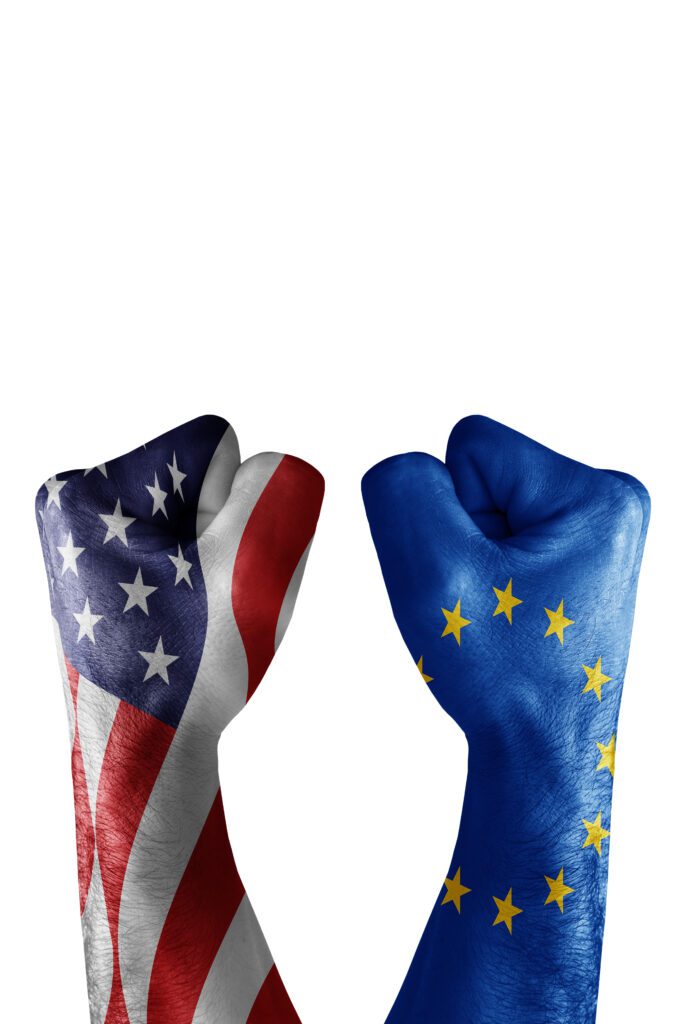
The Trump administration has launched fresh trade investigations into the EU, Japan, South Korea, Taiwan and Switzerland, targeting alleged manufacturing overcapacity — the latest move in a rapidly escalating effort to rebuild a tariff regime after the US Supreme Court struck down the president’s emergency-powers levies last month.
Donald Trump’s trade war is far from over. After the US Supreme Court dismantled the legal scaffolding propping up his sweeping tariff regime, the administration has moved swiftly to rebuild it — this time with a different set of tools.
The US Trade Representative’s office unveiled the new round of investigations on Wednesday, targeting what it described as “excess capacity and production in manufacturing sectors” across a string of major trading partners. The countries in its sights include the European Union, Japan, South Korea, Taiwan and Switzerland — all of which had previously negotiated bilateral trade deals with Washington under the tariff framework the court threw out.
The timing is not coincidental. Last month’s Supreme Court ruling found that the president had exceeded his authority by using emergency powers to impose sweeping tariffs on nearly all US trading partners. The administration responded immediately with a blanket 10 per cent levy on almost all imports as a stopgap, but that measure is only valid for 150 days. The new investigations are widely understood as the mechanism through which Trump intends to replace those temporary levies with something more durable — and more legally defensible — before the clock runs out. European businesses have been monitoring the fallout closely since the court’s decision sent shockwaves through transatlantic trade relations.
US Trade Representative Jamieson Greer was explicit about the target timeline, stating his intention to conclude the investigations before the current stopgap tariffs expire. “The president’s trade policy remains the same that it’s been for him for decades,” Greer told reporters, adding that protecting American jobs and ensuring fair trading conditions remained the core objectives. “The tools may change,” he acknowledged — a candid admission that the legal strategy has shifted even if the underlying goals have not.
For European businesses and policymakers, the implications are significant. The EU had spent months negotiating a trade agreement with Washington that would have slashed the bloc’s levies on American industrial goods and certain agricultural products to as low as zero, in exchange for a broad US tariff of 15 per cent. That deal now looks considerably less favourable than it did on paper. The current 10 per cent stopgap rate appears lower at first glance, but crucially it is levied on top of existing duties — whereas the previous 15 per cent figure had incorporated many of those same charges. The net effect for many European exporters navigating the new tariff landscape may be worse under the new arrangement than the old one.
The EU’s response to the ruling reflected that uncertainty. The European Parliament last month announced it would delay ratification of the trade agreement, signalling that Brussels is reassessing whether the terms it negotiated still represent a workable settlement. With fresh investigations now underway and the legal and political landscape shifting rapidly, the bloc faces a difficult balancing act between maintaining economic relations with Washington and protecting its own industrial base. The decision to pause ratification is being closely watched by trade analysts and corporate strategists across the continent.
The broader pattern is one that European business leaders have been tracking with growing alarm: a US administration deeply committed to raising trade barriers, increasingly willing to test the limits of executive authority, and prepared to adapt its legal strategy when the courts push back. For sectors from German automotive manufacturing to French agriculture, the investigations announced this week add a new layer of uncertainty on top of an already turbulent year for transatlantic commerce.
Greer insisted that all of Washington’s trading partners had expressed interest in “maintaining” the recent deals and “holding to them.” But with EU ratification paused and the terms of those agreements under fresh scrutiny, that optimism may be premature. Trade tensions between the US and Europe have rarely been more fluid — or more consequential for the companies operating across that relationship.
What is clear is that the window for certainty is short. The 150-day stopgap will expire, the investigations will conclude, and a new tariff architecture will emerge. For the EU, Japan, South Korea and the others now under investigation, the stakes could hardly be higher. As businesses and governments on both sides of the Atlantic have come to understand, in the Trump era there is no such thing as a settled trade arrangement — only a series of agreements waiting to be renegotiated under mounting political pressure.
FAQs
Why did the US Supreme Court strike down Trump’s tariffs? The court ruled that the president had overstepped his authority by using emergency powers to impose broad tariffs. The administration has since introduced a temporary 10 per cent levy while it pursues alternative legal routes to restore higher duties.
What does the EU’s current 10 per cent tariff rate mean for European exporters? Unlike the previously negotiated 15 per cent rate, which incorporated existing duties, the current 10 per cent levy is applied on top of pre-existing charges — meaning the effective tariff burden on many EU exports may be higher than the headline figure suggests.
The post EU Faces Fresh US Tariff Threat as Trump Administration Launches New Trade Investigations appeared first on European Business & Finance Magazine.