





















Environment Minister Totschnig supports EU-wide battery deposit system
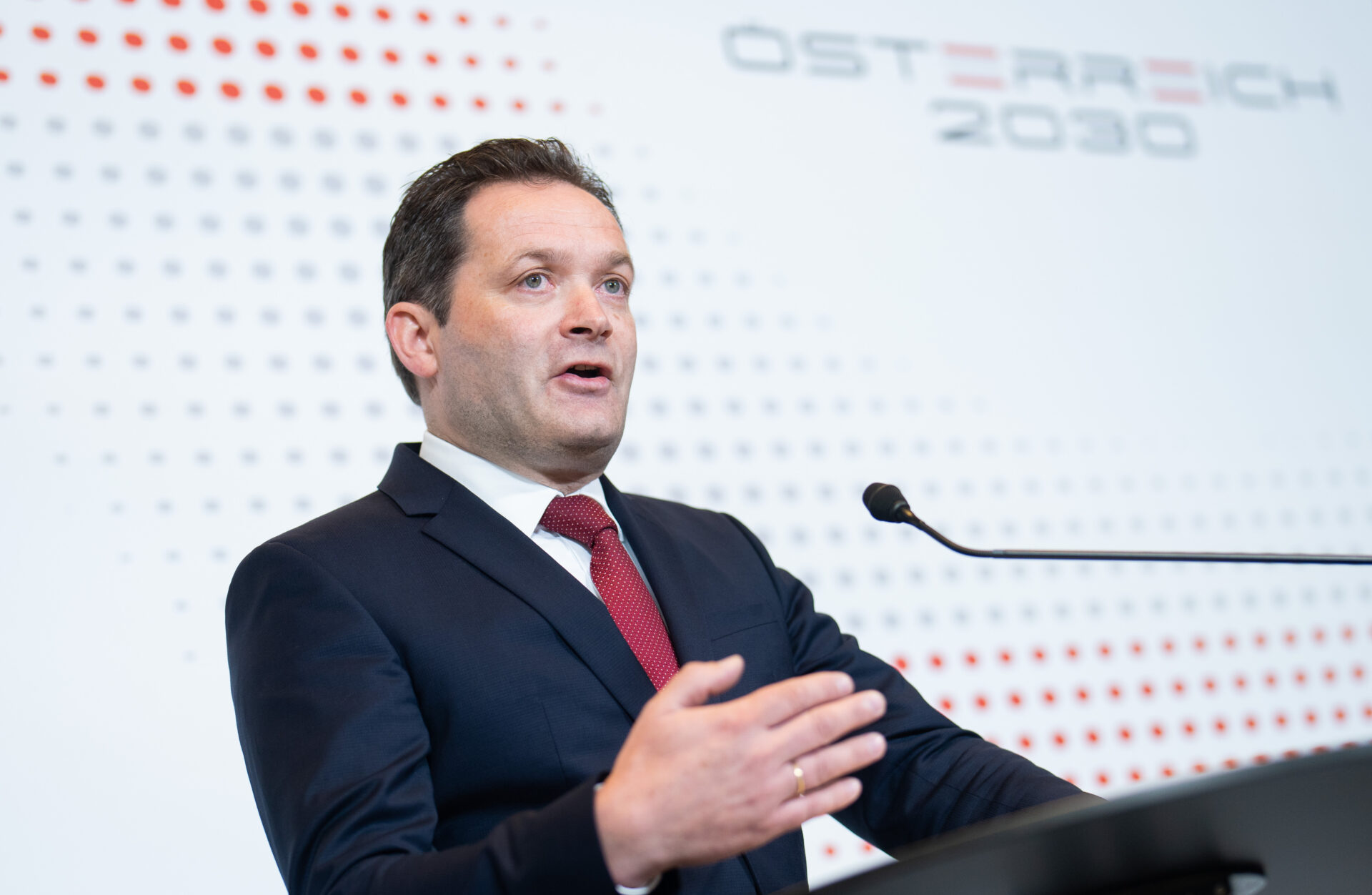
Brussels (APA) – Environment Minister Norbert Totschnig (ÖVP) is strongly advocating in Brussels for the introduction of a “uniform deposit system” for lithium-ion batteries. “We want the Commission to quickly put a proposal on the table,” Totschnig said at the start of the meeting of EU environment ministers on Tuesday in Brussels. The ministers also want to combat the “ultra-fast fashion trend.” “Enforceable regulations” are to be found for international retailers.
In Austria and many parts of Europe there are problems with discarded lithium-ion batteries. Devices with such batteries are often incorrectly disposed of in residual waste, where they cause fires. “In Austria we have experienced a very negative year with very, very many fires, enormous damage,” said Totschnig. At a “round table” in September it became clear that battery trading is international and that the problem can only be solved at the European level.
“Takes too long”
It is planned that an evaluation will be carried out by 2027, “from my point of view that takes too long.” A system is needed in which batteries are returned and safely disposed of. This would have a positive effect “for the environment, safety and a functioning circular economy in Europe,” said Totschnig.
With regard to the fashion trend, Totschnig explained that the average European buys 26 kilos of textiles per year and disposes of eleven kilos of textiles in the same year. “In Austria, 220,000 tons of textiles are thrown away every year,” said the minister. Countermeasures must be taken and the development curbed. In general, based on the latest report on the state of the environment in Europe, the ministers wanted to emphasize both the urgency of advancing climate resilience and the transition to a circular economy.
Bioeconomy strategy
The EU environment ministers also discussed the EU’s bioeconomy strategy. Bioeconomy refers to the use of biomass to produce food, materials and energy. Across the EU, more than 17 million people were employed in this field in 2023, with a value of 2.7 trillion euros. It was said that unlocking the potential of the bioeconomy is crucial for the transition to a clean and competitive economy in Europe and for its strategic autonomy. To this end, renewable biological land and marine resources are to be used, innovation expanded and dependence on imports of fossil fuels reduced. Currently, Europe is 90 percent self-sufficient in biomass, meaning that 90 percent of the biomass used in the EU also comes from the Union.
Regarding a likely imminent weakening of the “combustion engine phase-out,” Totschnig said that the transport sector faces particularly great challenges in achieving climate targets. He spoke out in favor of a “technology-neutral approach.” E-mobility will play a very central role in the coming years, but CO2-neutral technologies – he specifically mentioned biofuels and e-fuels – should also be given a chance. It is also about the supplier industry with its high added value, about jobs and prosperity. At the end of the day, a good compromise is needed that reconciles economic and ecological goals, said Totschnig.
(16.12.2025)