




























Deutsche Bank Finally Fixed Itself. Then the World Broke Again.
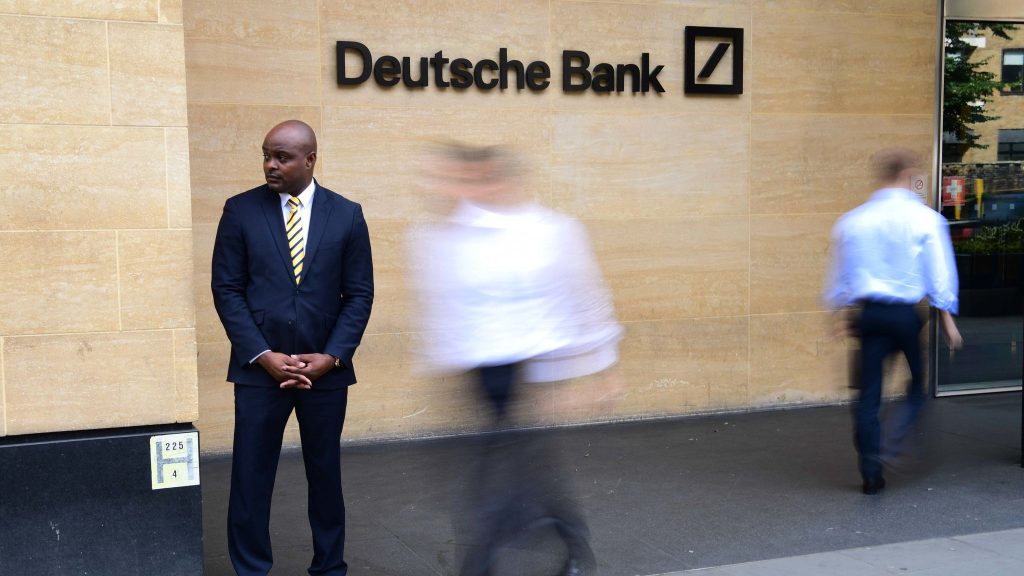
Quick Answer: Deutsche Bank delivered its most profitable year in history in 2025, posting €32 billion in revenues, a CET1 ratio of 14.5% and completing a €2.5 billion efficiency programme. But the Iran conflict, surging oil prices, the collapse of the Germany recovery trade and the return of stagflation risk have arrived simultaneously — threatening to undermine the most important financial turnaround in European banking before it has properly begun.
For a decade, Deutsche Bank was Europe’s most troubled major financial institution. Scandal, litigation, capital shortfalls, serial strategic pivots, and a share price that became a running joke in Frankfurt’s financial district. The recovery — long promised, frequently doubted, occasionally derailed — finally arrived in 2025. Christian Sewing declared 2025 “the most profitable year in Deutsche Bank’s history,” with the bank achieving or exceeding all its ambitious financial goals in an environment shaped by geopolitical tensions and challenging market conditions. Deutsche Bank
That was January. Then February 28 arrived.
What Deutsche Bank Actually Achieved
The numbers from 2025 deserve recognition because they were genuinely hard-won. Total net revenues reached the targeted €32 billion, up from €30.1 billion in 2024, with the Corporate Bank showing strong loan growth and Asset Management achieving organic growth with net inflows of €78 billion. Management completed its €2.5 billion operational efficiency programme by year end. Investing.com
The bank effectively transformed from a high-risk recovery play to an execution play — with record profits, a CET1 capital ratio of 14.5%, and a clear commitment to returning capital to shareholders. Investing.com The forward guidance was equally bullish: a 60% total payout ratio from 2026, post-tax return on tangible equity targeting above 13% by 2028, and a strategic plan built around becoming what Sewing calls the “European champion” in global banking.
The next phase of Deutsche Bank’s strategy — Scaling the Global Hausbank for 2026-2028 — targets group net revenues of around €33 billion in 2026, with provision for credit losses expected to trend slightly lower as commercial real estate provisions normalise. Deutsche Bank Coming into 2026, Deutsche Bank looked like the rarest thing in European finance: a genuine turnaround story that had actually turned around.
The Macro Trap
The problem is that Deutsche Bank’s recovery thesis was built on a specific set of assumptions about the world in 2026 — assumptions that the Iran conflict has systematically destroyed. The bank’s own economists had forecast Germany’s GDP growth at 1.5% for 2026, describing it as “one of the most meaningful rebounds among major economies” driven by newly unleashed fiscal stimulus. Deutsche Bank’s chief German economist had described a “noticeable economic recovery” in prospect, with the strongest growth impulse expected from a significant increase in government spending. Deutsche Bank
The ECB warned that a prolonged conflict will likely trigger a period of stagflation and push major energy-dependent economies including Germany and Italy into technical recession by the end of 2026. Wikipedia Germany — Deutsche Bank’s core domestic franchise, its largest single market, and the engine of the recovery thesis — is now one of the economies most at risk.
Bank of America’s March survey of European fund managers showed the percentage expecting stagflation surging from 15% to 50%, with expectations of EU inflation at their highest since 2022 — stagflation now described as “the primary view of the market’s macro regime.” CNBC
The Oil Warning Deutsche Bank Itself Is Issuing
In a striking piece of institutional irony, Deutsche Bank’s own economists have warned that oil prices remaining elevated are “raising the risk of a broader stagflationary shock,” noting that “with each passing day it gets harder to argue that the disruption to shipping and energy infrastructure will only prove temporary.” Fortune The bank’s research desk is now, in effect, warning about the conditions that most threaten its own recovery.
Deutsche Bank has raised its 2026 UK CPI projection to 3% from 2.4%, with peak inflation of nearly 3.2% year-on-year expected later this year, based on oil prices tracking nearly 50% higher than pre-conflict levels and gas futures nearly 90% higher. Investing.com These are not hypothetical scenarios — they are the bank’s own published projections, and they apply equally to the German economy at the centre of Deutsche Bank’s growth plans.
What the Numbers Now Mean
The credit loss provisions that Deutsche Bank guided slightly lower for 2026 were premised on portfolio normalisation and improving economic conditions. A German recession, rising unemployment across energy-intensive manufacturing sectors and a stagflationary consumer squeeze are not consistent with that guidance. As European banking stocks broadly retreated through March, Deutsche Bank shares fell with them — the recovery premium that investors had begun to assign to the stock now in question.
The investment banking pipeline that Deutsche Bank was counting on to boost fee income in 2026 is also at risk. The Revolut IPO and broader European capital markets activity that was expected to generate advisory and underwriting fees now faces a materially more hostile environment as the oil shock disrupts markets globally.
The corporate banking loan book — the segment that showed the strongest growth in 2025 — is most directly exposed to the industrial stress now spreading across the German economy. Chemical and steel companies, automotive suppliers and mid-sized manufacturers are exactly the borrowers who appear across Deutsche Bank’s German corporate book. Chemical and steel manufacturers have already imposed surcharges of up to 30% to offset surging electricity and feedstock costs, with economists warning of potential permanent deindustrialisation in some sectors. Wikipedia
The Structural Question
None of this means Deutsche Bank’s turnaround is over. A bank with a 14.5% CET1 ratio and €32 billion in revenues is not fragile. The UBS situation — a far more complex integration story running simultaneously in the same European banking landscape — shows that structurally stronger institutions can absorb significant macro shocks.
But Deutsche Bank’s 2026 guidance was written for a different world. The recovery story was premised on Germany accelerating, the ECB staying on hold, rates remaining stable and European corporate confidence recovering. Oil at $115, stagflation risk climbing to 50% probability among professional investors, and Germany facing recession instead of recovery is not that world.
Deutsche Bank finally fixed itself. The question now is whether the world will stay broken long enough to undo the fix.
Is Deutsche Bank’s turnaround at risk from the oil shock? Deutsche Bank’s 2026 targets — including slightly lower credit loss provisions and higher revenues — were premised on Germany recovering and macro conditions improving. The Iran conflict and oil price surge have materially changed both assumptions, raising corporate loan stress risk and undermining the German growth engine at the heart of Deutsche Bank’s strategy.
What are Deutsche Bank’s key financial targets for 2026-2028? The bank targets post-tax return on average tangible equity above 13% by 2028, a 60% total payout ratio from 2026, and a CET1 ratio slightly below its 2025 level of 14.5%. Group net revenues are guided at approximately €33 billion for 2026.
The post Deutsche Bank Finally Fixed Itself. Then the World Broke Again. appeared first on European Business & Finance Magazine.