























Could War in Iran Trigger a Global Recession? The $100 Oil Scenario Explained
Q: What will war in Iran do to the global economy?
A: A prolonged conflict risks pushing oil above $100 a barrel, adding 0.6–0.7 percentage points to global inflation and shaving up to 0.5% off eurozone GDP. If the Strait of Hormuz stays closed for more than a few days, analysts at Rapidan Energy say a global recession becomes a near-certainty. The impact depends entirely on how long Gulf shipping remains disrupted.
The joint US-Israeli strikes that killed Supreme Leader Ayatollah Ali Khamenei on 28 February 2026 have turned what markets long treated as a theoretical risk into a live economic emergency. Brent crude jumped 10% to $80 a barrel within hours. Goldman Sachs estimates prices could reach $120–150 in a full-scale war. The immediate question for businesses and investors is how deep the damage goes and how long it lasts.
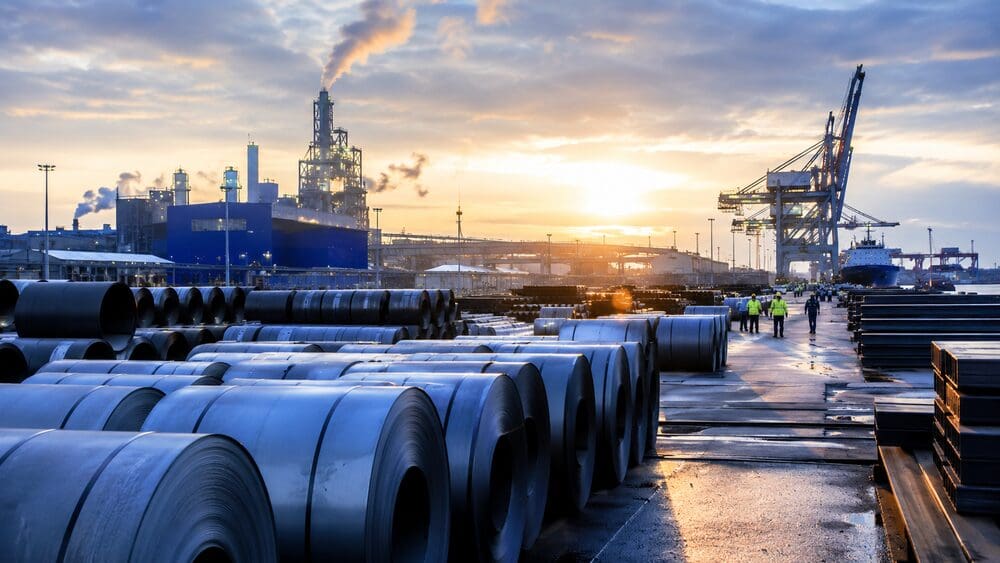
The Strait of Hormuz is the pressure point. Roughly 20 million barrels of oil and 20% of the world’s liquefied natural gas pass through it daily. Iran warned vessels the waterway was closed for navigation on Saturday, and most tanker owners, oil majors and trading houses suspended shipments. Even with Saudi Arabia’s East-West pipeline and Abu Dhabi’s bypass infrastructure, Rystad Energy estimates a net loss of 8–10 million barrels per day if the strait stays shut — a supply gap no amount of OPEC+ production increases can fill.
The inflation transmission is immediate. Capital Economics calculates that oil sustained at $100 a barrel would add 0.6–0.7 percentage points to global inflation and push natural gas prices higher in tandem. Oxford Economics models a more severe scenario: a Hormuz closure lifting Brent to $130 could push US inflation to 4.5% and eurozone inflation close to 4%, derailing expectations of monetary easing and potentially forcing central banks to delay rate cuts indefinitely.
For Europe, the timing is brutal. The eurozone had just achieved its 2% inflation target in December after three years of battling price pressures that peaked above 10%. The ECB has held rates at 2% for four consecutive meetings, and growth projections for 2026 had been revised upward on the back of Germany’s €500 billion fiscal expansion and improving domestic demand. An energy shock from the Gulf threatens to undo that progress in weeks. European manufacturers, already operating with energy costs roughly 40% above pre-2022 levels, face a potential second wave of cost pressure that could accelerate deindustrialisation in energy-intensive sectors.
The geopolitical risk premium that has been building across markets since Russia’s invasion of Ukraine is now being priced as a structural feature rather than a temporary disruption. Defence stocks, already up 260% since 2022, are likely to extend gains when European markets open on Monday. Gold, which has climbed above $4,600, reflects capital seeking shelter from a world where geopolitical tensions are reshaping corporate strategy and investor positioning on a permanent basis.
Asian economies face particular vulnerability. China, the world’s largest oil importer and Iran’s biggest remaining customer, will assess strategic reserves and alternative supply routes. Bob McNally, former White House energy adviser and founder of Rapidan Energy, warned that Asian countries would begin hoarding once they realised Hormuz was effectively closed — behaviour that amplifies the supply shock.
J.P. Morgan notes that previous Iranian regime changes have produced sustained oil price increases. After the 1979 revolution, prices more than doubled and Iranian production never recovered. If history is any guide, the economic consequences of this conflict will outlast the military campaign regardless of how quickly a ceasefire is reached.
The question is no longer whether the war affects the global economy. It already has. The question is whether it becomes a price spike or a structural reset.
Frequently Asked Questions
How high could oil prices go if the Strait of Hormuz stays closed? Analysts project a range depending on duration. Rystad Energy expects an initial jump to around $92 a barrel once markets fully reopen. Goldman Sachs estimates $120–150 in a full-scale prolonged war. Oxford Economics models a worst-case scenario at $130 if the strait is blocked for an extended period. The key variable is not the conflict itself but how long commercial shipping remains suspended — every additional day of closure compounds the supply deficit because the world’s spare capacity sits behind the same chokepoint.
Will the ECB raise interest rates again because of the oil shock? Not immediately, but rate cuts are almost certainly off the table. The ECB had held its deposit rate at 2% through four consecutive meetings, with markets pricing a 45% chance of a cut in 2026. A sustained oil price above $100 could add 0.6–0.7 percentage points to eurozone inflation, pushing it well above the 2% target the bloc only just achieved in December. Central banks are more likely to pause and delay easing than to hike, but a prolonged energy shock would force a fundamental reassessment of the monetary policy outlook across both the ECB and the Federal Reserve.
What happens to European energy security if Iranian oil is permanently off the market? Iran exported roughly 1.9 million barrels per day as of December 2025, mostly to China despite US sanctions. If regime change leads to a sustained production collapse — as happened after the 1979 revolution, when Iranian output never recovered — global supply tightens permanently. Europe is less directly exposed than Asia since it imports little Iranian crude, but the knock-on effects through higher benchmark prices and competition for alternative LNG supplies would hit European industry and consumers hard, particularly in energy-intensive manufacturing sectors already struggling with costs 40% above pre-2022 levels.
The post Could War in Iran Trigger a Global Recession? The $100 Oil Scenario Explained appeared first on European Business & Finance Magazine.