

































Carmakers turn against EU’s ‘disastrous’ petrol engine rule changes

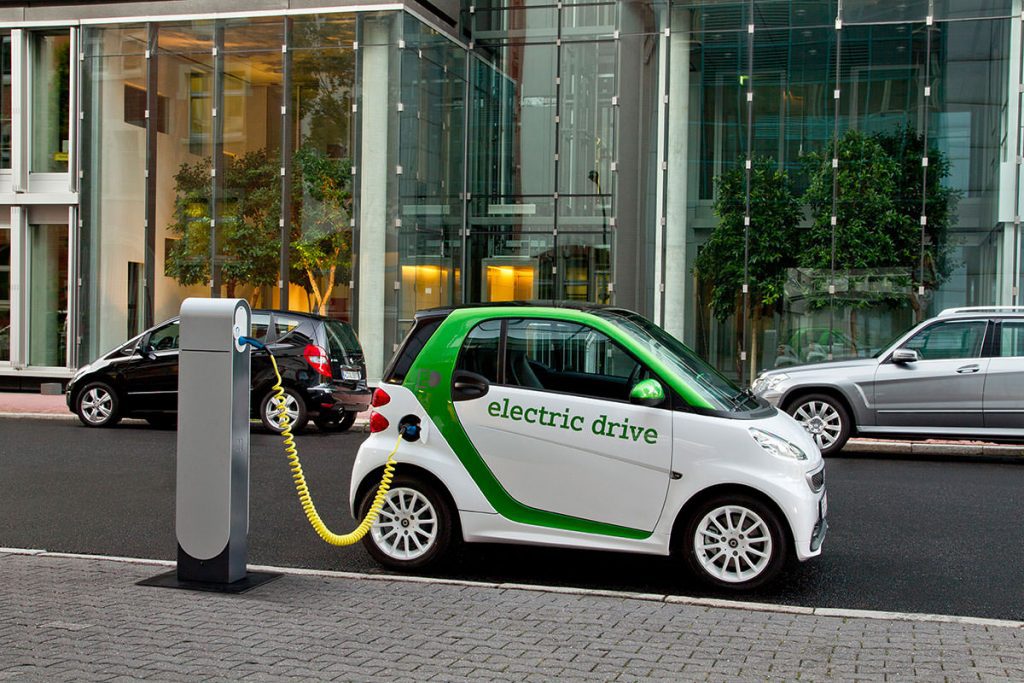
Brussels’ attempt to soften its flagship plan to end sales of new petrol and diesel cars by 2035 was supposed to calm Europe’s largest manufacturing industry. Instead, it has triggered a fresh backlash from carmakers who say the revised framework risks making combustion-engine vehicles rarer, more expensive and — in the words of one industry lobby group — “disastrous” in practice.
Under the European Commission’s updated approach, the headline goal of “zero” tailpipe emissions by 2035 is no longer as absolute as previously designed. The new outline would allow manufacturers to continue selling a limited volume of combustion engines and hybrids, but only if the remaining emissions are offset through a set of upstream measures — including the use of low-carbon materials such as green steel and the deployment of sustainable fuels.
On paper, the shift sounds like a pragmatic compromise: keep the EU’s direction of travel toward electrification while recognising that parts of the market, supply chain and charging infrastructure remain uneven across member states. In the industry’s telling, however, the detail is what breaks it. Executives and lobbyists argue that an “offset” regime effectively rewrites the rules late in the game, while creating a compliance architecture that is complex to certify, costly to implement and prone to political tinkering.
The most immediate concern is cost. If the Commission’s proposal forces a portion of the remaining combustion fleet to be built with significantly more expensive inputs — including premium low-carbon steel that is still scaling in Europe — the economics begin to resemble a niche product rather than a mass-market option. Analysts have warned this could turn future petrol cars into a “luxury good”, not because consumers suddenly prefer them, but because regulation makes them structurally pricier to manufacture.
That is awkward timing for an industry already squeezed from multiple directions. Europe’s carmakers are battling softer demand, a volatile cost base, and intensifying competition from Chinese EV champions and from Tesla’s price-cutting strategy, which has reset consumers’ expectations of what an electric vehicle should cost. (EBM has looked at how the price war has eaten into margins and changed the competitive landscape in Europe.) Tesla’s profits slide despite record deliveries
Trade policy is another stress point. With the EU moving toward higher tariffs on imported Chinese EVs, manufacturers face the risk of retaliation in China — still the most important profit pool for several European groups — even as they try to fund an expensive industrial transition at home. VW warns of a €5bn tariff hit after its first loss since Covid
Against that backdrop, carmakers are arguing that policy needs to be simpler and more financeable, not more intricate. A regime that asks manufacturers to prove the “Europe-made” provenance of materials, validate fuel sustainability and document offset chains may satisfy political optics, but it risks slowing investment decisions and complicating product planning — especially for companies that sell across multiple EU markets with different consumer profiles.
The politics, too, are becoming messy. The Commission’s package is dividing member states and splitting stakeholders who broadly agree on electrification’s direction but disagree on the pace and the mechanisms. Some groups warn that watering down the 2035 target could slow the transition by signalling uncertainty to the market. Others argue the opposite: that a rigid “zero means zero” deadline was already encouraging quiet back-tracking and lobbying, and that a controlled flexibility could keep the industry onside — provided the rules are implementable.
A separate flashpoint is the debate over mandatory EV quotas for corporate fleets, which policymakers see as essential to building a healthy second-hand EV market. Leasing groups, however, have cautioned that quotas without supportive financing incentives could become another unfunded mandate — shifting risk onto fleet buyers while doing little to address charging bottlenecks and residual value uncertainty.
For businesses, the key issue is not ideology but predictability. The transition to electric will require a workable ecosystem — charging access, grid upgrades, stable incentives, and a credible used-car pipeline — otherwise the cost of compliance will reappear as higher sticker prices and constrained model choice. Electric cars for business use: benefits and considerations
The broader strategic question is whether Europe’s rulebook is helping its champions compete — or inadvertently putting them into a permanent defensive crouch. The region’s manufacturers are being asked to transform their product lines while also dealing with a fragmented market, slower growth and intensifying global competition. Strategies to help European carmakers regain their edge
None of this means the EU should abandon its decarbonisation goals. But the emerging lesson from the industry’s reaction is that “flexibility” can backfire if it is delivered as late-stage complexity rather than clear, bankable rules. If Brussels wants manufacturers to keep investing in European production, it will need to ensure that the transition is not only ambitious, but administratively and economically buildable — at scale, and at speed.
The post Carmakers turn against EU’s ‘disastrous’ petrol engine rule changes appeared first on European Business & Finance Magazine.