

















Belgium PM Breaks EU Consensus, Calls for Reset With Russia Over Energy Prices
The Belgian Prime Minister Just Said What European Leaders Won’t — It’s Time to Deal With Putin
There is an unspoken conversation happening in the chancelleries of Europe. Bart De Wever, Belgium’s prime minister and a right-wing Flemish nationalist not given to diplomatic understatement, has now said it out loud.
“We must normalise relations with Russia and regain access to cheap energy. That is common sense,” De Wever told Belgian newspaper L’Echo in an interview published at the weekend. “In private, European leaders agree with me, but no one dares to say it out loud. We must end the conflict in the interest of Europe, without being naïve towards Putin.” Euronews
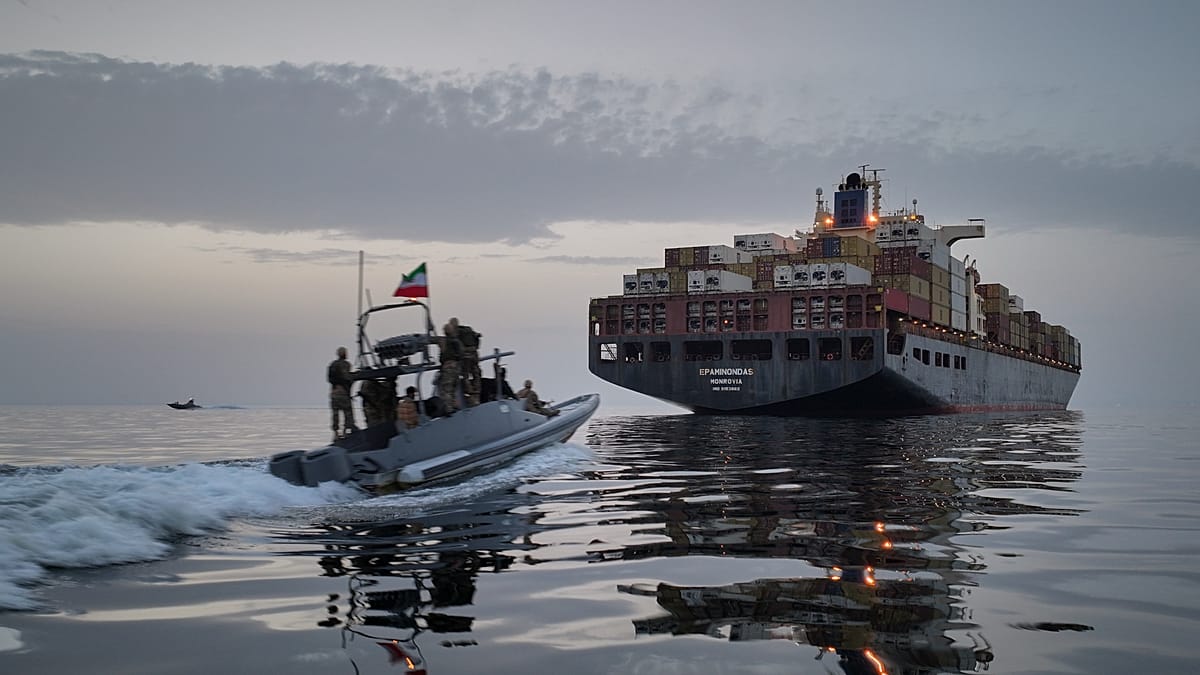
The remarks land at a moment of acute energy stress across the continent. The US-Israeli war on Iran, which began on 28 February, has driven oil and gas prices sharply higher, rerouted global energy supply chains, and reopened questions about European energy security that many policymakers had hoped were being put to rest through diversification and renewables. As EBM has reported, the oil shock triggered by the Hormuz closure is now the dominant variable in European inflation forecasts, complicating central bank policy and household budgets simultaneously.
The Logic of the Argument
De Wever’s case rests on a clear-eyed — his critics would say cold-eyed — reading of the strategic situation. He argued that Europe’s dual strategy of supporting Ukraine militarily and squeezing Russia’s economy has become untenable without the backing of the United States. “Given that we are unable to pressure Putin by sending weapons to Ukraine, and cannot suffocate his economy without US support, only one method remains: making a deal,” he said. Euronews
The argument has a logic that is hard to dismiss entirely, even for those who find its conclusions unpalatable. The Trump administration’s retreat from unconditional support for Ukraine has materially weakened the coercive leverage that EU strategy was built around. Sanctions imposed without full US enforcement and military aid without full US backing are different instruments from those the EU had when Washington was an active co-author of the pressure campaign. The architecture of the strategy has shifted beneath European feet, and De Wever is making the case that the strategy should shift with it.
He warned that Europe risks suffering economically while the war continues, and that cheaper energy supplies could be restored if relations improve — though he stressed that Europe must remain cautious and continue strengthening its military defences. Belga News Agency The combination of rearmament and rapprochement is not contradictory in De Wever’s framing: Europe should negotiate from a position of growing military capability, not from weakness. He made the comments while promoting the French edition of his book Over Welvaart, which deals with Belgium’s economic challenges and the need for structural reform.
A Fracture That Was Already There
De Wever is not operating in isolation. French President Emmanuel Macron, Italian Prime Minister Giorgia Meloni and Hungarian Prime Minister Viktor Orbán have called for direct talks with Moscow, while Poland and the three Baltic states are firmly opposed. Euronews The Belgian prime minister is effectively giving explicit voice to a growing informal caucus that has been taking shape for months, composed of leaders who believe the war’s economic costs for Europe are approaching a threshold that democratic publics will not indefinitely absorb.
Hungary’s Viktor Orbán has long occupied this position; Slovakia’s Robert Fico has aligned with him. De Wever’s addition to this grouping is significant because Belgium, as host nation to both NATO and the European Union’s principal institutions, is not a peripheral voice. His claim that European leaders privately agree with him but dare not say so publicly is impossible to verify — and conveniently unverifiable — but it carries the specific sting of someone describing a dynamic that his audience will recognise.
The energy dimension is not merely rhetorical. Russian gas imports represented approximately 40 per cent of EU supply in 2021 and had fallen to around 13 per cent by 2025, following the post-invasion push for diversification — a transformation EBM has examined in depth in Europe’s energy independence strategy. The cost of that transition — in higher bills, LNG import infrastructure, and emergency supply contracts — has been substantial and politically visible. The Iran conflict has now piled a second energy shock on top of a continent that was already paying a premium for its strategic choices.
The Counter-Arguments Hold
De Wever’s framing has been sharply contested. European Commission President Ursula von der Leyen has argued that even the temporary suspension of US secondary sanctions on Russian oil purchases — a move forced on Washington by the Middle East price crisis — represents a strategic mistake that weakens the West. Macron, despite his own openness to eventual talks with Moscow, has insisted Europe will not resume buying Russian energy under any circumstances.
The counter-case is not merely moral. Resuming energy dependence on Russia would hand Moscow a geopolitical instrument it has already demonstrated a willingness to use as a weapon. The energy leverage Russia exercised in 2021 and 2022 was not accidental. Normalising relations — and the energy flows that come with them — without a durable political settlement would recreate the vulnerability that Europe spent billions and years trying to eliminate. As EBM’s analysis of how the Iran war is accelerating the oil price cycle makes clear, the problem Europe faces is not a shortage of energy suppliers — it is exposure to simultaneous crises across multiple supply routes.
There is also the question of what a deal with Russia would actually require. Ukraine’s territorial integrity, its sovereignty, and its democratic future are not abstract concerns for Poland, the Baltic states, or the countries that border a potentially emboldened post-settlement Russia. De Wever acknowledged the need to avoid naivety toward Putin — but the gap between that acknowledgement and a workable deal framework remains considerable.
EU foreign ministers gathered in Brussels on Monday to discuss both Ukraine and the Middle East conflict, with De Wever’s intervention providing uncomfortable context for a meeting already navigating extraordinary levels of geopolitical complexity. The divergence his comments have crystallised — between those who see energy cost as the defining constraint on European policy, and those who see strategic credibility as the higher-order interest — is likely to define EU politics for the months ahead. The debate De Wever has opened in public is one Europe can no longer afford to keep private.
FAQs
Why is Belgium’s prime minister calling for normalised relations with Russia now? De Wever’s intervention is directly tied to the energy price shock caused by the Iran conflict. With oil and gas prices surging following the Hormuz closure, the economic cost of maintaining sanctions on Russian energy has become more politically acute. He argues Europe lacks the US backing needed to make its pressure strategy work and that a negotiated settlement is the only remaining option.
What is the EU’s current official position on Russian energy? The EU has committed to eliminating dependence on Russian fossil fuels by 2027 under its RePowerEU framework. European Commission President von der Leyen has firmly opposed any resumption of Russian energy imports, including resisting the temporary US sanctions relaxation on Russian oil purchases triggered by the Iran supply crisis.
The post Belgium PM Breaks EU Consensus, Calls for Reset With Russia Over Energy Prices appeared first on European Business & Finance Magazine.