













Amazon Just Spent $11.6 Billion to Take on Elon Musk in Space — and Europe Is in the Crosshairs
Quick Answer
Amazon has agreed to acquire satellite operator Globalstar in an $11.6 billion deal announced on 14 April 2026, offering shareholders $90 per share in cash or Amazon stock at a 23.5% premium to Monday’s closing price. The acquisition — Amazon’s second largest in its history — gives the company immediate access to Globalstar’s satellite infrastructure, spectrum licences and low Earth orbit network as it moves to build a direct rival to Elon Musk’s Starlink. The deal is expected to close in 2027, subject to regulatory approval.
EBM Exclusive Take
This is not a satellite deal — it is Amazon declaring war on Elon Musk’s control of the global connectivity infrastructure that underpins the next decade of commerce, defence and digital services. For European businesses and governments that have spent the past two years quietly alarmed by their dependence on Starlink, Amazon’s entry into the market at this scale is the most significant development in satellite connectivity since SpaceX began its low Earth orbit roll-out. Competition at this level changes the pricing, the politics and the power dynamics of who controls the pipes that the global economy runs through.
What Amazon Is Buying
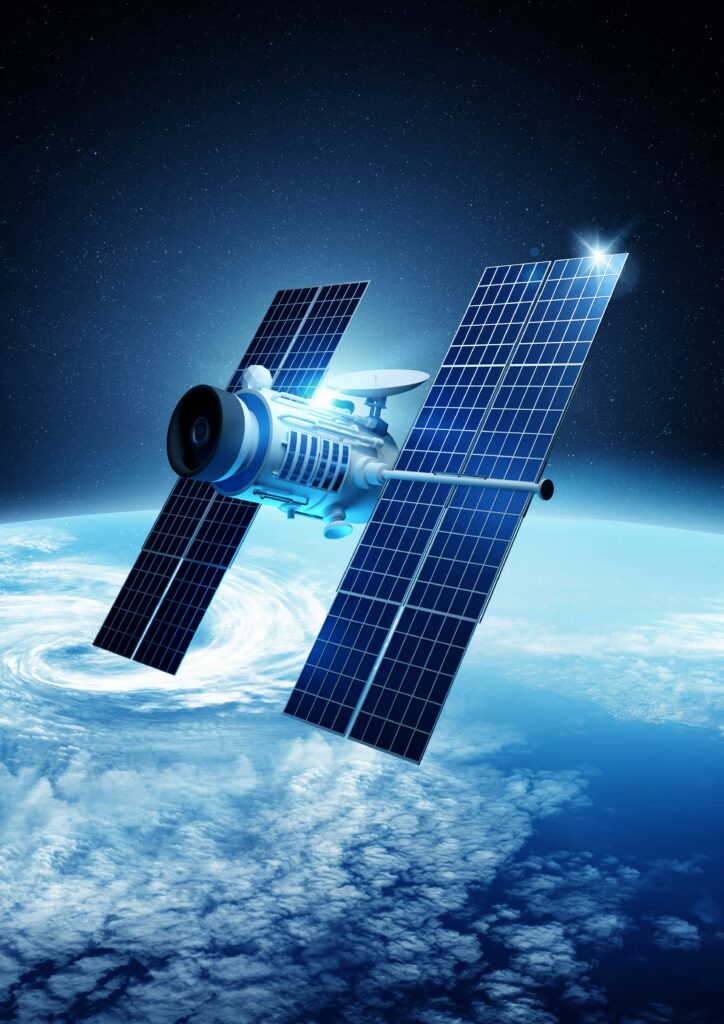
The acquisition gives Amazon access to Globalstar’s satellite infrastructure, spectrum licences and mobile satellite services capabilities — the foundational assets needed to move connectivity beyond traditional cellular networks. That spectrum is particularly valuable: global authorisations that would take years and billions to replicate from scratch are now sitting inside Amazon’s balance sheet.
Amazon has plans to put roughly 3,200 satellites into low Earth orbit by 2029 under its Amazon Leo initiative. Globalstar accelerates that timeline significantly, providing operational infrastructure that complements rather than duplicates what Amazon is already building.
The deal would be Amazon’s second-biggest acquisition ever, behind only its $13.7 billion purchase of Whole Foods in 2017. The scale of the commitment signals that Amazon views satellite connectivity not as a peripheral technology bet but as a core infrastructure play central to its long-term business model — from AWS cloud delivery to logistics to consumer devices.
The Starlink Threat That Triggered This
SpaceX’s Starlink has moved from a curiosity to a critical infrastructure provider at extraordinary speed. It now serves millions of consumers, enterprise customers and — most significantly — government and military clients across Europe and beyond. The Ukraine conflict demonstrated Starlink’s strategic value in ways that alarmed NATO governments and European policymakers who had no alternative and no leverage.
Amazon’s acquisition strengthens its position against SpaceX and enables direct-to-device services alongside a partnership with Apple for satellite features. The Apple dimension is notable — it suggests Amazon Leo is positioning itself not just as a connectivity provider but as the infrastructure layer beneath the consumer devices that European users already carry.
What It Means for European Business
The implications for European enterprises are immediate and practical. A credible Amazon-backed alternative to Starlink changes the negotiating position of every European company and government currently locked into or considering Starlink contracts. Competition at this level drives down pricing, improves service terms and — critically — reduces the geopolitical risk of dependence on a single provider controlled by one individual with his own political agenda.
European businesses have been grappling with digital infrastructure sovereignty since the pandemic exposed the extent to which critical systems rely on US-controlled platforms. Satellite connectivity has been the hardest gap to fill — no European provider operates at Starlink’s scale, and EU efforts to build one through the IRIS² programme remain years from operational deployment.
Amazon’s move does not solve Europe’s sovereignty problem — it replaces one American dependency with another. But it does introduce competitive pressure that benefits European consumers and businesses in the near term and gives regulators leverage they currently lack.
The Regulatory Question
The transaction has already been approved by shareholders holding about 58% of voting power. But regulatory scrutiny — particularly from European competition authorities — will be the critical variable. The European Commission has shown increasing appetite for examining large US technology acquisitions that affect digital infrastructure markets. A deal that concentrates satellite spectrum and low Earth orbit capacity in Amazon’s hands will not pass without examination.
The deal is expected to close in 2027. Between now and then, the space race just got significantly more interesting.
Related Analysis
- Global Markets Just Had Their Best Week in Months — But the Economy Didn’t Get the Memo
- European Stocks at a Tipping Point: Why 2026 Could Decide the Continent’s Economic Future
- Toyota Just Opened a 200-Strong Tech Hub in Poland — and It’s Rewriting How Europe’s Cars Get Built
The post Amazon Just Spent $11.6 Billion to Take on Elon Musk in Space — and Europe Is in the Crosshairs appeared first on European Business Magazine.