



















A Belgian Museum Holds the Key to Congo’s Mineral Wealth — And Won’t Let Go
QUICK ANSWER What’s happening? Belgium’s AfricaMuseum in Tervuren holds nearly half a kilometre of colonial-era geological archives mapping the Democratic Republic of Congo’s mineral deposits. The DRC government wants US company KoBold Metals — backed by Jeff Bezos and Bill Gates — to digitise them for AI-driven mineral exploration. Belgium is refusing, saying a private foreign company cannot be given exclusive access to public federal archives. An EU-funded digitisation project is already underway. A standoff between Brussels and Kinshasa over colonial-era geological records has exposed an uncomfortable truth: some of Africa’s most valuable natural resource data still sits in a European museum built by King Leopold II.
The Belgian government is blocking the Democratic Republic of Congo from granting a US mining technology company access to millions of colonial-era geological records held at the AfricaMuseum in Tervuren, just outside Brussels. The archives — spanning nearly half a kilometre of shelving — contain detailed maps, surveys, and scientific data on Congo’s mineral deposits, assembled by Belgian geologists during 75 years of colonial rule. They are, in effect, a treasure map to some of the most strategically important mineral reserves on earth.
The company at the centre of the dispute is KoBold Metals, a Silicon Valley-backed exploration firm that uses artificial intelligence to identify high-value mineral deposits. KoBold counts Jeff Bezos and Bill Gates among its investors and has committed more than one billion dollars to mining exploration in the DRC, with a primary focus on the Manono lithium deposit — believed to be one of the largest in the world.
A Deal Signed, Then Blocked
In July 2025, the DRC government signed a framework agreement with KoBold in Kinshasa, in the presence of President Félix Tshisekedi. The deal included a commitment to progressively digitise the geological archives currently stored at the AfricaMuseum, with KoBold providing the technology and resources to convert decades of colonial-era paper records into searchable digital data. For KoBold, the commercial logic is clear: feeding that data into its AI exploration models could dramatically accelerate the identification of new cobalt, lithium, and copper deposits across a country that already supplies over 70 percent of the world’s cobalt.
But Belgian authorities have refused to cooperate. Digitisation minister Vanessa Matz confirmed that while the archives remain accessible to researchers and the public, Belgium cannot grant exclusive access to a private foreign company with no contractual relationship with the Belgian state. The data, she said, must be made available within a “scientific, non-exclusive and non-privatising framework” that complies with Belgian and European rules.
The AfricaMuseum’s director, Bart Ouvry, was equally direct. The museum, he said, is not a party to the agreement between KoBold and Kinshasa. “We can give them access to specific documents. But it is impossible to allow a private company to privatise the archives in their entirety.”
Colonial Data, Modern Stakes
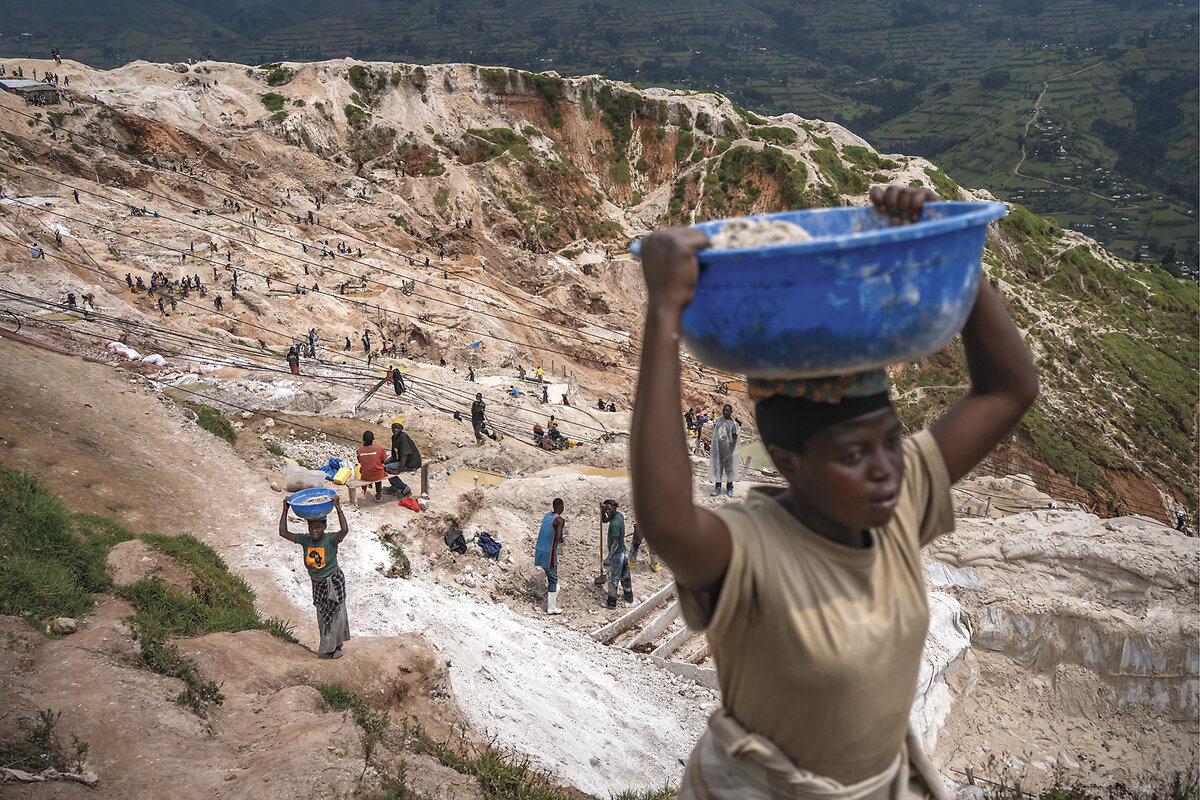
The dispute sits at the intersection of colonial history, critical mineral geopolitics, and the accelerating race for battery metals that will define the energy transition. Congo’s mineral wealth — cobalt, lithium, copper, tantalum — is central to global supply chains for electric vehicles, smartphones, and renewable energy storage. The geological data that could unlock the next wave of discoveries was collected by Belgian colonial administrators and scientists between 1885 and 1960, then shipped back to Belgium alongside the artefacts and cultural objects that still fill the museum’s exhibition halls.
That this data remains in Brussels rather than Kinshasa is itself a legacy of colonialism. King Leopold II — who personally owned the Congo Free State as a private fiefdom from 1885 to 1908 — burned most of his administrative records before transferring the colony to the Belgian government. What survived was archived in Tervuren, where the museum he built to showcase his colonial project still stands. The geological records, unlike the looted cultural artefacts that have dominated restitution debates, were never included in Belgium’s 2022 restitution law.
Belgium points to an existing EU-funded digitisation project already underway at the museum, with digital copies being progressively transferred to Congolese authorities. But the pace of that project and the DRC’s desire to accelerate the process through a private partnership have created a clear tension — one that echoes broader European debates about how industrial policy and regulation intersect.
Why This Matters for Business
The standoff has implications that reach well beyond the museum’s walls. KoBold’s billion-dollar commitment to the DRC is part of a wider scramble among Western governments and companies to secure critical mineral supply chains and reduce dependence on Chinese-controlled processing. The United States, in particular, has been pushing to diversify sourcing of battery metals — and the DRC is the single most important country in that equation.
If the archive dispute delays KoBold’s exploration programme, it could slow the development of deposits that Western supply chains are counting on. The irony is stark: Europe’s own regulatory frameworks are intended to accelerate the green transition, yet a European government is effectively gatekeeping the data that could help deliver the raw materials that transition requires.
For the DRC, the dispute also touches a deeper nerve. Kinshasa has spent years pushing for the repatriation of colonial-era assets — from cultural artefacts and human remains to scientific archives. The geological records represent something arguably more consequential than museum pieces: they are economic intelligence, compiled by a colonial power, about resources that belong to the Congolese people.
A Familiar Pattern
The Belgian government’s position — that public archives cannot be privatised by a foreign company — is legally defensible. But it sits uncomfortably alongside a colonial history in which Belgium extracted vast wealth from Congo while building institutions in Tervuren to house the evidence. The AfricaMuseum itself has undergone an $84 million renovation to confront that legacy, introducing critical narratives about Leopold’s brutality and launching provenance research into its 120,000 ethnographic objects.
Yet the geological archives tell a different story about what decolonisation actually means in practice. Cultural restitution is symbolically powerful, but it is the economic data — the maps, the mineral surveys, the bore-hole records — that could materially reshape Congo’s economic future if placed in the right hands.
As institutional capital flows increasingly toward resource security and the minerals powering the energy transition, the question of who controls the data behind those resources becomes a strategic issue — not just a historical one. The archives in Tervuren are not relics. They are, quite literally, the keys to the next chapter of the global minerals race. And for now, Belgium is holding them.
The post A Belgian Museum Holds the Key to Congo’s Mineral Wealth — And Won’t Let Go appeared first on European Business & Finance Magazine.