






























$65 Billion Lost: The Catastrophic EV Bets That Broke Ford, Stellantis, GM, VW and Honda
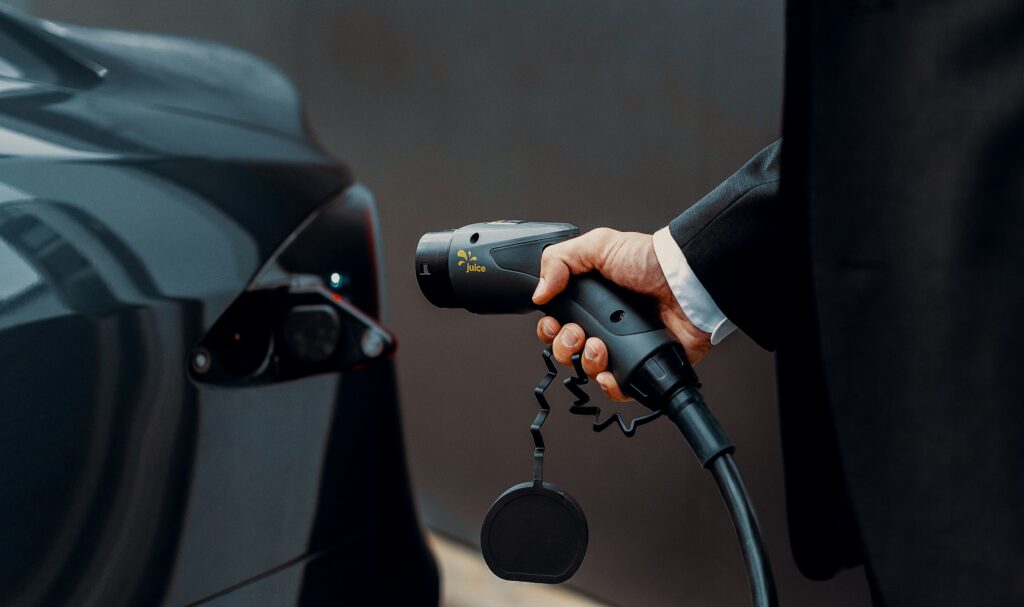
The electric vehicle revolution was supposed to be unstoppable. Governments mandated it. Investors demanded it. Boardrooms across Detroit, Wolfsburg, and Tokyo bet tens of billions on it. The logic seemed airtight: Tesla’s soaring valuation proved the market wanted EVs, and any legacy carmaker that failed to go all-in risked being left behind.
That logic has now cost the global auto industry at least $65 billion in writedowns, cancelled models, and restructured operations — and the bill is still rising.
Stellantis delivered the biggest single blow. In early February 2026, the Jeep-to-Fiat parent disclosed $26.5 billion in charges during the second half of 2025, wiping more than 20 per cent off its share price and sending the stock to a six-year low. CEO Antonio Filosa was blunt about the cause: the writedown was the cost of “over-estimating the pace of the energy transition.” The company scrapped the Ram 1500 REV electric pick-up, killed the entry-level Dodge Charger Daytona EV, shelved the Charger Daytona SRT Banshee, and dropped all plug-in hybrid Jeep and Chrysler models for 2026. In their place, Stellantis is reviving its 5.7-litre V8 engine for the American market. It was a retreat so complete it barely qualified as a pivot.
Ford was next. In December 2025, the company announced a $19.5 billion writedown and cancelled several electric models, including its much-anticipated electric F-150 pick-up. Ford’s EV division, Model e, had already reported a $5.1 billion operating loss in 2024 alone. CEO Jim Farley framed the reversal as following the customer rather than the forecast. The company is now pivoting hard into hybrids and gas-powered trucks.
General Motors took a $7.6 billion hit in January 2026 to unwind EV investments, including $4.2 billion in cash charges for cancelled supplier contracts. The company said further material charges were expected in 2026. Volkswagen, Europe’s largest carmaker, absorbed a $6 billion blow connected to a sweeping product overhaul at Porsche, which delayed or cancelled several electric models and extended the life of combustion-engine vehicles. VW posted its first quarterly operating loss in the third quarter of 2025 — a $1.5 billion deficit driven by Porsche’s EV reset and up to $5 billion in US tariff costs.
Honda joined the list this month. The Japanese carmaker expects $4.5 billion in EV-related losses by the end of its fiscal year in March 2026, including $1.7 billion in restructuring charges already booked. Its car-making division has posted four consecutive quarters of operating losses. Honda’s global EV sales halved in the most recent quarter, falling to just 15,000 units, and the company is now spending more than $17,000 in incentives on each Prologue SUV sold in the US — yet shifted only 664 units last month. Executive VP Noriya Kaihara said Honda must conduct a “fundamental review” of its strategy.
The causes of this unravelling are multiple and compounding. The most immediate trigger was the Trump administration’s termination of the $7,500 federal EV tax credit at the end of September 2025. The effect was instant: US EV sales, which had spiked to 10.5 per cent market share in Q3 as buyers rushed to claim the credit, collapsed to roughly 5.2 per cent in Q4. Full-year US EV sales fell to about 1.28 million units — the first year-on-year decline since 2019. Average transaction prices for EVs remained stubbornly high at around $59,000, well above petrol alternatives.
The rollback of Biden-era fuel economy standards in December 2025, and the EU’s cancellation of its 2035 EV sales mandate that same month, removed the regulatory pressure that had underpinned much of the industry’s investment case. Without mandates pushing supply and subsidies pulling demand, the gap between what carmakers had built and what consumers actually wanted became impossible to ignore.
Meanwhile, Chinese competition is intensifying. BYD overtook Tesla as the world’s largest EV seller in 2025. Chinese brands’ market share in Europe nearly doubled from 3.1 per cent in 2024 to 6.1 per cent in 2025, reaching almost 10 per cent in December. In Mexico, Chinese-made vehicles now account for nearly 20 per cent of new sales. Legacy carmakers are being squeezed from both sides — undercut on price by Chinese rivals and outpaced on technology by newer entrants who built EV platforms from scratch rather than retrofitting combustion-engine architectures.
The picture is not uniformly bleak. In the UK, EV uptake continues to climb ahead of the 2030 ban on new petrol and diesel cars. Battery electric vehicles accounted for 23.4 per cent of registrations in 2025, with more than two million cars registered for the first time since 2019. In October 2025, EVs hit a record 25.4 per cent share.
But the broader global story is one of expensive miscalculation. Between 2022 and late 2025, the major US and European carmakers — Ford, GM, Stellantis, Mercedes-Benz, and Volkswagen — collectively burned through an estimated $114 billion on EV ventures, according to analysis by the New York Post. The industry bet that policy would create demand. When policy changed, the demand vanished, but the factories, the supplier contracts, and the debt remained.
As Bernstein analyst Stephen Reitman put it, the problem was simple: everyone got caught up in the euphoria of Tesla’s valuations, and they forgot to bring the customers with them.
The post $65 Billion Lost: The Catastrophic EV Bets That Broke Ford, Stellantis, GM, VW and Honda appeared first on European Business & Finance Magazine.